What Is a Payment Service Provider (PSP)? Complete Guide
July 1, 2026

For rapid growing business, it’s essential to be well-connected with the financial world. Many businesses lose the chance to deal with customers just because of slow, failed, or insecure payment gateways. Today, every business requires fast, secure, and reliable payment solutions for meeting customer expectations. Opting for the right PSP is essential for better growth and seamless transactions.
According to the RBI (Reserve Bank of India), in FY 2016-17 approx ₹0.07 lakh crore ₹0.07 lakh crore made UPI transactions. But this number in FY 2025-26, with YOY value growth of 20.59%, reaches ₹314 Lakh Crore. This displays the rising demand for online payment gateways in India.
This guide explains how PSPs simplifies the online payment procedure, including the payment service provider definition, key features, benefits, services, challenges, and selection criteria that help businesses choose the best payment service providers according to their preferences and build trust among consumers.
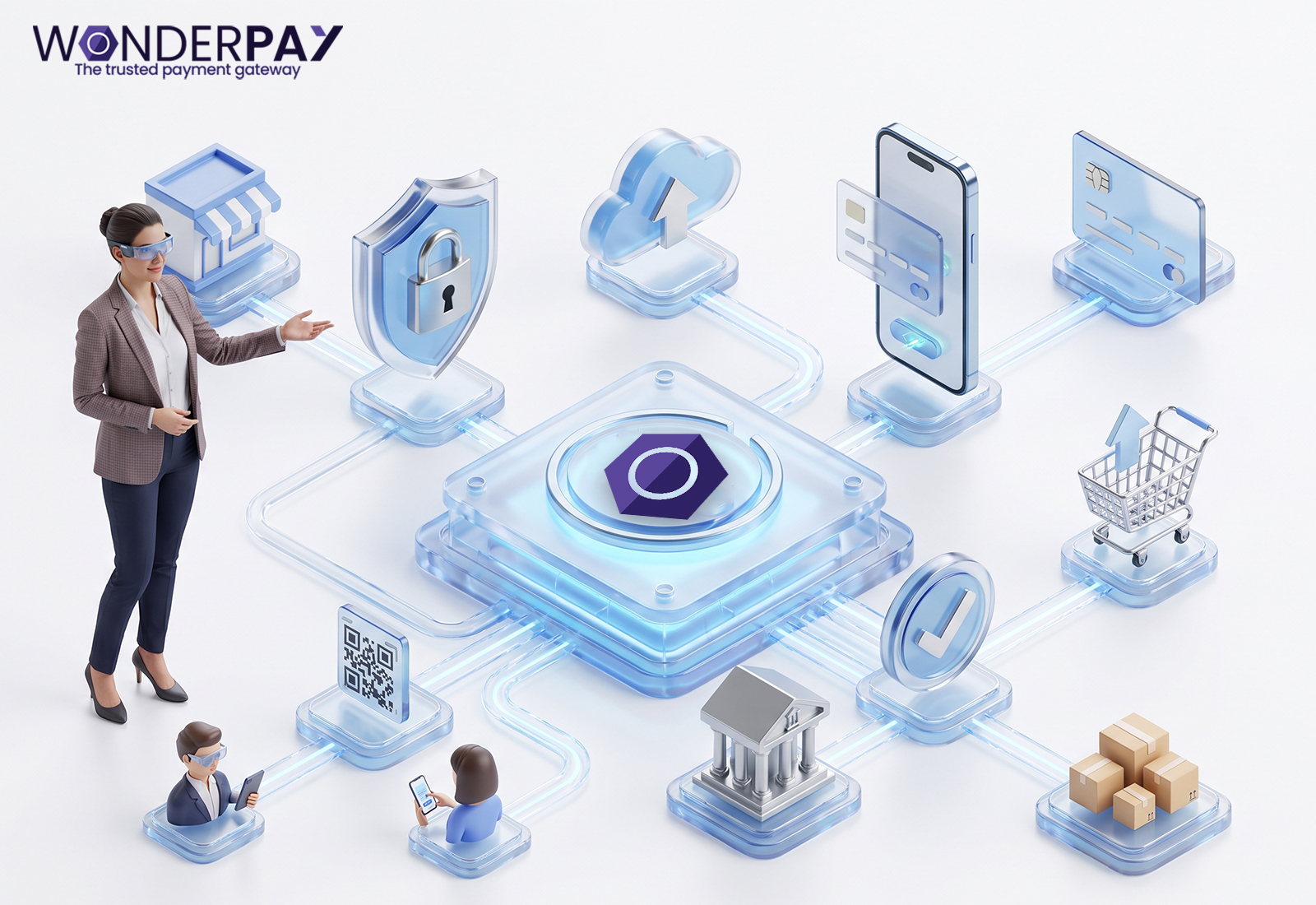
A third-party that permits the businesses to receive and make transactions. Serves as a link between the merchants, customers, and financial entity to guarantee that the proceeds payments are secure, quick, and reliable.
Using a payment service provider in India helps the business in processing transactions securely, electronic fund transfers, and enlarges the payment alternatives. Also helps in preventing fraud and built-in security.
Wonderpay, the best payment service provider, offers broad resolution that serves every-sized business. The end-to-end payment gateway permits merchants to accept multiple payment methods such as cards, UPI, net banking, and wallets. What makes Wonderpay different is its unique solutions that suit businesses.
Merchants received customised payment requests through emails, social media, and SMS.
Function of easy payment integration into web portals.
Based on the payment history of merchants lending them working capital loans.
Encourage smooth integration and business thoughts through strong analytics and APIs.
In Indian number of domestic PSPs includes Razorpay, PhonePe, and Paytm that provide comprehensive payment solutions. Other gateways like Stripe, Adyen, and PayPal also maintain their strong presence worldwide.
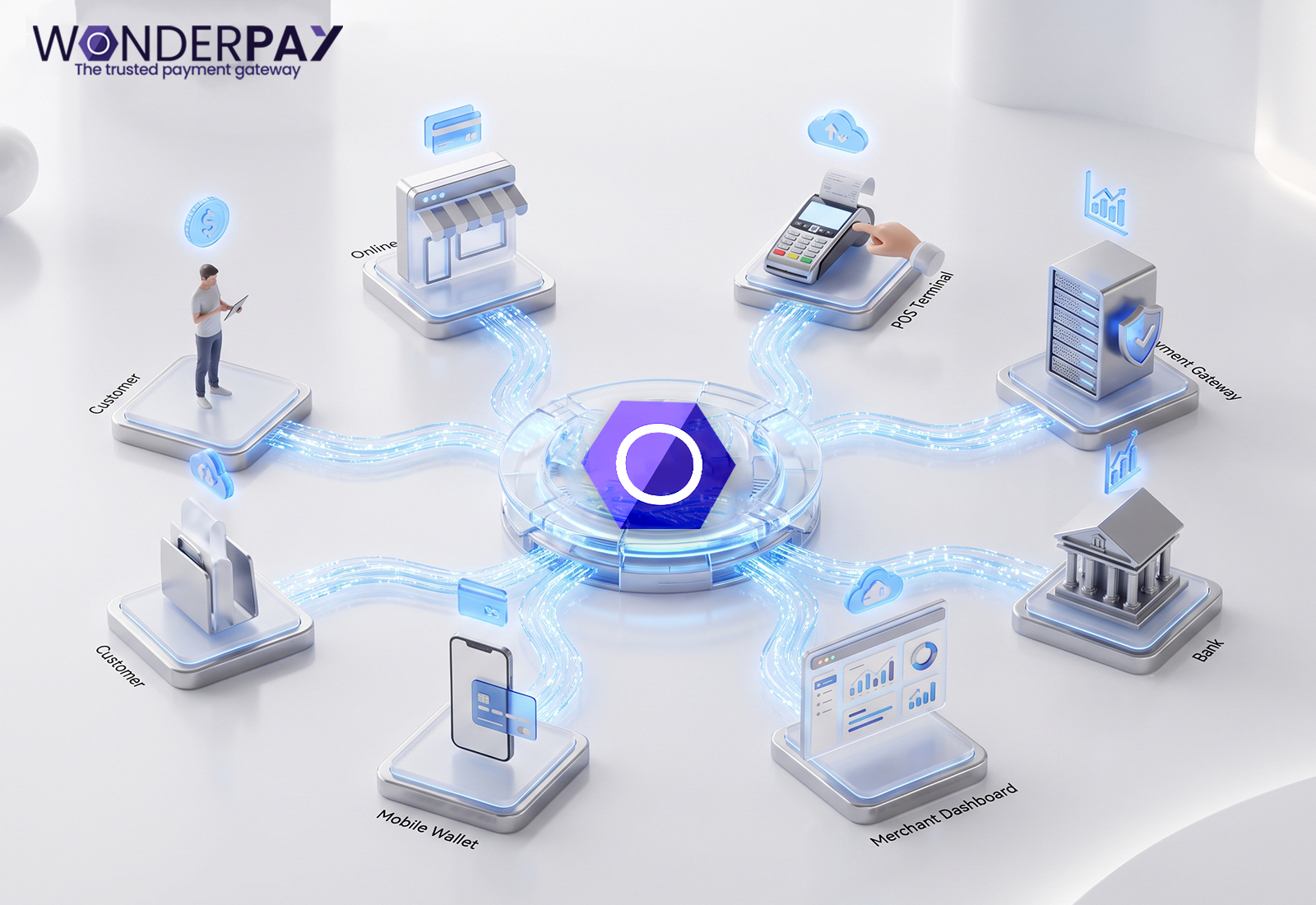
Being an intermediary between the bank, customers, and merchants, a PSPs manages the entire payment procedure that reduces manual work pressure on businesses.
The customer chooses the method from the given options and provides their personal details. PSP verifies the transaction details and securely sends them to the payment gateway for further procedures.
After a successful transaction, the PSP verifies the payment details and detects fraud. Advanced security helps in analysing the doubtful activities and reduces the chances of fraud payment.
The PSP transfers the transaction data to the customer’s bank. Afterwards, the bank checks the availability of funds, reliability of transactions, and decides to approve or disapprove the transaction. If approved, the merchant gets notified about the authorised confirmation.
After confirmation, the merchant may receive the payment immediately or after some time. The PSP sends the money from the customer’s bank account to the merchant bank account through acquiring financial institutions. In the case of failure payment, the PSP can reverse the payment.
Once the transfer is done, the PSP creates a detailed payment report. The report contains payment amounts, transaction methods, fees, and chargebacks that help merchants to easily monitor financial records and business performance.
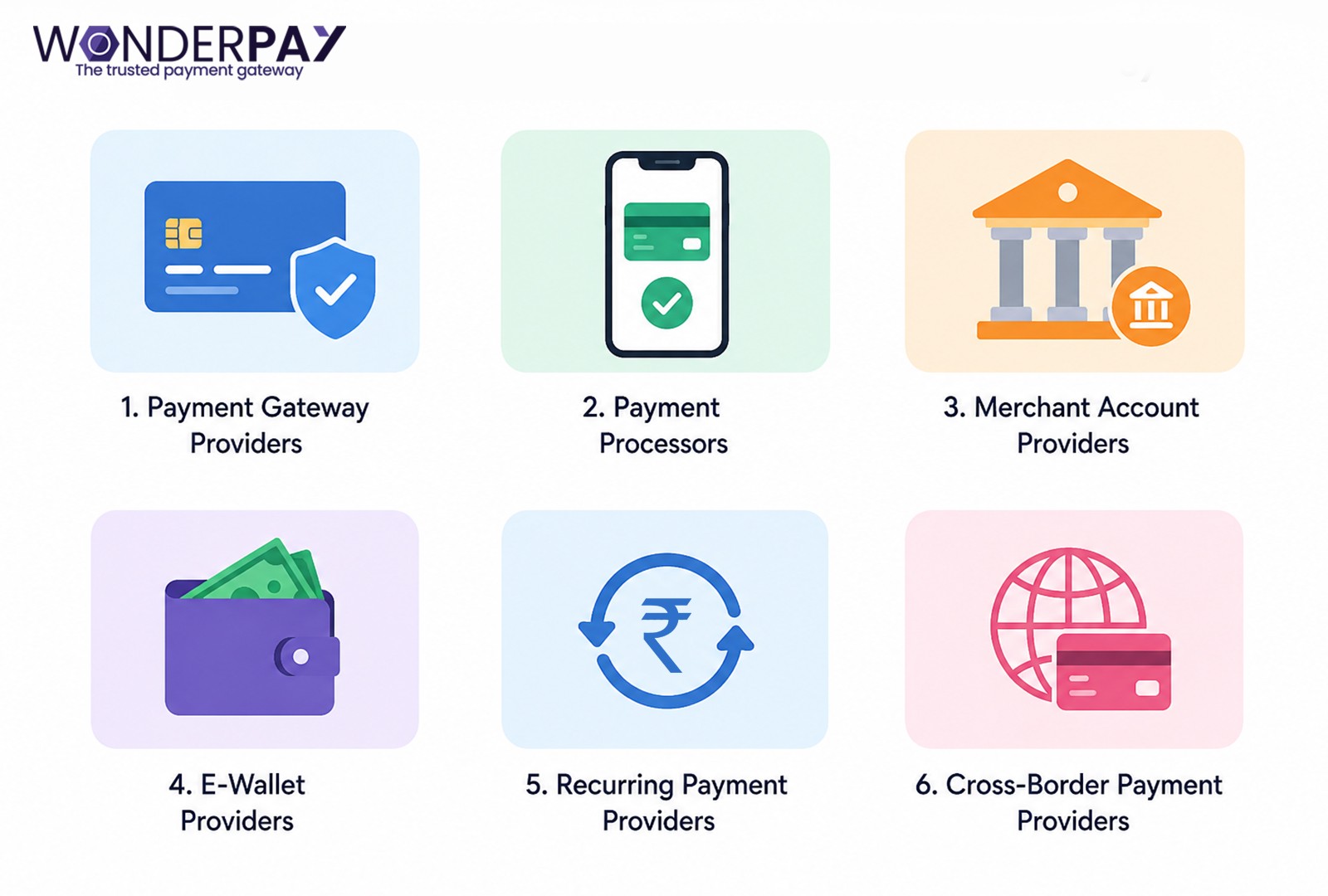
PSPs are widely scattered into three types, which are completely based on their functionality. features, and the organisation size.
These providers serve its customers with core services such as credit/debit card processing and bank transfers. These many come in use where a simple master account is used by many businesses. Highly suitable for small to medium-sized businesses.
Modern solutions that provide multiple services like a payment processor, payment gateway, and seller account at a single platform. Provides an easy-to-use API and immediate operation functionality. This type is best suited for the SaaS companies and platforms that need complex structured.
These providers prioritise the online checkout experience. They offer the out of the box services like multi-currency support, fraud detection, and seamless procedure. Suited especially to online retailers, D2C sellers, and international merchants.
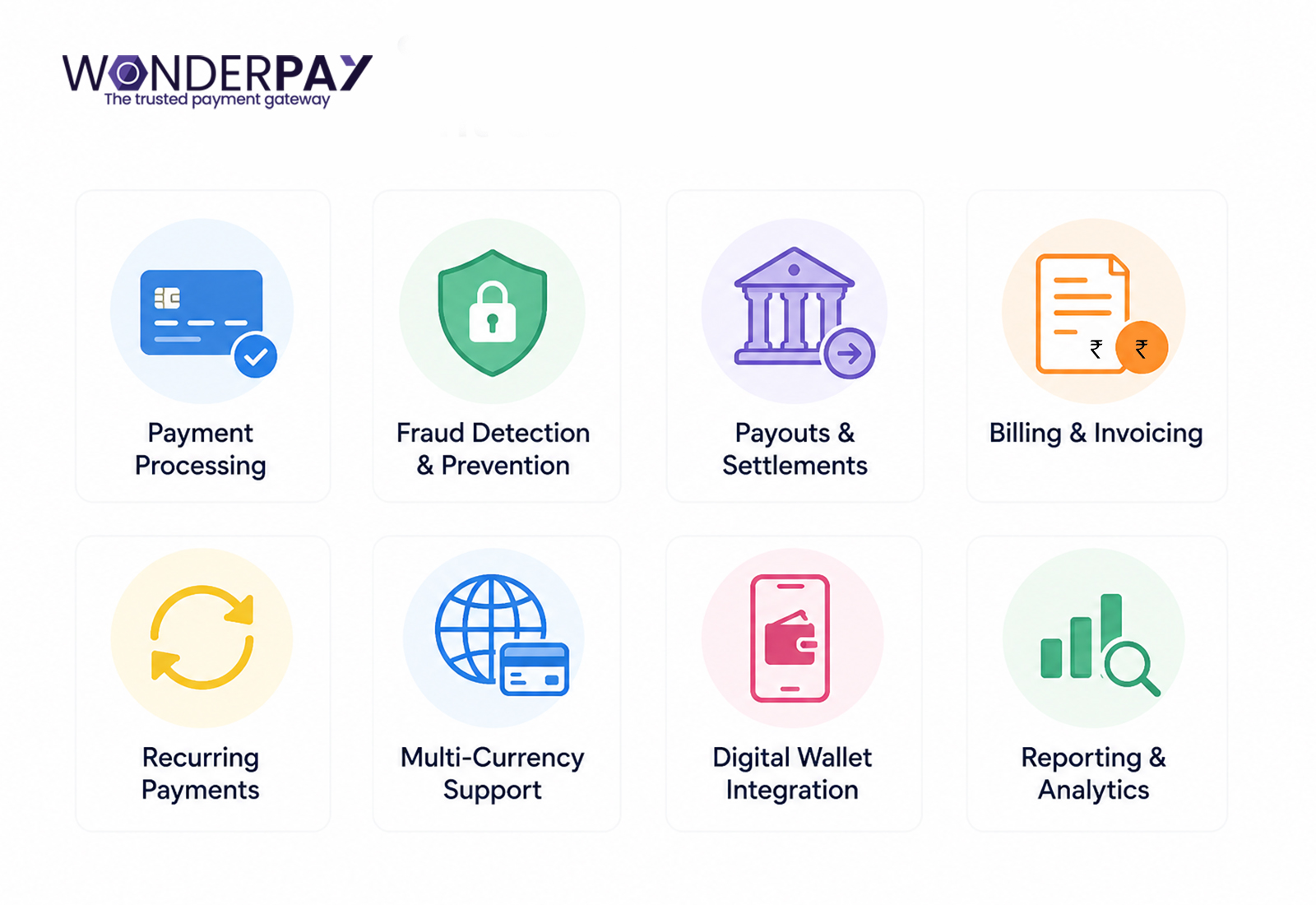
Considered PSP as a third party that permits businesses to receive funds securely through electronic payments. To deeply understand its technical infrastructure, it is important to analyse the provided services.
PSP protects businesses from fraudulent payments by monitoring real-time updates. It utilised advanced procedures and security tools to detect doubtful activities, verify payments, and decrease the risk of losses.
After successful payment approval, the PSP carefully manages the transaction from the customer’s account to the merchant account. This settlement ensures that businesses get the payment securely immediately or after some time.
PSP makes detailed reports that help businesses monitor all financial records. These reports mainly contain the payment history, methods, fees, refunds, settlements, and chargebacks that make the tackling process seamless.
A PSP allows businesses to use multiple transaction methods within a single platform. Customers can make payments effortlessly through credit cards, debit cards, e-wallets, net banking, QR code, and other payment alternatives.
These modern features help the business receive payment across sales platforms, such as websites, mobile applications, offline stores, and social commerce platforms. This makes payment convenient, no matter where customers are purchasing.
To safely handle online transactions, a PSP interfaces with a payment gateway. Businesses can receive payments without creating complicated payment systems themselves, which also authorises transactions and encrypts sensitive payment data.
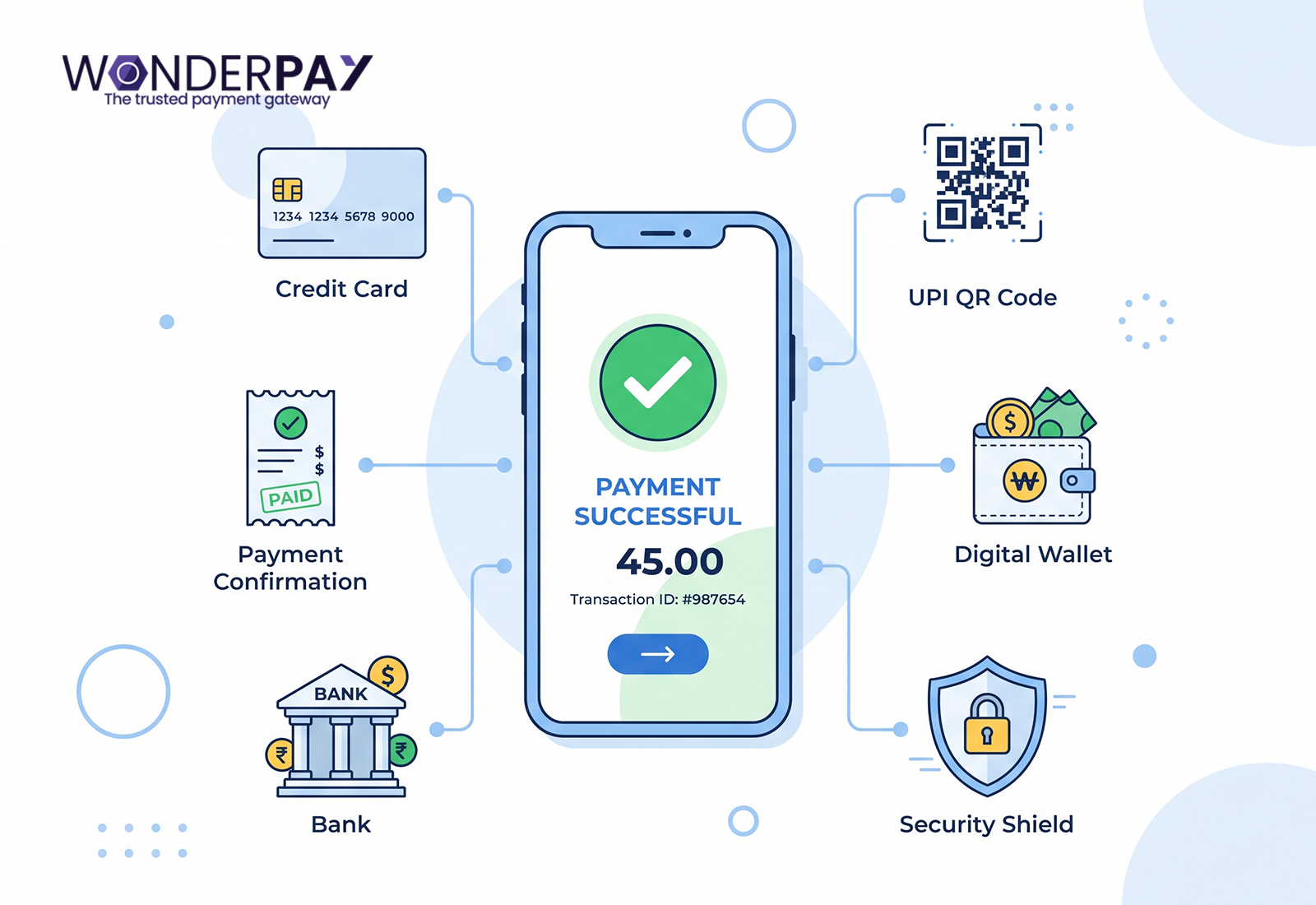
A PSPs provides business some essential features that help them manage, process, and receive secure online payments. These features are considered useful in simplifying the payment procedure while enhancing the customer experience and promoting effective transactions.
A payment processing service provider utilised security and fraud detection tools and advanced encryption to protect the transaction data. This ensures that merchants and customers both can complete the payment procedure safely and reliably.
A payment gateway service provider handles several transaction alternatives, such as credit cards, debit cards, UPI, net banking, e-wallets, and many other payment services. This mobility supports the businesses to satisfy customers’ requirements.
Modern PSP payments methods tackle the payments and settle the funds into the merchant’s bank account. Quick handling encourages cash flows and supports businesses in managing routine financial activities effectively.
Some of the best payment service provider like Wonderpay offers you the service of API functionality along with mobile software, websites, and e-commerce platforms. Therefore, detailed information about the transaction provides useful insights that support managing the payment efficiently and help in making informed financial choices.
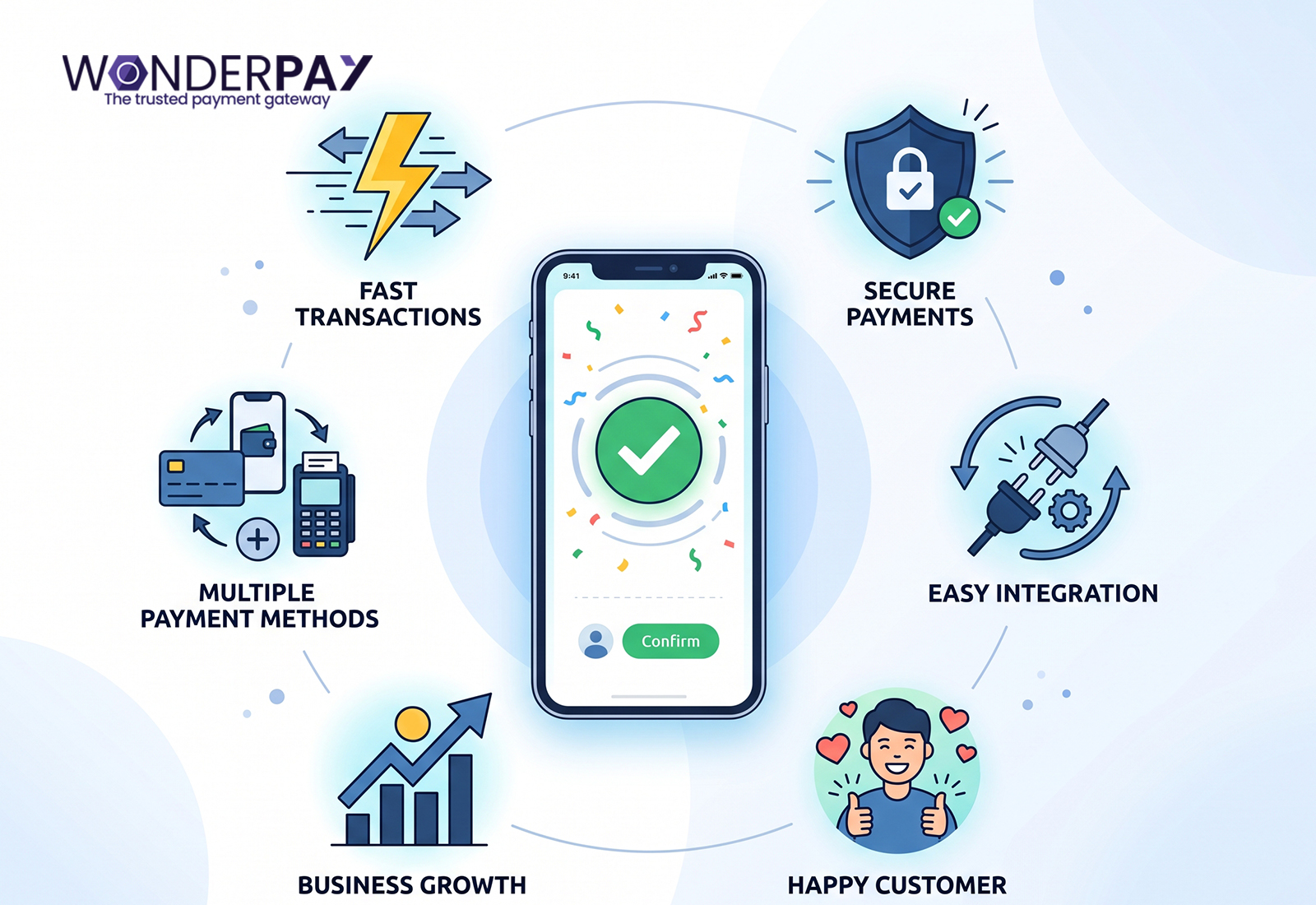
A PSPs allows businesses to accept digital payments securely and efficiently. It helps in satisfying the customer requirements, managing transactions, and promoting business growth through an advanced payment gateway.
A payment gateway service provider encourages businesses to use various methods for accepting payment, such as debit/credit cards. UPI, net banking, and others through a single platform. This simplifies the payment procedure and saves time, and also meets customer preferences.
Payment processing service providers protect the transaction information by using security tools and advanced encryption. Safe payments enhance customer confidence, reduce the chances of payment failure, and improve the overall payment procedure.
Several online payment service providers in India use security and fraud detection tools that help to track doubtful payments. These reduce the chances of financial risks and protect the customer and merchant’s data.
A PSP gives detailed payment information in their reports along with useful insights. These reports are useful for businesses in monitoring sales, tracking payment performance, and making informed financial decisions.
This e-payment service provider makes it easy to choose the payment option according to the customer and merchant preferences. Businesses can quickly adapt these payment methods without upgrading their software frequently.
The best payment service provider, like Wonderpay, prefers working with acquiring banks to simplify the payment procedure. This supports a quick process and ensures businesses receive the payments fast,
PSP Payments creates a report that contains data on every transaction method across various platforms. This simplifies the accounting management, reconciliation, improves accuracy, and reduces the efforts of manual work.
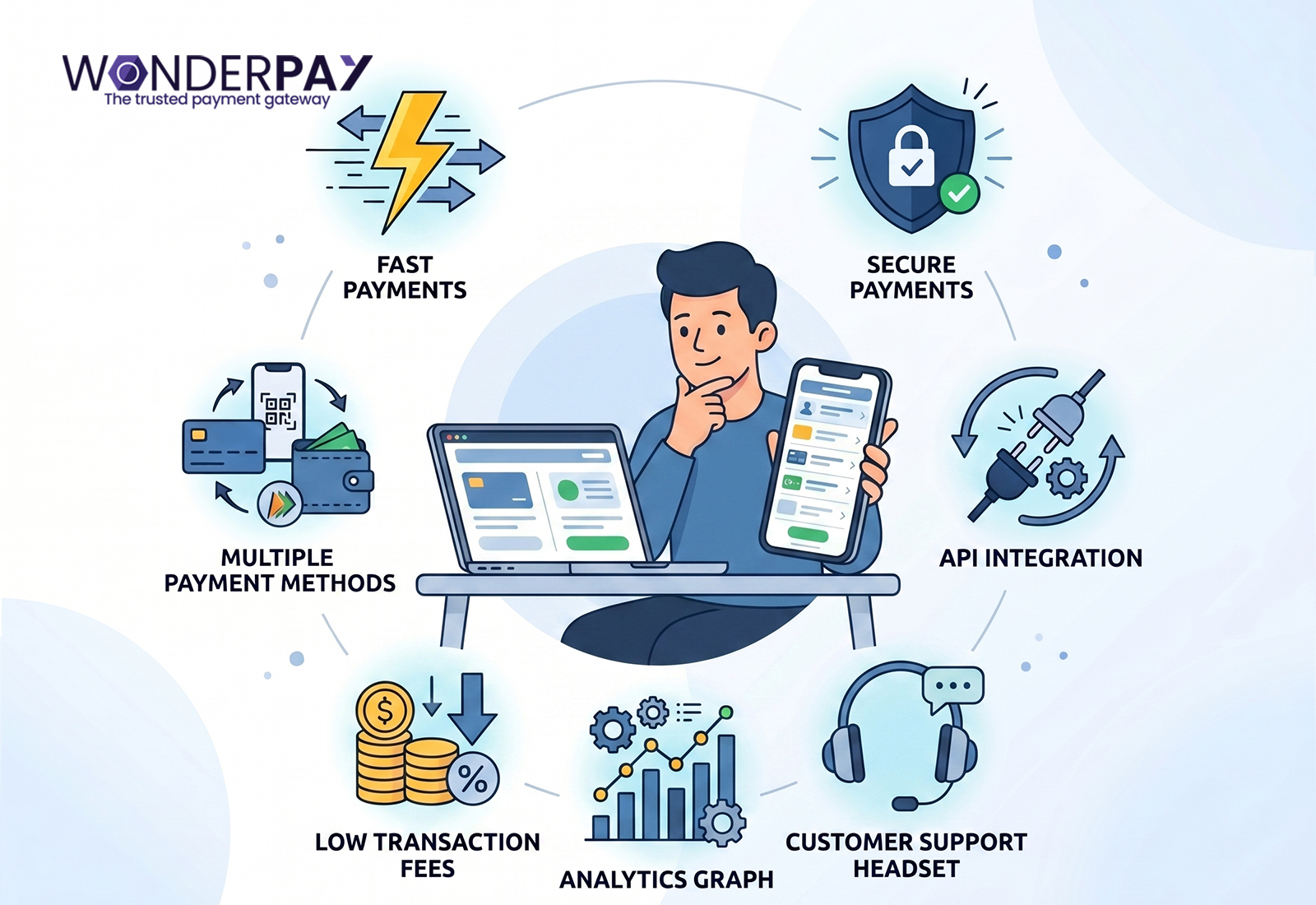
Businesses can easily choose the right PSPs, but it highly depends on five essential factors: customer-preferred payment gateways, transaction costs, compatibility issues, security compliance, and settlement speed. The points below can provide useful insights for choosing the best payment service providers in India.
Prior to choosing a PSPs, ensure to analyse the customer preference for payment methods. Opt for a payment gateway service provider that supports various options such as debit/credit cards, UPI, net banking, e-wallets, and other PSP payments services. Several methods can simplify the payment procedure.
Compare the pricing infrastructure before opting for a business PSPs. Analysing the transaction charges, setup fees, maintenance costs, and other hidden charges. Choosing a cost-effective payment processing service provider supports businesses in controlling operational expenses without exposing the quality of payment.
Ensure that the payment service provider in India you are opting for easily integrates with e-commerce platforms, websites, mobile software, and other applications. A smooth combining feature reduces the implementation time, technical issues, and simplifies the payment gateway for merchants and customers.
Settlement speed refers to the speed at which merchants and businesses receive the payment in their bank accounts. Some of the best payment service providers, like Wonderpay, offer the services of fast and reliable settlements that encourage seamless procedures and healthy cash flows.
Go for PSPs that uses advanced security tools to detect fraud, data encryption, and that adheres to the industry security standards. PSPs that prioritise risk management are considered beneficial in protecting customer data, reducing the chances of fraudulent transactions, building confidence and trust among customers, and ensuring the payment is completed securely.
Carefully examine customer reviews, expert reports, and PSPs examples before choosing PSPs for your businesses. Comparing helps businesses in analysing the most suitable option that can simplify the procedure, meet customer requirements, and promote long-term growth.
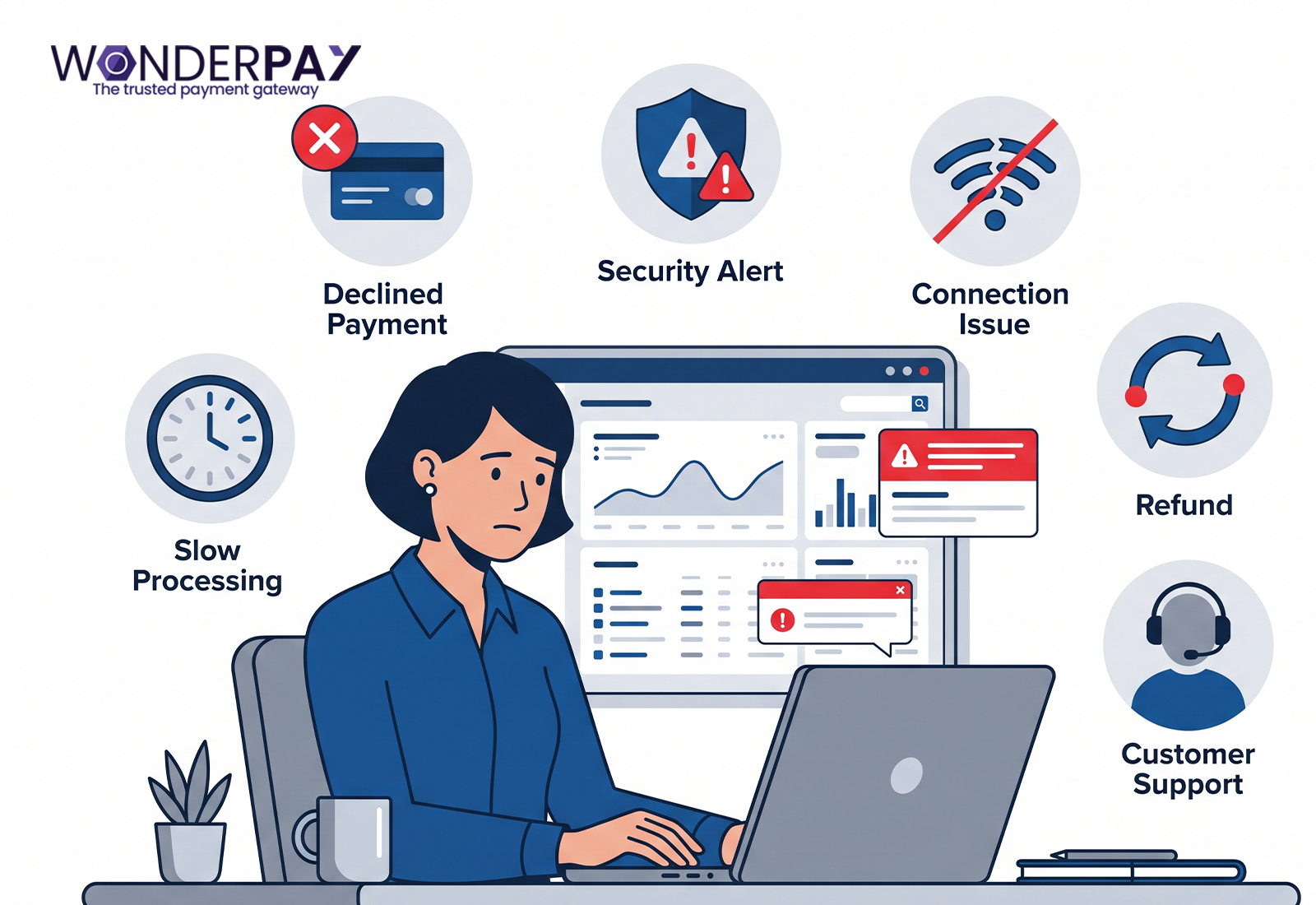
PSPs simplifies the payment procedure, but many businesses still face some operational and technical challenges. A proper understanding of these challenges helps businesses choose a genuine payment processing service provider that encourages seamless payment operations. Below are some common challenges that many businesses face in India.
Some of the online payment service providers in India follow a complex infrastructure to combine with e-commerce platforms, websites, apps, and other applications that can delay the procedure.
Technical errors, bank downtime, and network issues cause transaction failure that can affect sales.
Weak security measures can encourage data threats and fraudulent transactions. Selecting a PSP reduces these risks.
Operational expenses can be impacted due to the transaction charges, setup fees, and maintenance expenses.
Slow settlement can directly affect the cash flow and make it challenging for businesses to manage routine financial operations effectively.
Choosing the right PSPs is not only about opting for a suitable payment gateway, but also about supporting businesses’ growth. The best payment processing service provider, like Wonderpay, simplifies the transaction, strengthens security, and improves the overall payment experience.
As the market continues evolving and adopting new technologies, collaborating with one of the best payment service providers in India is essential to meet the customer requirements and manage operations efficiently.
From seamless checkout to faster settlements, Wonderpay supports advanced fraud protection and long-term business growth. Rapid growing digital marketplace needs to build trust among consumers, ensure a smoother payment process, and encourage sustainable business growth.
A PSP is a third company that helps businesses to approve, receive, proceed, and manage online transactions through a single platform. The payment service provider definition involves fraud detection, payment processing, solution implementation, and transaction settlement that ensure secure and seamless payment experiences.
PSP is a financial technology institution that act as a bridge between merchants, banks, customers, and payment gateway to complete the online transactions successfully. PSP payments supports various methods of payments such as debit/credit cards, UPI, e-wallets, net banking, and other fast and secure services.
A payment processing service secure examine the customer transaction information, encrypts the data, verifies the payment, approves the transaction from the bank, and transfers the payment into the merchant’s preferred bank account. This automatic process allows the business to enjoy digital payment services while adhering to financial standards.
Businesses can easily choose best payment service provider through comparing security standards, various payment methods, transaction charges, integration capabilities, settlement speed, and customer reviews. Businesses should understand payment service provider in India should meet collectively both customer and operational payment requirements.
A payment Initation Service Provider (PISP) is a kind of PSP that make payment directly from the customer bank account after approval. It allows safe bank-to-bank transfers, reduce the requirement of middlemen, and increse payment efficiency, as compare to conventional card payments.

“A fintech content specialist with expertise in financial technology, digital banking, and emerging market trends, Kanisha Mathur is skilled in crafting SEO-friendly, research-driven content that transforms complex financial concepts into engaging and accessible insights. Combining analytical precision with compelling storytelling, the writing delivers value to both industry professionals and modern digital audiences.”