AI In Payment Processing: Smarter, Faster & Safer Payments
September 11, 2026
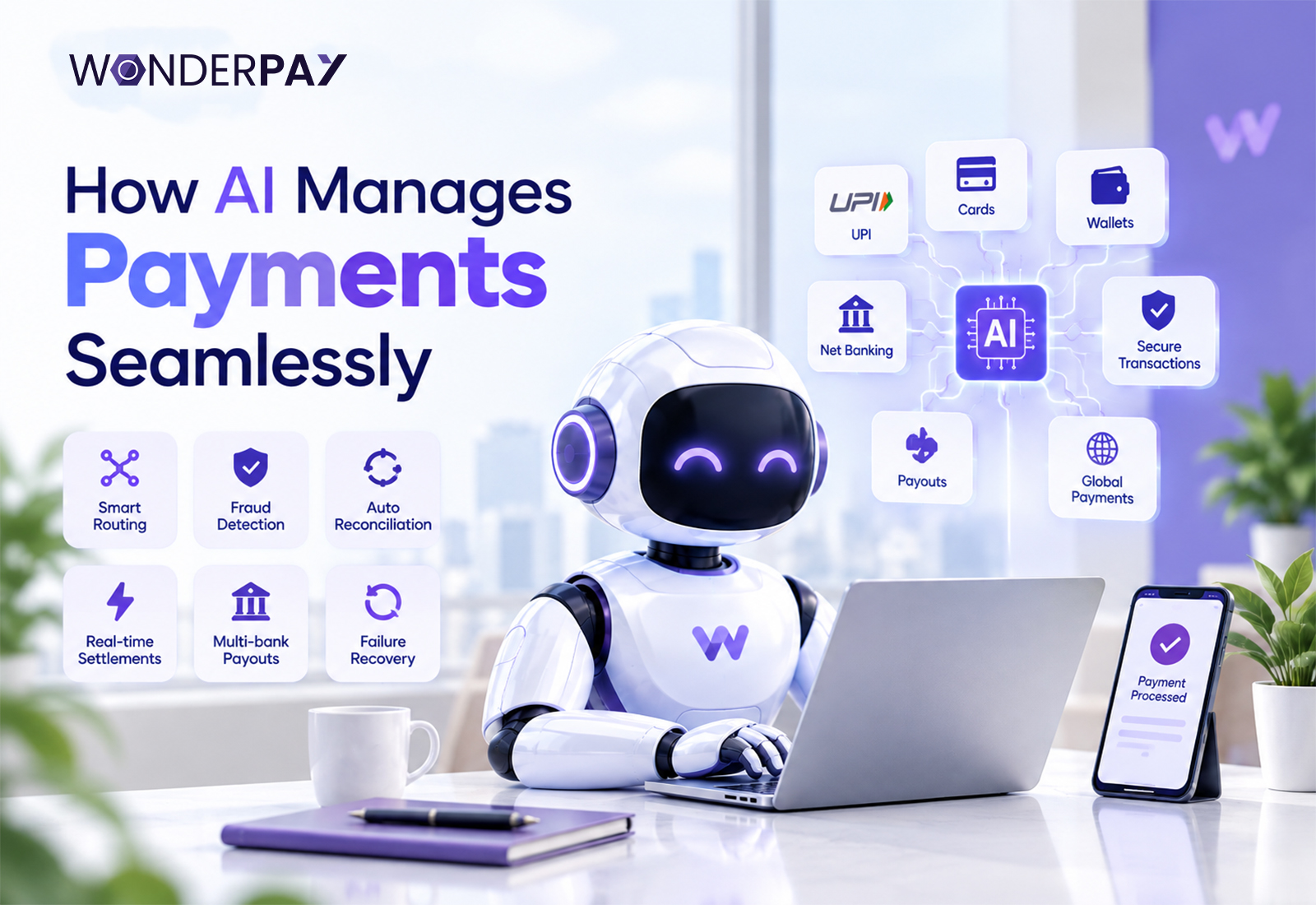
In India, the digital payments environment is changing like never before, which requires smarter and faster transaction management. The Indian digital payments ecosystem is sprawling, and UPI (the Unified Payments Interface) handled 22,716.07 million transactions worth ₹28.92 lakh crore in June 2026, according to the National Payments Corporation of India(NPCI), on a massive scale of things. With transaction volumes skyrocketing, AI in payments is at the bleeding edge — becoming an almost centralised technology to drive order out of all this complexity.
And this is where AI in payments can potentially become a game changer. AI in Payment Processing can instantly identify suspicious activity, assess and categorize risk at the transaction level, and provide payment processors with insights to help them make smarter choices. In addition to this, intelligent routing and automation of reconciliation also make up a few important AI use cases in payments.
With the ongoing advancements taking place in AI in banking and payments, an AI payment gateway can mitigate fraud attempts & increase the efficiency of transactions. Hence, the emergence of artificial intelligence in digital payments is revolutionizing the AI in payments industry. (Source)
AI Payment Processing is powered by artificial intelligence and machine learning, thus helping with smarter or faster payment transactions using this new technology. Traditional automated systems generally work on rules; in the case of AI systems, they learn from data and update their decision-making based on transactional behaviour.
AI frameworks investigate your past transactions and gather information points like customer conduct, installment designs, gadget details, location, and transaction time. That, in turn, will allow AI to then join the dots between detecting outlier behaviour and transaction-level risks to make real-time payments.
In contrast to traditional automation, which automates things along pre-defined commands, AI-powered payments can scan, analyse, and respond accordingly with respect to the situation during payment. The combination of AI with existing infrastructure and payment gateways helps in smart payment processing, better security, and reduced human involvement.
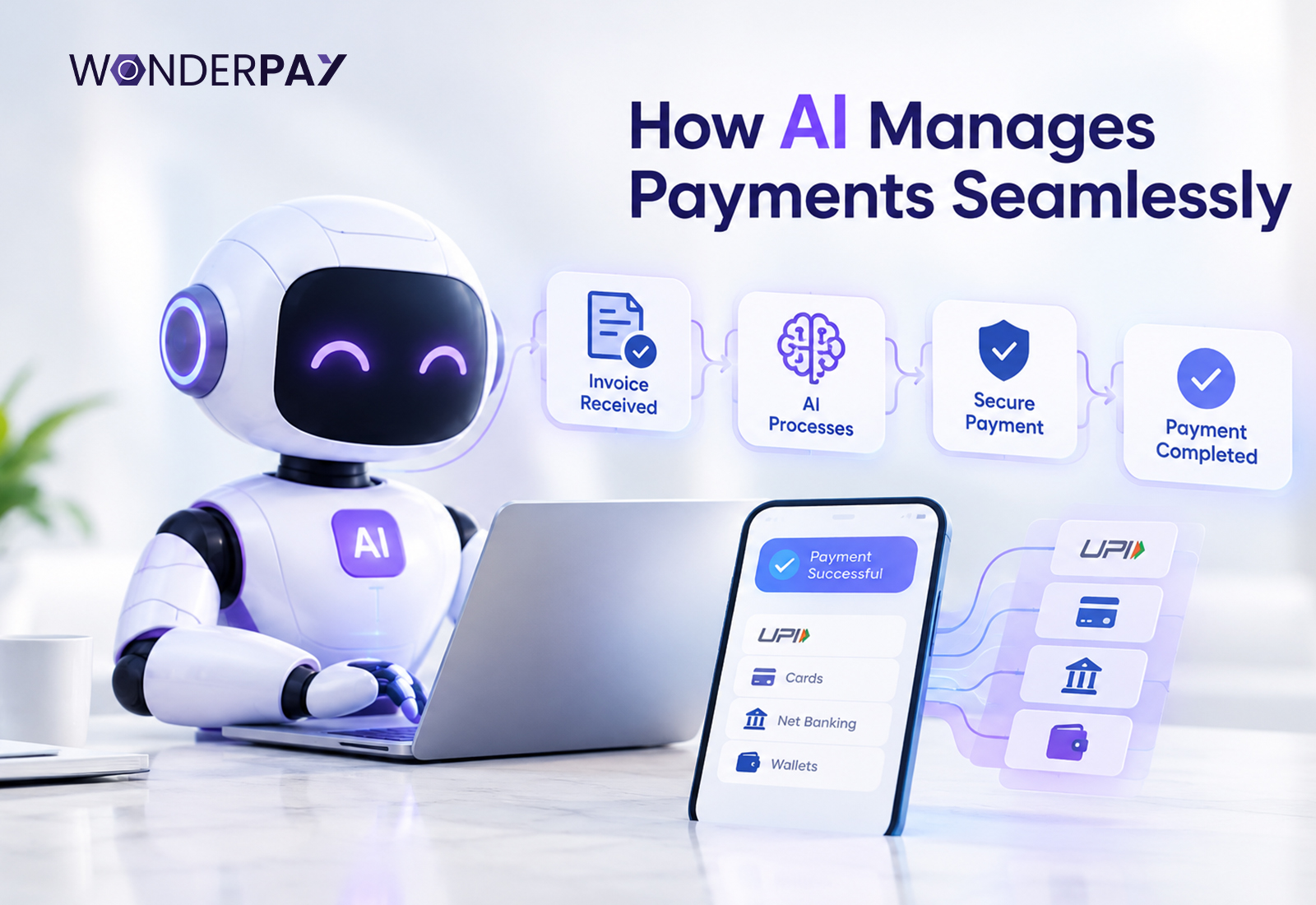
Given the number of transactions, modern payment systems must be quick, precise, and secure to facilitate businesses. AI payment processing adds an intelligent layer above this ecosystem, analyzes transaction data, recognizes patterns, and makes the majority of transactional decisions live. AI has to intelligently assess an individual set of parameters for every deal dynamically and help businesses make the most of their payment journey rather than simply applying rules. With AI-powered payments, you can reduce manual actions by automating the processes associated with getting the right payment routes, fraud detection, customer identification, and transaction reconciliation. These are some of the most important ways in which artificial intelligence in payment processing is transforming the transaction landscape today.
AI can use the type of transaction, payment channel, and previous transaction data to figure out how best to approach processing either kind of transaction. With this, smart routing can carry out real-time processing based on intelligent know-how to guide the payment toward optimal paths while eliminating avoidable failures. AI can also aid businesses in improving payment success rates and enhancing the checkout experience by uncovering the patterns underlying successful and failed payments.
One of the primary and most beneficial AI use cases in Payment is Real-Time Fraud Protection. AI systems can be trained on transaction behaviour in order to identify behaviours that are suspicious and possibly indicate unrevealed activity. It may include high-value transactions, rapid transaction bursts, geo-locations not commensurate with the customer is used to, or an unrecognized device operating outside of its normal behavior. AI fraud detection, by using techniques such as pattern recognition and machine learning, can assess transactions more dynamically compared to rule-based systems. In this way, businesses can easily identify suspicious activity to react appropriately and give legitimate customers a hassle-free way to do business.
It can also help with payment authentication by understanding transaction risk and user behavior on the go. An AI-powered framework can help an organization judge whether a transaction appears to be normal or requires more scrutiny. This will help you to temporarily reduce friction at checkout without making payments unnecessarily insecure. AI-Powered payments provide risk-based authentication to secure the transaction while maintaining a smooth user experience.
Continuous monitoring is yet another major use case of AI in payments. Instead of manual checks, AI can identify abnormal trends, repeated failures, or other potential triggers across vast volumes of transaction records. This enables organizations to monitor payment activity in real-time, allowing them to identify issues more quickly. This also enables payment teams to better understand transaction trends and be quicker to respond to new problems as they emerge in real time.
AI makes reconciliation seamless, matching payments to invoices, orders, and accounting. Automated payments will be able to automate repetitive manual tasks and, in addition, help unearth mismatches, missing entries, duplicate transactions, or discrepancies.
AI provides a balance of cost, speed, and accuracy when transaction data is combined with the ability to match transactions intelligently enough to identify exceptions from normal activity, which minimizes time spent reviewing all transactions by finance teams (for reconciliation). This means smart payment management is priceless not just at the checkout — but in daily monetary work as well.
A payment gateway is the technology used by merchant service providers to process credit card payments from customers. An AI payment gateway can make this even smarter and more reactive if artificial intelligence is added to it. In payment processing, artificial intelligence can be used to analyse transaction histories, identify potential fraud risks, and determine ongoing transaction patterns while routing payments intelligently in real time.
Artificial intelligence can also help with smoother payment flows by identifying any potential risks beforehand that may lead to transaction failures. This means you can have a smoother checkout process for real humans and, in turn, reduce the use of useless verification steps and payment friction. AI, however, is more than just about payment speed. It’s about enabling more secure and smarter payment processing with the following: automation, risk mitigation, and real-time insights throughout the payment journey.
AI in Payment processing enables businesses to process transactions quickly, securely, and efficiently. AI cuts down on manual labour by analysing vast amounts of payment data and automating mundane decisions, leading to better transaction performance.
Automation of transaction-related decisions with AI reduces human interaction and makes payments flow through the system smoothly. It helps improve transaction throughput and latency.
Using transaction flows and payment behaviour patterns, AI helps to enable smart routing while tracing the root causes of failed transactions. This may result in reducing avoidable payment rejections and improving the success rate of payments.
Using Exception detection, AI monitors transactions around the clock, searching for any unusual behaviour and using real-time analysis whenever you suspect suspicious activity. Not only does this help prevent fraud, but it makes a more agile business..
Since a lot of the processes are prone to human error, this is where AI will make significant sense by helping with repetitive tasks like transaction monitoring or payment matching & reconciliation. This provides respite to finance and operational teams, allowing them to focus their efforts on solving complex issues.
Checkout can also be simple with fewer interruptions during transactions and easy verification. By delivering seamless, reliable payment processing, you build customer trust and bring your customers back.
Using AI, businesses can benchmark payment performance, flag recurring issues and transactional trends as well as review where growth opportunities lie to improve their payment operations.
Even though digital transactions are on the rise, payment fraud remains one of the biggest threats faced by both businesses and customers. For instance, payment fraud detection AI inspects transaction data and marks patterns of potential illicit activities that fortify secure payments. Behavioral analysis, transaction scoring, anomaly detection, machine learning, and real-time monitoring Extract fraud transaction patterns from historical transactions and use these models to assess current transactions in a more dynamic way. As an example, artificial intelligence can look at payment behaviour for current transactions and view previous transaction data to identify what behaviour is considered normal versus what could constitute risky business.
Related reads: Security Standards for Businesses
AI can be helpful with minimising time spent on payment processing, fraud security, and automating a lot of processes, but there are also lots of challenges that come along before businesses decide to implement this. Data, infrastructure solutions, and human supervision are keys to success in AI-based payments. Understanding these constraints enables businesses to use AI techniques as much as possible, whilst maintaining the security of payments and customer trust.
AI systems need accurate, relevant, and adequate data to give dependable insights. Incomplete or low-quality transaction data can lead to poor performance for both fraud-detection and payment decisions.
Payment information is also rather sensitive, so strong data protection practices and adherence to applicable privacy and security requirements must be implemented by businesses.
Connecting AI to the thousands of payment gateways, banking systems, and accounting platforms is something that requires technical knowledge, time, and resources.
Although you may get a case of a false positive where your genuine transaction is flagged wrongly as fraudulent, this inconvenience might take away your customer.
AI enhances human decision-making, where it complements and does not replace human decision-making ability. Payments with responsible AI include continuous monitoring, governance, and review.
More likely, the future of AI-assisted payments will be a more automated, personalized, and intelligent digital payment infrastructure. In addition to it, Payments firms may take advantage of AI growth, especially predictive payment analytics, better risk assessment, smarter fraud prevention, automated reconciliation, and smart payment routing. It is these capabilities that help a business evolve from reactive payment management to proactive optimisation, identifying potential problems before they impair transaction execution.
Also read: Future of Payment Gateways in India
AI is now streamlining transactions, making them smart, quick, and secure, reshaping the processing of modern payments for enterprises. From AI fraud detection and smart routing to automated reconciliation and real-time risk assessment, AI in payment processing helps reduce payment friction and make it more efficient! As payments become empowered by AI, businesses can embrace proactive and personalized payment experiences. But the success of digital payment technologies will depend on establishing reliable, secure, data-protecting & regulation-compliant systems.
Want to be a part of the Wonderpay community? follow us on:
Youtube : https://www.youtube.com/@wonderpaytec
Instagram: https://www.instagram.com/wonderpaytec
LinkedIn : https://in.linkedin.com/company/wonderpay-technologies-pvt-ltd
Facebook: https://www.facebook.com/wonderpaytec
Twitter: https://x.com/wonderpaytec
Payment processing with AI uses artificial intelligence and machine learning to analyse payments, detect abnormal behaviour, assess threats, and automate payment processes. It helps businesses drive smarter, data-led payment management for greater efficiency and improved security, as well as more seamless customer experiences.
AI also empowers payment security as it can identify standard transaction behaviour and anomalies based on patterns in real time. AI fraud detection evaluates the risk of a transaction at the point of sale in real time, which speeds up identifying potentially fraudulent activity for businesses and enables legitimate customers to make genuine payments with reduced disruption.
Some of the important use cases of AI in payments include fraud detection, intelligent payment routing, transaction monitoring, risk assessment, automated authentication, and reconciliation. This enhances operational efficiency, reduces payment friction, and allows transactions to process more reliably through these AI-based payment applications.
An AI Payment Gateway is the integration of traditional Payment Gateway features with Artificial Intelligence to analyse transactions, evaluate risks, and perform smart payment actions. Its capabilities can accelerate the building of faster, safer, and more seamless checkout experiences through improvements to payment routing as well as fraud monitoring and transaction optimisation.
We strongly believe that AI will not eliminate conventional payment processing but add to it. Payment-related AI can, however, layer intelligent analysis, automation and risk assessment over existing infrastructures. Payment management is also always going to need human supervision, security controls, and regulatory compliance.

“A fintech content specialist with expertise in financial technology, digital banking, and emerging market trends, Kanisha Mathur is skilled in crafting SEO-friendly, research-driven content that transforms complex financial concepts into engaging and accessible insights. Combining analytical precision with compelling storytelling, the writing delivers value to both industry professionals and modern digital audiences.”