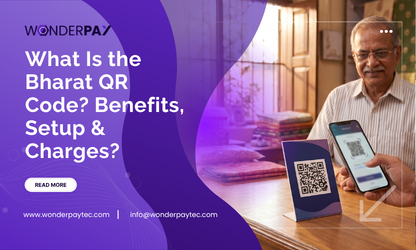
What Is the Bharat QR Code? Benefits, Setup & Charges?
August 13, 2026
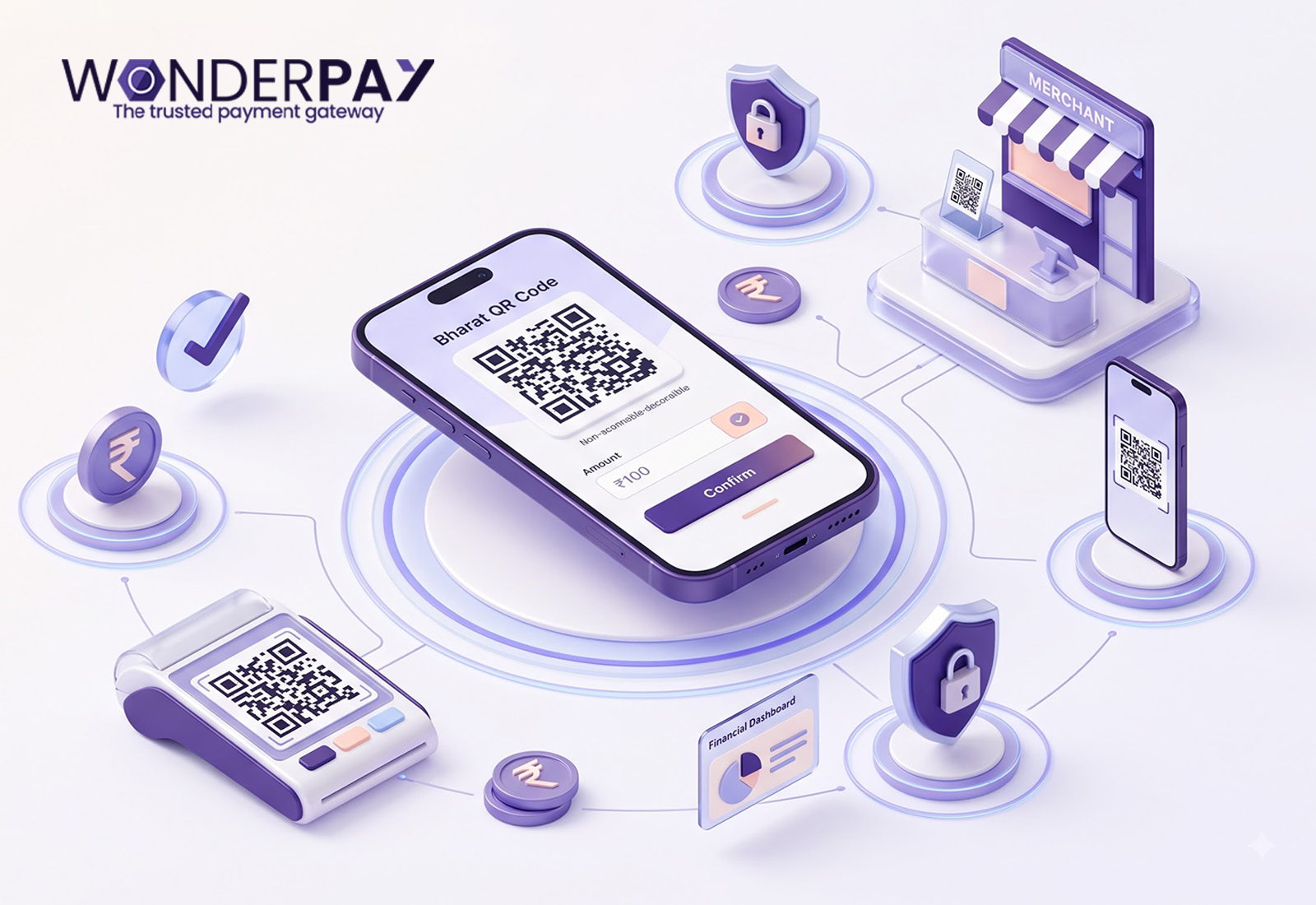
A digital payment solution is no longer a choice but a necessity for any business or merchant! Millions of users have already jumped on the bandwagon for cashless payments in developing and developed countries. On the other hand, digital payments are challenging for many organizations.
Merchants are concerned about payment security and the learning curve, such as how they will accept the payments, where the payments go first, when the settlement happens, and whether it is a chargeable service. The fear of sharing bank account details each time with unknown people is somewhat insecure and difficult, especially for merchants in developing countries.
However, the Bharat QR code solution delivers an improved experience. It allows users to make payments by scanning just a code. It does not require merchants to share any bank account details and can accept payments with multiple payment methods such as credit or debit card, Unified Payment Interface (UPI), and more. In this blog post, we will discuss how QR payments with Bharat QR work, what its advantages are, how to deploy the solution for a brand, and how much it charges.
Let’s take a deep dive.
Bharat QR is an interoperable digital payment solution developed by the National Payment Corporation of India (NPCI) alongside the major card networks such as Visa, Mastercard, and American Express.
Bharat QR payment assists business customers in making cashless transactions by scanning a QR code. It is a single unified solution that can be used using a user’s bank account mobile application or one of the UPI applications, and it does not require a physical card to make payments.
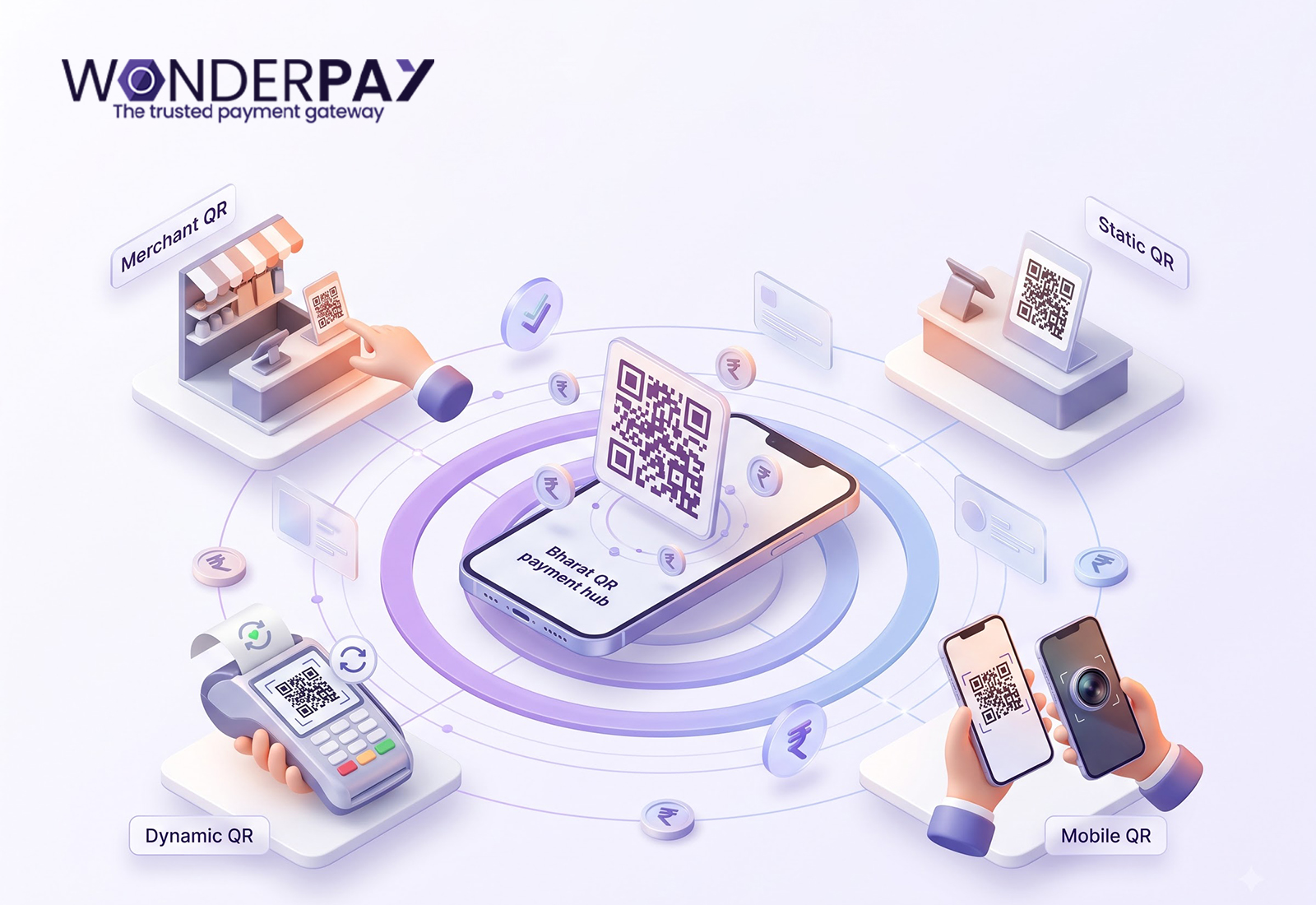
There are two main types of Bharat QR codes: static QR and Dynamic QR. The two kinds distinguish them from each other.
In this section, you can learn about both types, which will help you make the right decision between choosing one of the solutions.
The static QR codes assist organizations or vendors with online payments to accept them seamlessly. This is a fixed QR code that is deployed at the store counter. Once the customer makes a purchase from one of the merchants. The buyer scans the QR code displayed, enters the amount manually by typing it into the payment field section, and completes the transaction with a secure and encrypted PIN or using biometrics.
The name “dynamic QR code” itself indicates what it is.
The dynamic solution is a unique QR code. It allows generating a different code each and every time when accepting payments. You may have experienced this in a supermarket or at a petrol pump: the person shows the code, which automatically embeds the vendor’s details along with the exact bill amount to be paid.
In the end, the person asks you to scan the code and verify and enter the PIN, and the transaction is completed successfully.
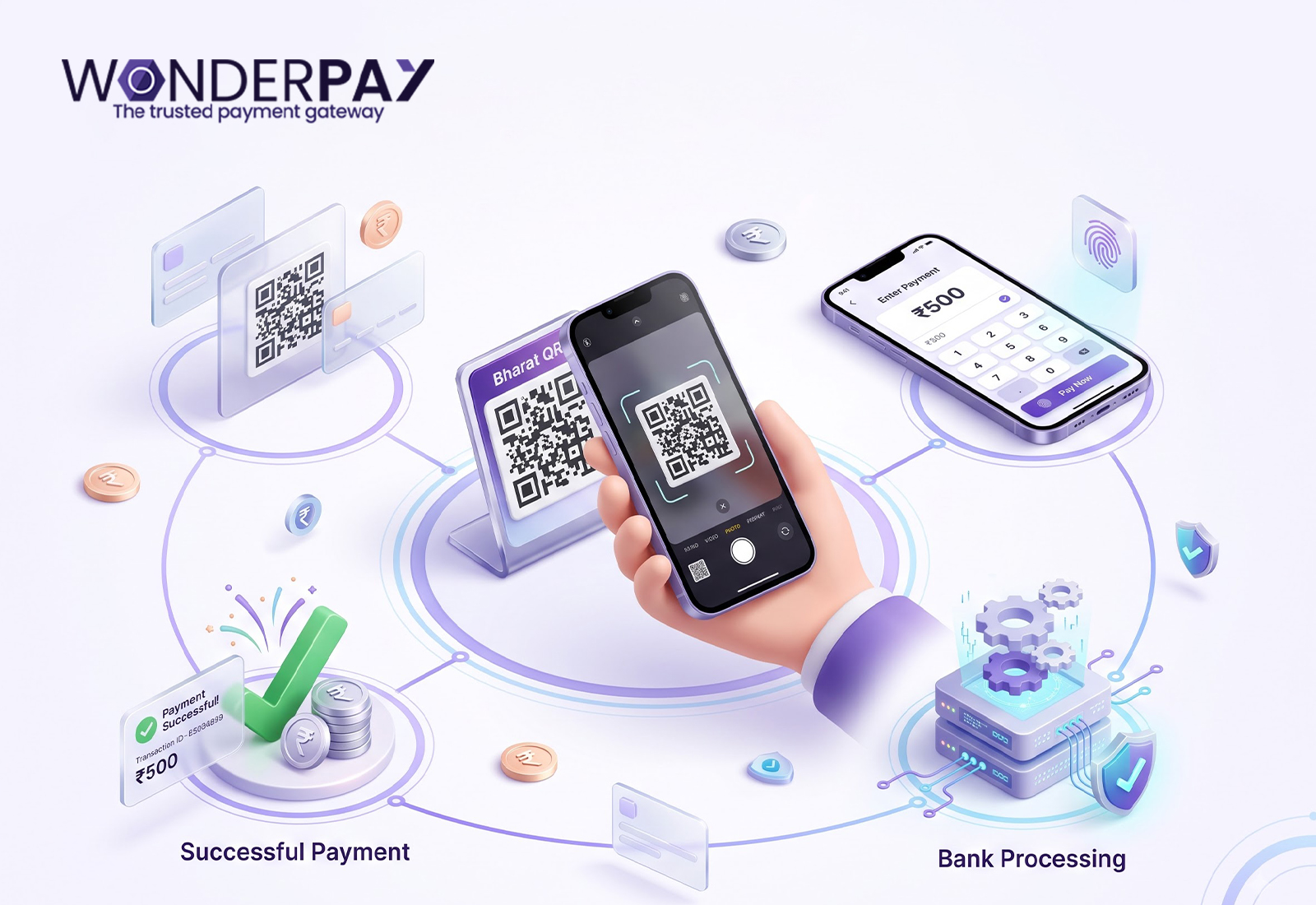
Bharat QR working is completed in just 5 simple steps, which start with the merchant setup, customer payments, and confirming both parties. This section will help you understand the complete process step by step with each step’s briefing.
A Payment Service Provider (PSP) generates a Bharat QR code for merchants. Once generated, the merchants can display the QR code at their counter or any place where users can scan easily and often use the digital QR code also within their phone.
Now the customer scans the QR code. It can be scanned using a bank’s mobile application, a card app, or a card linked application like UPI. The action to scan the code captures the entire payment details of the merchant.
The customer can check the details of the merchant, such as the bank name, to confirm the right person.
The customer verifies and authorises the transaction using one of the applications (platform) they are using. It could be the UPI application they are familiar with, or the card app. It asks the mPIN created by the user to unlock the app and to authorize the transaction. There may be other authorization ways to make payment, such as entering a One Time Password (OTP), mPIN, or ATM PIN.
The process happens for payment transfer once it is authorized. The funds are transferred from the customer’s bank account to the merchant’s account.
Payment transfer is a secure and more encrypted way to send payments, while authorization, conducting checks for sufficient or insufficient payments, and checking the payments with a secure PIN are done in just a few seconds in the backend.
The respective applications send the confirmation to both the customer and the merchant. If the transaction is successful, the confirmation is sent via SMS, saying: xx amount is deducted from the xx bank on xx date and time using the xx method.
Both parties can receive one of the notifications for a failed transaction. It says the transaction made by the xx platform on the xx date and time failed due to the following reason. The reason could be entering the wrong PIN, insufficient balance, etc.
This is the process that one must know to get a clear understanding of “how Bharat QR works” for a merchant as well as a business. So, going through the entire working process would have helped in getting the clear picture one needs.
Bharat QR code vs UPI distinguish each other in their purpose: the solution between customers and merchants and vice versa.
Both payment methods are prominent options in India but serve different use cases.
UPI QR Code: It is a tightly integrated system which has payments, or say, from bank to bank, on the UPI network. It is used for both the Peer to Peer (P2P), and merchant means Peer to Merchant (P2M) payments.
On the other hand, the Bharat code is one of the joint initiatives taken by the National Payment Corporation of India (NPCI) as well as the card networks such as Visa, MasterCard, and Amex.
The Bharat payment solution using QR code allows merchants or businesses to accept all payments. The solution helps in getting payments such as Peer to Merchant using credit card, debit card, UPI, Prepaid cards. This makes online payments so simple for a brand without any barrier or seeking a solution like Point of Sale (POS).
Here is a clear structure that will help in understanding the complete difference. This will make things easy for your brand and give you a complete picture of the same. Check this breakdown, explained in a few steps, with all the details one must know for a clear picture of the same.
| Feature | UPI QR | Bharat QR |
|---|---|---|
| Primary Use Case | Person-to-Person (P2P) and Person to Merchant (P2M) | Strictly Person to Merchant (P2M) |
| Supported Payment Methods | UPI accounts and wallets | Credit cards, Debit cards, Prepaid cards, & UPI |
| Network Backing | Built on the UPI platform managed by NPCI | Interoperable network created by NPCI, Visa, Mastercard, Amex |
| Transaction Limits | Usually capped per UPI transaction/day (varies by bank) | Subject to higher credit or debit card limits |
| Popular Apps | Google Pay, PhonePe, Paytm, BHIM | Mobile banking apps of participating card issuing banks |
This is how the QR with Bharat and the Unified Payment Interface (UPI) or say that the Bharat QR code vs UPI make each of them different. This will help a lot in making an informed decision and deciding on one of the solutions if you are seeking to use it.
Related reads: UPI Payment Charges & Fees in India
Now, you know “how Bharat QR works” when it comes to the set up for the same. This can be done in the following steps. If one is seeking to know and deploy the solution for their brand. This will help them make the right decision while having a clear understanding of the same.
The Bharat code (QR) can be generated by one of the payment aggregator solutions, such as one of the UPI applications or the bank service provider. It could be any bank such as the State Bank of India (SBI), HDFC Bank, or ICICI Bank. They provide the standardized, bank issued QR code one needs.
Steps to get started with the solution for online payments using the QR code of the Bharat solution.
1. Choose one of the providers that will help with the QR generation while having the standardized QR code.
2. Complete the mandatory process for the payments with full Know Your Customer (KYC). This will require one to have a mobile number submitting all the business details. It will include the PAN card, Aadhaar Card, and the bank account details where one wants the payments to be settled.
3. Now generate the QR code by navigating to the Bharat QR code option or to the profile button. The system generates the code instantly without any effort.
4. Display the code by printing it and pasting it where customers can see and make the payments easily. This should be done without you having to ask them each time to make the payment using one of the options.
We know how Bharat QR works and the clear difference between the Bharat QR code vs UPI as well.
What are the advantages of the solution for everyone using this solution? Here is the comprehensive list of the benefits one can leverage with this solution.
1. Customers can pay the merchant or any business with multiple payment options such as UPI, credit, and debit cards like Visa, MasterCard, RuPay, etc.
2. The QR code enhances security by not sharing any sensitive details with a third party.
3. No charges to make the payments at all.
4. It is one of the most convenient solutions for any customer as there is no learning curve and it is easy to use.
1. QR code is one of the cost-effective solutions as there is no need for a Point of Sale (POS) terminal.
2. The payments are settled directly in the merchant account.
3. The QR payment solution will streamline the operations.
This shows that the “Bharat QR working” is so simple and effective after other solutions a brand may seek.
Digital payments are convenient to both customers, and businesses including when they are done between Peer to Peer also. But there are still some concerns when it comes to merchant or business payment cash flow.
However, the Bharat QR changes the entire game with its unique solution. Thanks to the improved technology by the NPCI and the various card networks. This combination of the network and the NPCI makes it possible to let merchants and businesses accept online payments seamlessly. It does not matter if the customer uses a credit or debit card, or UPI, you just accept the payments with an improved cash flow.
Looking for a reliable payment service provider? Consider Wonderpay for your online payments in India. Connect with us right now and get the payment solution your business needs with full compliance.
Want to be a part of the Wonderpay community? follow us on:
Youtube: https://www.youtube.com/@wonderpaytec
Instagram: https://www.instagram.com/wonderpaytec
LinkedIn: https://in.linkedin.com/company/wonderpay-technologies-pvt-ltd
Facebook: https://www.facebook.com/wonderpaytec
Twitter: https://x.com/wonderpaytec
QR payment is a unified, interoperable digital payment solution. It is developed by the National Payment Corporation of India (NPCI). It also includes the major card networks, which allow customers to make payments online. Its seamless, cashless payments with just a QR code are easy using just a smartphone.
It can be generated with the help of a payment aggregator in India, as well as one of the banks. Once the code is generated, you can print and show it over the counter, or anywhere it is visible.
Yes, both solutions of Bharat QR code vs UPI differ. If one is using UPI, they can use it for P2P transactions and Merchant to Peer transactions also.
On the other hand, the Bharat QR code helps merchants and businesses get a solution to accept payments via cards and UPI also without requiring a Point of Sale (POS) terminal.

“A fintech content specialist with expertise in financial technology, digital banking, and emerging market trends, Kanisha Mathur is skilled in crafting SEO-friendly, research-driven content that transforms complex financial concepts into engaging and accessible insights. Combining analytical precision with compelling storytelling, the writing delivers value to both industry professionals and modern digital audiences.”