What is a Telegraphic Transfer & How Do They Work?
August 17, 2026
According to data from the Reserve Bank of India, in FY 2023-24, annual outward remittances for LRS (Liberalised Remittance Scheme) soared to $29.5 billion. Every day around the world, travel, study abroad, and foreign investment are powered by modern cross-border transactions. This travel guide will help you simply understand how electronic settlement networks around the world work.
Knowing how a telegraphic transfer is still important for safely transferring money to overseas bank accounts. In fact, unpacking the real telegraphic transfer meaning informs how central clearing institutions validate world payments. Executing an online telegraphic transfer triggers quick, secure automated processing around the clock through contemporary digital applications. However, you are processing the international telegraphic transfer with full compliance against a global benchmark. Choosing a traditional bank telegraphic transfer is the best alternative when proceeding with high-value financial transactions due to its high safety guarantee. (Source)
Global cross-border payments require more reliable mechanisms for international capital movement between global institutions. The mechanism surrounding a telegraphic transfer is still vital for travellers to facilitate overseas transactions seamlessly. Electronic settlement channels cover foreign travel expenditures, overseas education fees, and global commercial trade. Fast forward a few decades — now, secure digital clearing systems validate every transaction between international banking networks.
1. Cross Definition: The telegraphic transfer meaning is defined as an electronic means to send money internationally.
2. Historical Evolution: Historically, financial institutions broadcast high-priority payment instructions over oceanic telegraph cables.
3. Modern Integration: Physical wires eventually secured banking networks worldwide.
4. Current Terminology: These cash settlements have subsequently been labelled as telegraphic transfer in the global banking space today.
5. Digital Execution: Starting online telegraphic transfer provides travellers with quick access through web apps.
1. Historic Origin: The term comes from the former telegraphic communication system for business messages.
2. Message Authentication: Banks used coded telegraphic cables before payment to check account details.
3. Electronic Protocols: Most modern financial systems use secure SWIFT messaging channels to operate an international telegraphic transfer.
4. Retained Name: Despite complete electronic automation of all operations, banking organisations continue to use this traditional phrase.
5. Secure Settlement: A bank telegraphic transfer provides high security for larger foreign remittances.
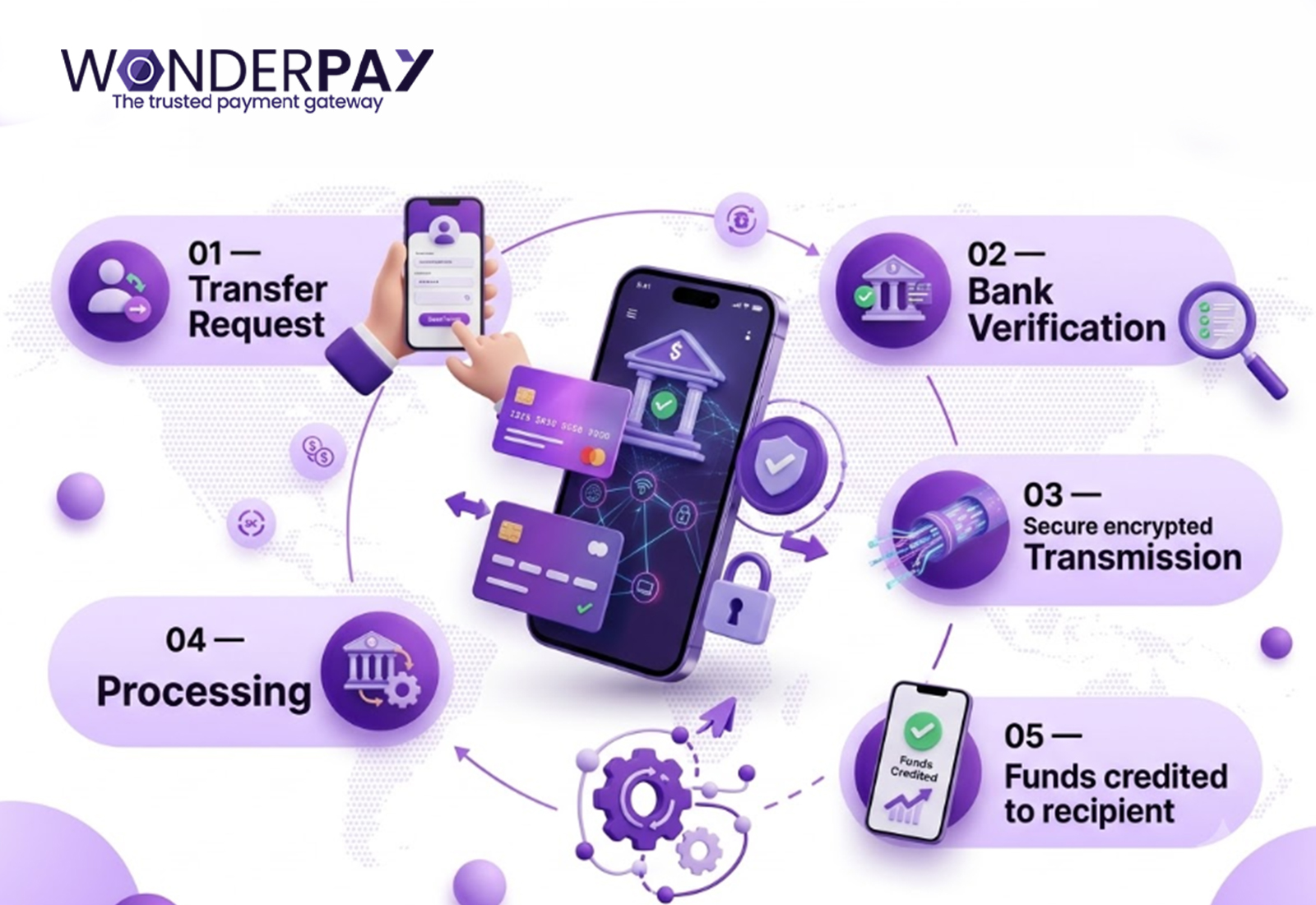
Global cross-border payments require more reliable mechanisms for international capital movement between global institutions. The mechanism surrounding a telegraphic transfer is still vital for travellers to facilitate overseas transactions seamlessly. Electronic settlement channels cover foreign travel expenditures, overseas education fees, and global commercial trade. Fast forward a few decades, and today, secure digital clearing systems validate every transaction between international banking networks.
1. Initiating Request: Travellers use secure digital mobile applications to start an online telegraphic transfer.
2. Providing Details: Accurately entering recipient credentials clarifies the practical telegraphic transfer meaning during setup.
3. Bank Verification: The verification officers look at the identity of the recipient banks before disbursing loans to outside banks.
4. Payment Processing: Instantaneous payment of customers’ accounts against approved foreign currency transactions.
5. SWIFT Communication: Encrypted SWIFT messages are used to ensure that all international telegraphic transfer are routed through network nodes all over the world.
6. Receiving Funds: The local receiving branches make the deposit to the foreign beneficiary’s accounts promptly.
1. Beneficiary Name: Senders need to write the account holder’s full official name.
2. Bank Name: Identification of the financial entity to which the funds are to be deposited.
3. Account Number: Using exact account digits ensures the transaction process does not get delayed or reversed.
4. SWIFT/BIC Code: To ensure that a bank telegraphic transfer gets to the right overseas branches.
5. Currency: This reduces any unforeseen foreign exchange conversion fees.
6. Purpose of Payment: Regulators need clear purposes of payment for the approval of cross-border remitting procedures.
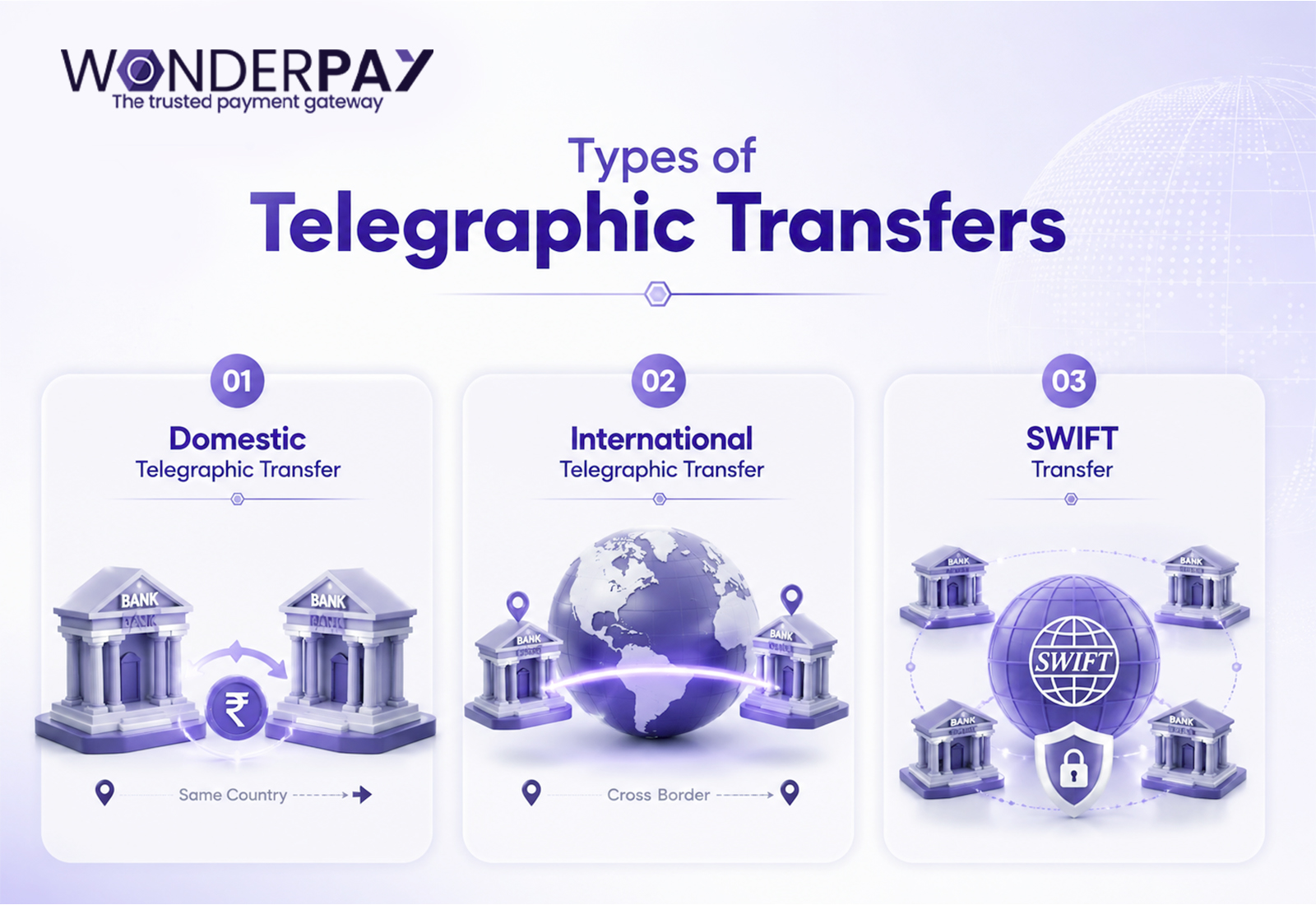
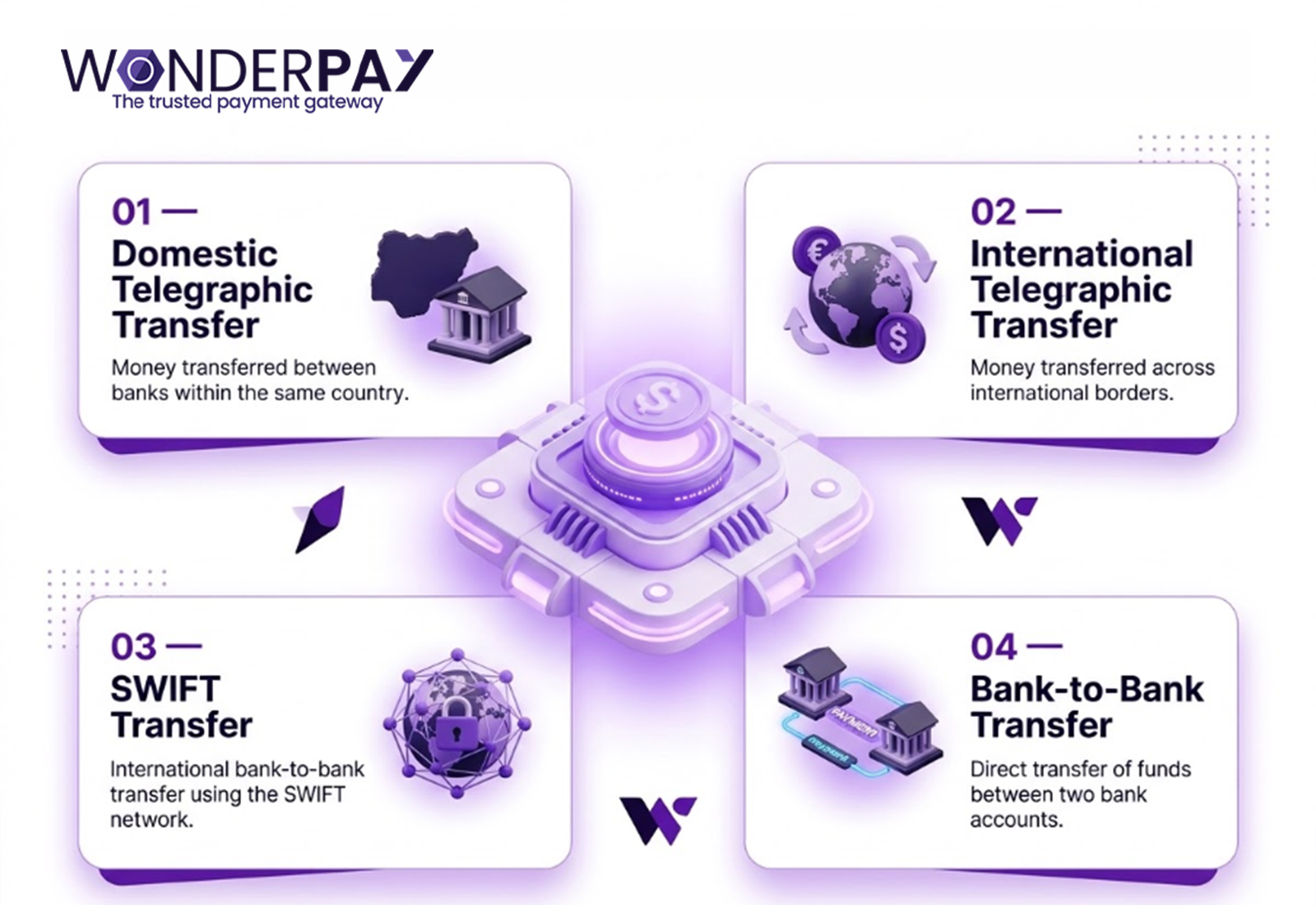
Payment channels are classified according to geographic destination and clearing procedures by financial institutions. Knowing exactly how a telegraphic transfer works can help the account holder select the right payment method. Modern networks work efficiently locally or internationally when dealing with payment transactions.
Domestic transfers are conducted in the clearing system of one country. Terms such as RTGS or NEFT are commonly used by financial institutions internally for settlement and clearing, while consumers are more familiar with the terms used in the modern era. The official telegraphic transfer meaning offers insight into how transactions involving large amounts of money are settled between regional branches via local interbank networks. Customers can easily make an online telegraphic transfer using digital banking platforms and thus be able to conduct instant local transactions.
International telegraphic transfer is the process of transferring money from one country to another, using the international banking systems and different currencies. Typical applications encompass payment for foreign tuition fees, international business imports and exports, foreign real estate investments and family remittances. A formal bank telegraphic transfer guarantees proper compliance with foreign exchange legislation and foreign anti-money laundering policies.
The foreign exchange transaction was revolutionised by digital banking, which eliminated the need for physical branch locations. The online telegraphic transfer enables people to send foreign money safely from their home. International remittances are processed efficiently by modern portals and are also compliant with financial regulations.
1. Internet Banking: Users can use safe online web portals to make a cross-border wire transfer directly.
2. Mobile Banking: Mobile apps allow for hassle-free remitting from mobile devices globally.
3. Digital Verification: In modern financial transactions, digital verification is a higher level of security that validates the transaction, continuing the familiar telegraphic transfer meaning into the digital era.
4. Faster Processing: Automated digital routing is quicker than processing at the branches for international clearing.
1. Convenience: Senders make a telegraphic transfer without having to wait in a bank line or complete a paper application.
2. 24/ Initiation: Foreign remittance instructions can be taken through digital platforms any time of the day, even during weekends and holidays.
3. Secure Authentication: All international telegraphic transfer are protected from unauthorised digital access by multi-factor protocols.
4. Real-time Status Updates: Users are updated during the payment process through global networks.
5. Faster Processing: Opting for digital bank telegraphic transfer eliminates the need for manual paperwork, which speeds up the document submission process.
By using a trusted and well-established financial institution for your cross-border remittance needs, you can be assured of the highest level of trust and regulatory protection. A bank telegraphic transfer is a payment with funds that go through the heavily monitored interbank channels, sending the money to the other party without risk of loss or fraud. It’s important to understand that the larger context of the telegraphic transfer message highlights the importance of institutional oversight as the best practice standard for fund movements globally.
To safeguard each and every telegraphic transfer, institutions use strict encryption protocols and multi-factor authorization processes. Rigorous security protocols ward off fraud, and money reaches intended recipient bank accounts without incident.
An international telegraphic transfer utilises existing SWIFT messaging services that connect thousands of financial institutions across the world. This network connection ensures the correct routing and clearing without any transparency issues between participating foreign banks.
An online telegraphic transfer is a great way to get your cross-border transactions done much faster than with the old paper-based drafts and manually written cheques. With direct electronic routing, the credits to accounts are processed efficiently across time zones.
The traditional bank telegraphic transfer is still the most common way of transferring large amounts of capital abroad. Verified accounts can have higher transaction amounts and are perfect for foreign investments, university tuition fees, or international property purchases.
Knowing the processing time and related fees are essential for financial cross-border transactions. Charges depend on the institutional policies, routing paths and currency pair. A telegraphic transfer is subject to charges from the financial institutions involved in the transaction. To avoid any unexpected deductions, the account holder should look into the fee structure before starting payments.
1. Bank Service Charges: Fees that the originating bank charges to process transfer requests.
2. Correspondent Bank Fees: Service charges levied by an intermediary institution when a telegraphic transfer is sent between different institutions.
3. Currency conversion charges: These are fees charged for transferring money from the home country to another country’s currency.
4. Receiving Bank Fees: Settlement collection fees charged by the receiving bank when receiving funds.
1. 1–5 Business Days: The time it takes for a bank telegraphic transfer to arrive in accounts abroad to make a normal payment.
2. Digital Acceleration: An online telegraphic transfer sent at the beginning of the operating day enhances routing procedures.
3. Time Zone Variations: The settlement time in destination countries can impact time to settlement, making operational telegraphic transfer definition meaningful on the fly.
4. Regulatory Factors: Processing times may be longer than expected due to regulatory factors such as compliance audits, anti-money laundering, and public holidays.
Related reads: Payment Gateway Charges Guide for Businesses
They both refer to electronic money transfer, but regionally and technically they are differentiated. A telegraphic transfer has roots in the historic cable system, while today’s wire transfers are based on entirely digital systems such as SWIFT.
| Feature | Telegraphic Transfer (TT) | Wire Transfer |
|---|---|---|
| Meaning | A historic term that describes payments made across the border by electronic funds transfer. | Modern term for funds transfer from one account to another |
| Technology Used | SWIFT is an interbank clearing network. | SWIFT, Fedwire, CHIPS, local clearing systems |
| Usage | Primarily international payments | Both domestic and international usage |
| Processing Speed | 1–5 business days | Same day (domestic) / 1-5 days (international) |
| Cost | Higher fees due to correspondent banks | Variable; lower for domestic transfers. |
| Common Use Cases | Overseas tuition, foreign property, trade imports | Payments for local bills, buying homes, paying daily bills. |
Today, both terms are used interchangeably by financial institutions, depending on geographical location and institutional terminology.
Unexpected pauses are frequent and disrupt global payment routes. Knowing about telegraphic transfer can assist travelers in handling potential clearing problems efficiently.
When an account number does not match, or the recipient name is incorrect, the transaction is flagged right away. When the inputs are accurate, there is no possibility of a routing error during processing.
Financial institutions examine every telegraphic transfer to foreign countries for safety. Overseas transfers may be temporarily suspended in connection with regulatory compliance reviews.
Electronic clearing systems around the world come to a standstill with local bank closures. Telegraphic transfers submitted outside of business hours are delayed.
Extra processing time is required when changing currency to foreign currencies. The traditional bank telegraphic transfer requires full clearing settlement.
When you get ready to make cross-border payments, you need to pay attention to the details. By following the proper security protocols, all telegraphic transfers are made to the recipient with no unnecessary risk.
1. Double Check Details: When sending a telegraphic transfer online, confirm that the beneficiary names and account numbers are correct.
2. Verify Identifiers: Double-check the SWIFT or BIC against other financial institutions to avoid routing errors.
3. Confirm Rates & Keep Receipts: Check live foreign exchange rates and keep receipts to ensure that the meaning and breakdown of all applied fees are correct for the telegraphic transfer.
4. Prevent Fraud: Use encrypted portals for an international telegraphic transfer and avoid sending funds to unverified recipients.
5. Use Trusted Institutions: A trustworthy bank telegraphic transfer service offers increased regulatory safeguards and secure processing.
Structured settlement networks are used to finance foreign operations smoothly for commercial enterprises. A telegraphic transfer offers enterprise-level protection for corporate transactions when they’re transborder.
1. Supplier Payments: Companies clear major supplier invoices on time, reinforcing the operational significance of telegraphic transfer meaning in global trade logistics.
2. Cross-Border Trade: Enables easy cross-border trade settlements between manufacturing partners and buyers across the world.
3. Global Vendor Settlements: Create an online telegraphic transfer stream to simplify the process of recurring payments to global vendors.
4. Business Reliability: Settle an international telegraphic transfer with known timeframes, strengthening relationships with foreign vendors.
5. Secure Banking Infrastructure: A traditional bank telegraphic transfer ensures strict compliance with international banking standards and anti-fraud regulations.
Efficient, transparent, and secure settlement networks are required to manage cross-border financial operations. Commercial enterprises using Wonderpay can make all telegraphic transfers very quickly and entirely with operational accuracy.
1. Global Operations Support: Facilitates transactions across borders for foreign trade to facilitate businesses in order to expand its presence in the global market.
2. Secure Payment Infrastructure: Uses advanced encryption and multi-layered protocols to ensure that all international telegraphic transfer payments are secure.
3. Easy Payment Management: Digital portals that are user-friendly make it easier to schedule payments, truly embodying the operational telegraphic transfer definition in today’s financial technology.
4. Reliable Processing: Automated interbank routing eliminates execution delays, providing dependable settlement schedules worldwide.
5. Transparent Transactions: No hidden exchange mark-ups that can be associated with the traditional bank telegraphic transfer.
6. Seamless Scalability: Making the online telegraphic transfer using Wonderpay makes it easy for expanding businesses to pay vendor bills.
Comprehending a telegraphic transfer is still essential for carrying out safe, effective international payments. While upholding strict institutional banking security standards, contemporary digital channels expedite payment processing. Unmatched ease is provided by online platforms, which allow real-time status tracking for international account transfers. Choosing a reliable financial settlement partner guarantees flawless international money transfers. Wonderpay offers businesses worldwide a cross-border payment infrastructure that is extremely safe, reliable, and efficient. Through automated routing systems and transparent clearing procedures, commercial businesses effectively handle foreign payments.
A telegraphic transfer (TT) is an electronic way of transferring capital internationally across banks. Understanding the meaning of a telegraphic transfer also explains how financial institutions authenticate accounts and clear payments securely. Performing an online telegraphic transfer is a quick, electronic method of moving foreign funds over international clearing networks.
In the context of modern banking, when people refer to an international telegraphic transfer, they mean direct account-to-account funds transfers that are processed electronically between foreign institutions. Then you are recommended to choose a trusted bank telegraphic transfer, which can strictly abide by foreign exchange control regulations and also facilitate safe overseas education, direct investment, and commercial payments across borders.
Depending on the official banking sector, an ordinary bank telegraphic transfer (TT) takes 1-5 days to clear around the world. A telegraphic transfer may be initiated during the early hours of a workday online for faster processing. On occasion, total timelines for clearing international transactions can be lengthened by compliance checks, intermediary bank routing, and weekend closures.
Telegraphic transfer works on secure, encrypted interbank networks such as SWIFT. Sellers are usually requested through digital portals and provide valid beneficiary credentials. Banks check for compliance, exchange currencies (if necessary), and transmit funds electronically. Benefiting foreign bank sources subsequently credit the funds directly into designated accounts.
Although regional terminology varies, both words refer to electronic money transfers. While wire transfers pertain to digital routing techniques, an understanding of a telegraphic transmission reflects its historical cable origins. Although telegraphic transfers often refer primarily to cross-border foreign transactions, banks now use both terms interchangeably.
Log into internet banking applications to commence an online telegraphic transfer. The sender manually enters the names and digits of the beneficiary and the SWIFT code of the foreign bank. Afterward, the sending institution checks details and foreign exchange conversion rates; the payment is processed securely using international banking networks.

“A fintech content specialist with expertise in financial technology, digital banking, and emerging market trends, Kanisha Mathur is skilled in crafting SEO-friendly, research-driven content that transforms complex financial concepts into engaging and accessible insights. Combining analytical precision with compelling storytelling, the writing delivers value to both industry professionals and modern digital audiences.”