Payment Orchestration Explained: Benefits, Features & Working (2027)
July 16, 2026
“Every failed payment is not just a lost transaction but also a customer.”
Nowadays, organizations expand across multiple payment methods, currencies, and providers. It becomes increasingly complex managing digital payments.
Many businesses rely on multiple payment gateways, banks, and payment processors to improve their payment success rates. But it creates operational complexity.
Thanks to payment orchestration, which routes transactions intelligently, manages multiple providers, reduces failed transactions, and improves the business customer experience with its unified payment infrastructure.
This guide explains how payment orchestration works, why businesses adopt it, and how it improves your payment process.
Payment routing provides an alternative path when the primary route fails. It lets organizations avoid returning a customer without making a purchase. Online payments continue to evolve across the developing and developed countries. It becomes essential for decision-makers to choose the right payment solution that works reliably.
The latest report indicates the digital payment market transaction value is projected to reach $37.45 trillion in the current year.
The transaction value annual growth rate is expected to have a CAGR from the current year 2026 to 2031 of 4.31%. This further results in a total amount of $46.25 trillion by 2031.
Mobile POS payment market projects total transaction value of $28.32 trillion in 2026.
The report shows the highest cumulative transaction value of $10.86 trillion in the current year (2026) in the United States.
As of now, the transaction volume for UPI has surged 12,000-fold in the last 10 years. Unified Payment Interface (UPI) value exceeds Rs 314 lakh crore in Financial Year (FY) 2025 and 2026.
It onboarded over 700 banks as UPI captures nearly 49% of global real-time payments. This delivers high-frequency retail usage as well as inclusive digital growth.|
The expansion in both value and volume highlights UPI’s significant role in supporting high-frequency retail payments. Additionally, the International Monetary Fund (IMF) recognizes UPI as the world’s largest real-time payment system.
India’s overall digital payment transaction volume grew at a [44% CAGR]. On the other hand, the Peer to Merchant (P2M) transaction reflects a 37% CAGR.
The merchant base spans roughly 80 to 85 million. However, the adoption was largely propelled by the low-cost UPI QR code using soundboxes. It drives deep penetration across Tier 2 to Tier 4 cities.
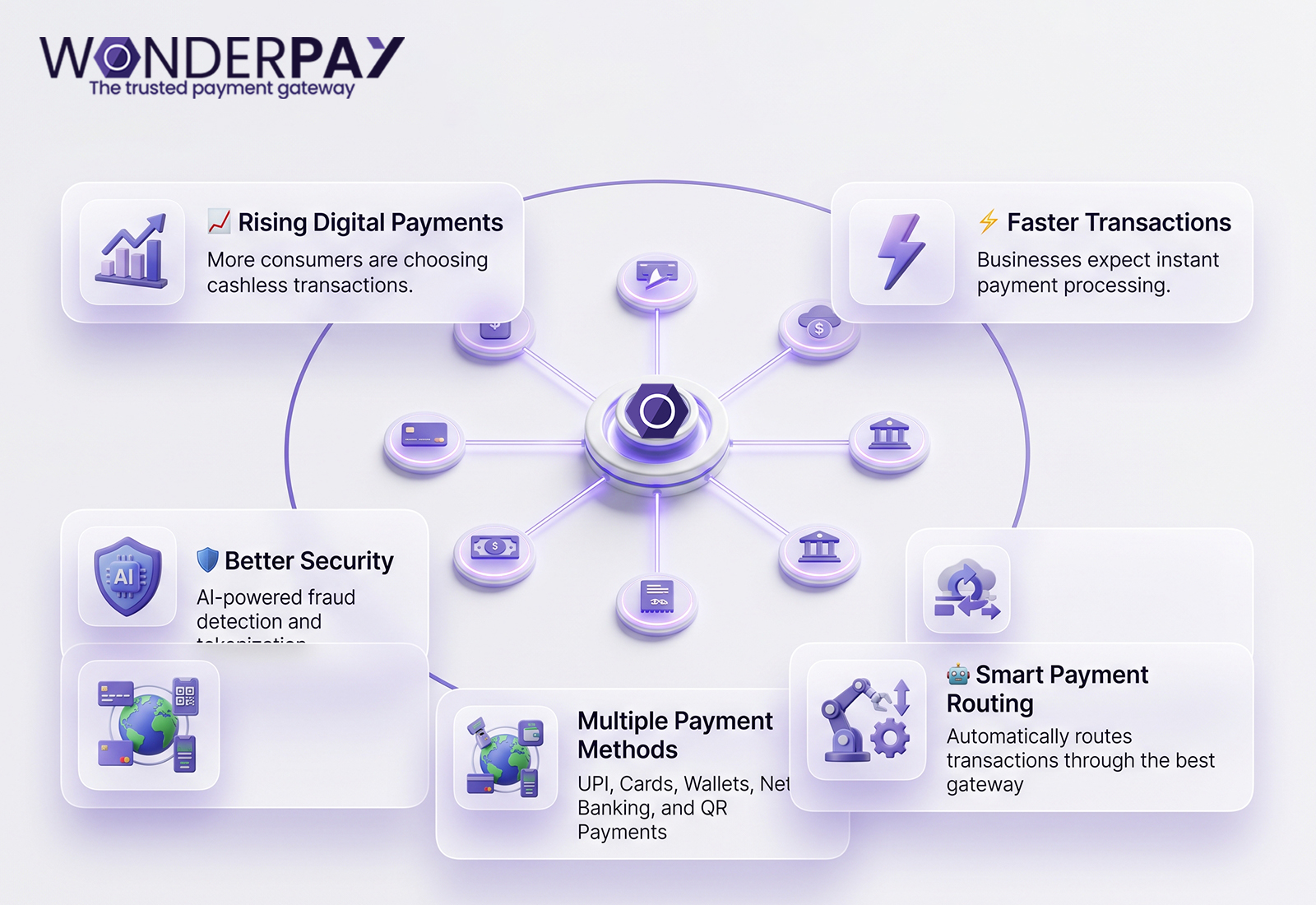
Payment orchestration architecture acts as a centralized software layer. It connects multiple payment processors through a single Application Programming Interface (API). This further optimizes payment authorization, including rates as well as slashing transaction fees.
Growing complexity in digital commerce fuels the rapid adoption of technology. Here are the key forces that fuel the adoption.
The growing transaction volume for enterprise-level e-commerce; the volume generates a large amount of payment data, which requires a resilient backend.
We noticed that over 70% of shoppers abandon carts due to complicated checkouts. Automated payment retries reduce checkout, which further lowers the friction.
More than 50% of enterprises use multi-gateway payments service providers. But orchestration unifies all the fragmented connections into one interface.
The unified channel approach allows businesses like retailers to synchronize customer payment data across the website, mobile application, as well as physical point of sale (PoS) terminal.
Its centralized system consolidates online and offline infrastructure. This further eliminates disconnected reporting systems.
The consistent checkout logic assists customers in experiencing identical payment options, including the conditions instead of the sales channel.
Cross-border: It lowers the international fees and raises foreign approval rates.
AI Routing: Artificial Intelligence, or say AI routing, instantly picks one of the cheapest and highest-converting processor paths.
Embedded finance: It offers non-fintech applications that leverage integrated payments with robust security.
The Open Banking System: It allows business decision makers for direct bank to bank online payment transfers while cutting card fees.
Payment in Real Time: The real-time payment enables instant settlement as well as automates tracking.
Multi Payment Methods: The system adds more payment stacks like wallets and Buy Now Pay Later (BNPL).
Subscription Economy: It stops the involuntary churn with the help of automation for card retries.
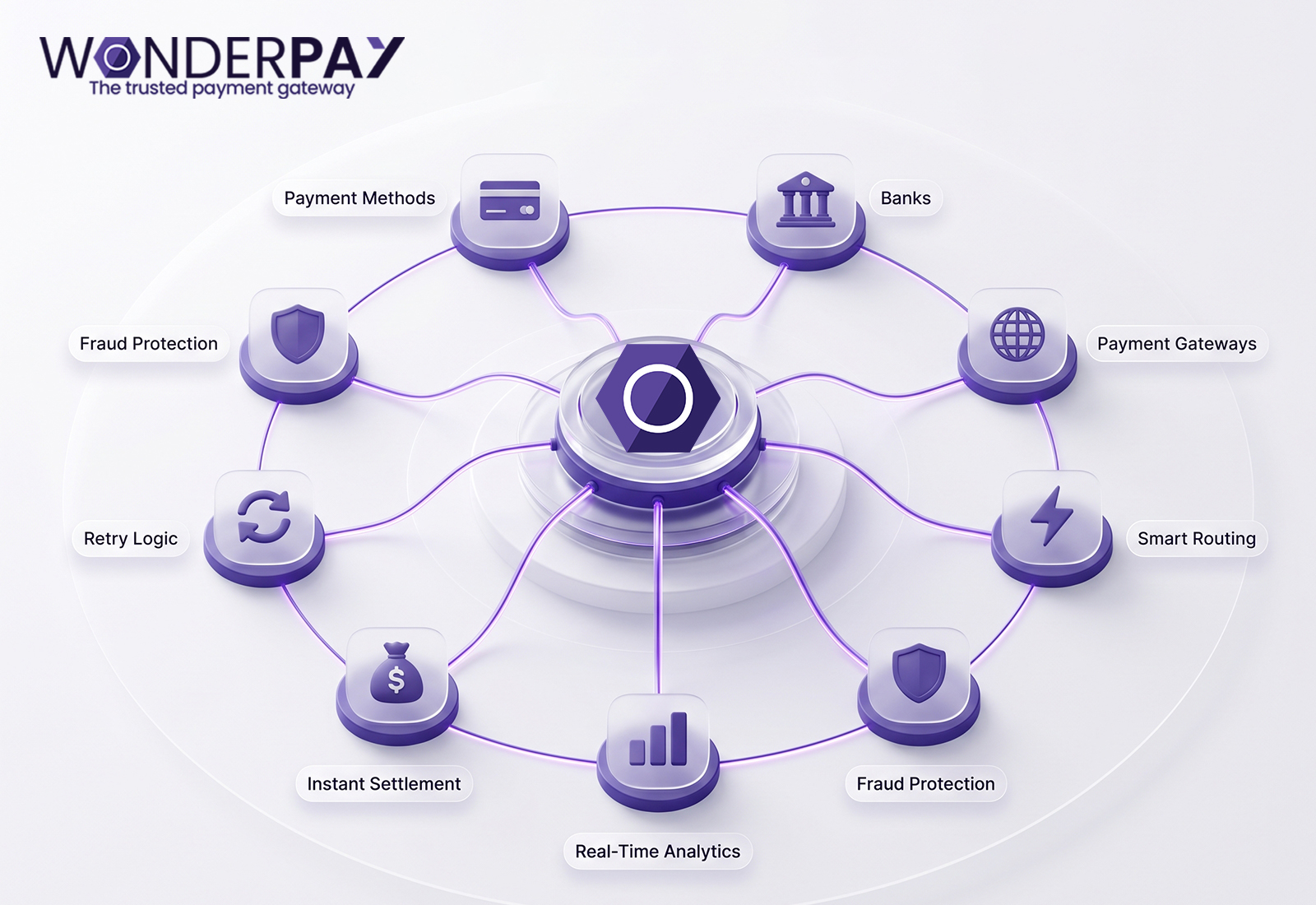
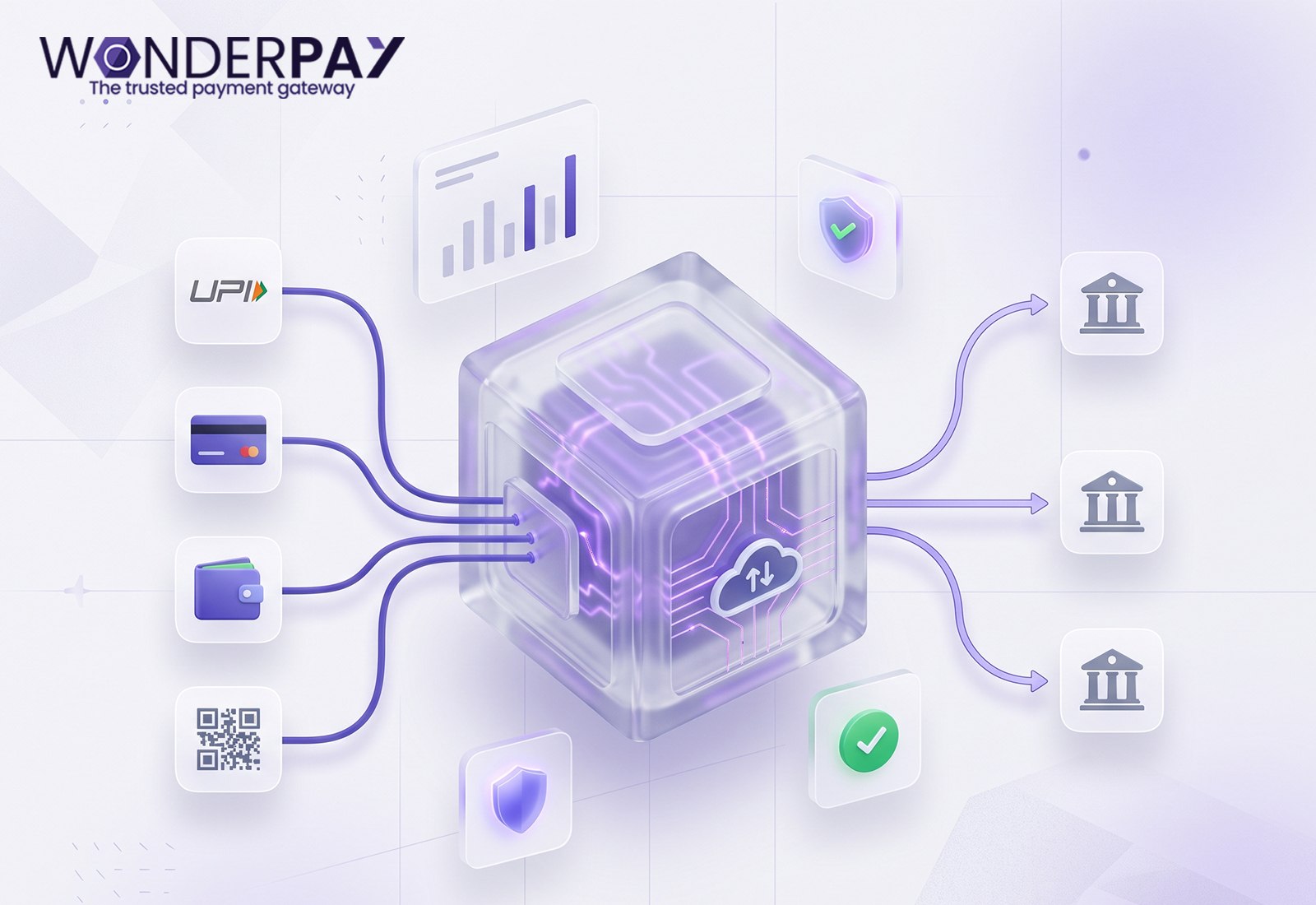
Payment orchestration connects a brand’s checkout to a single platform. It eliminates the need to build a separate pipeline for Gateway A, payment gateway B, including the fraud tools and acquirers. You integrate it only once, while the system handles everything from routing, retries, reconciliation, and reporting.
How Do Payment Optimizations Help:
Saves Your Development Time: A company writes and maintains only one API rather than five.
Reduces Lost Sales: In case payment gateway A fails, the system retries via gateway B instantly.
Cost Effective Solution: The smart routing automatically routes the payment to the provider with a lower fee.
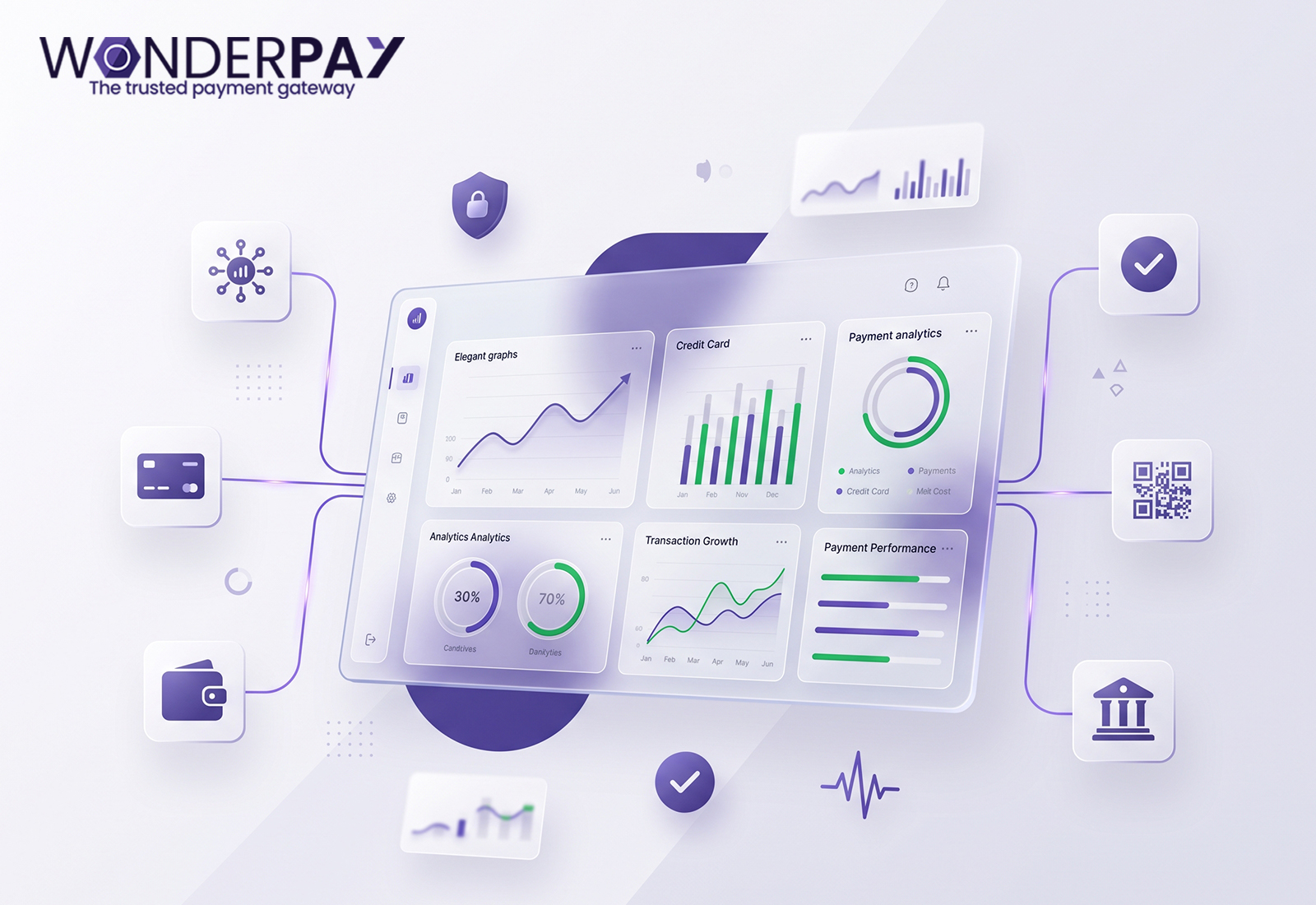
Centralized Dashboard: It unifies everything in one place with easy accessibility for all the transactions, fraud, and fee data.
The system transforms a tangled web of payment tech into a single, smart control panel.
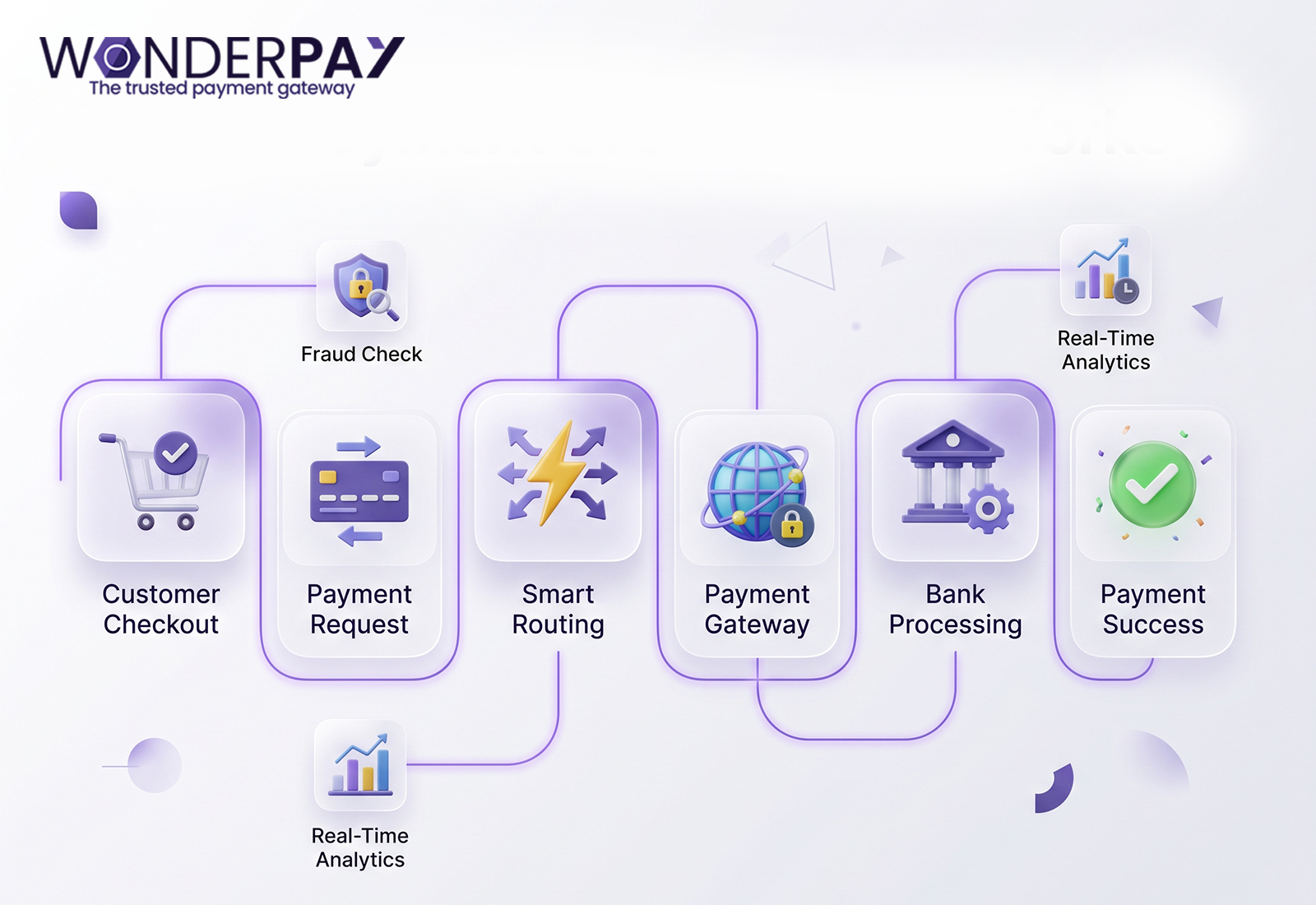
Payment gateway orchestration works in five simple steps. It starts with the payment initiation by the customer to the settlement and reporting. Here is the complete breakdown with a step-by-step brief process:
The customer selects a product or a service from a brand and proceeds to the checkout page.
The backend system sends the transaction data to the payment orchestration platform. The smart routing engine carefully evaluates the following factors:
Once all the factors are checked, it forwards the data to the optimal payment gateway instantly.
In the third step, the gateway encrypts the transaction details with its tokenized system. At the same time, it sends the payment data to the processor and acquiring bank.
The authorization process lets the acquiring bank communicate with the issuing bank to verify the funds. Once the transaction is approved or declined, the response passes back down the chain.
Once the process completes the payment authorization, the funds are moved from the issuing bank via the processor and ultimately settle the funds into the merchant’s account securely.
Payment Orchestration Example with Architecture Diagram
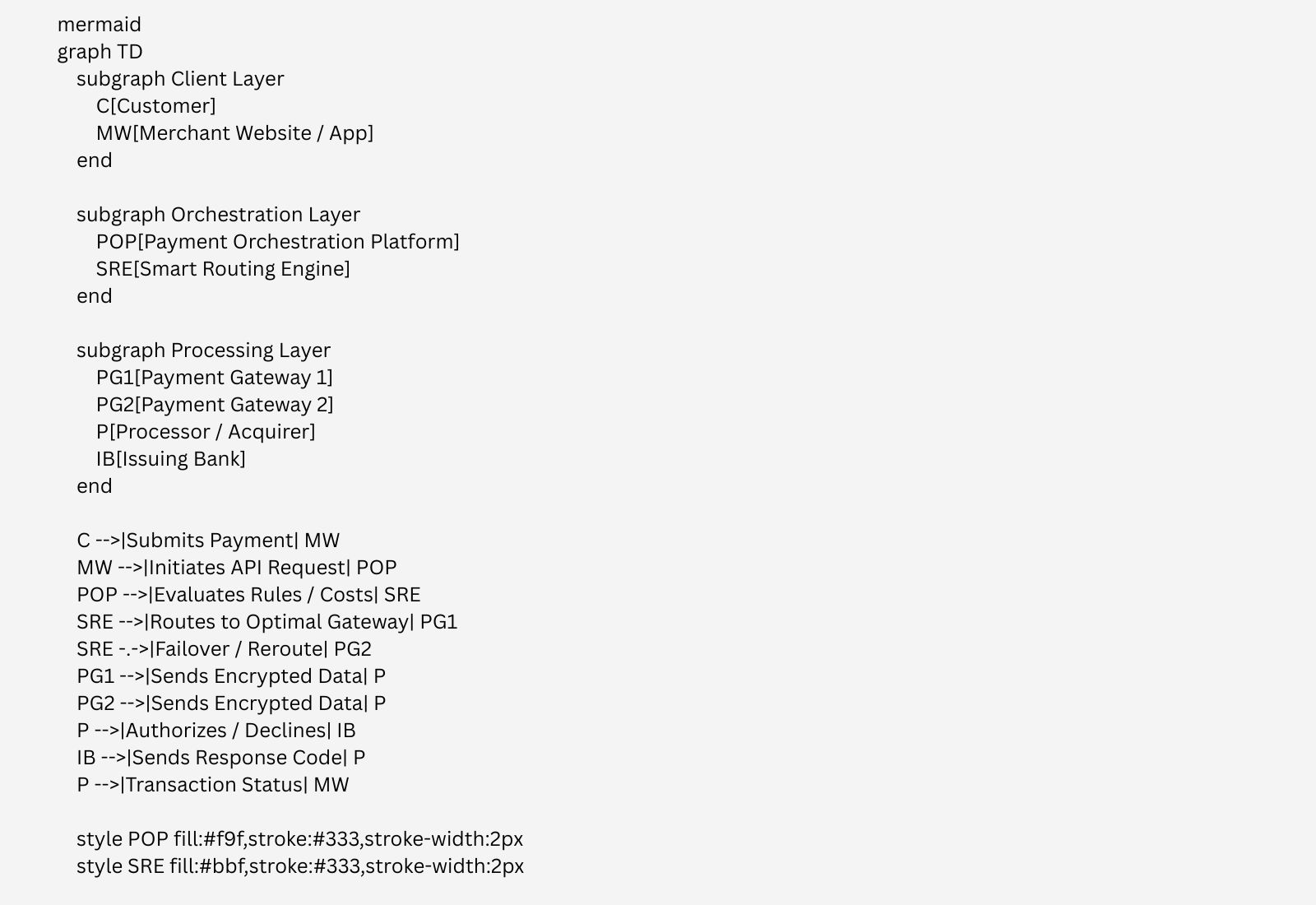
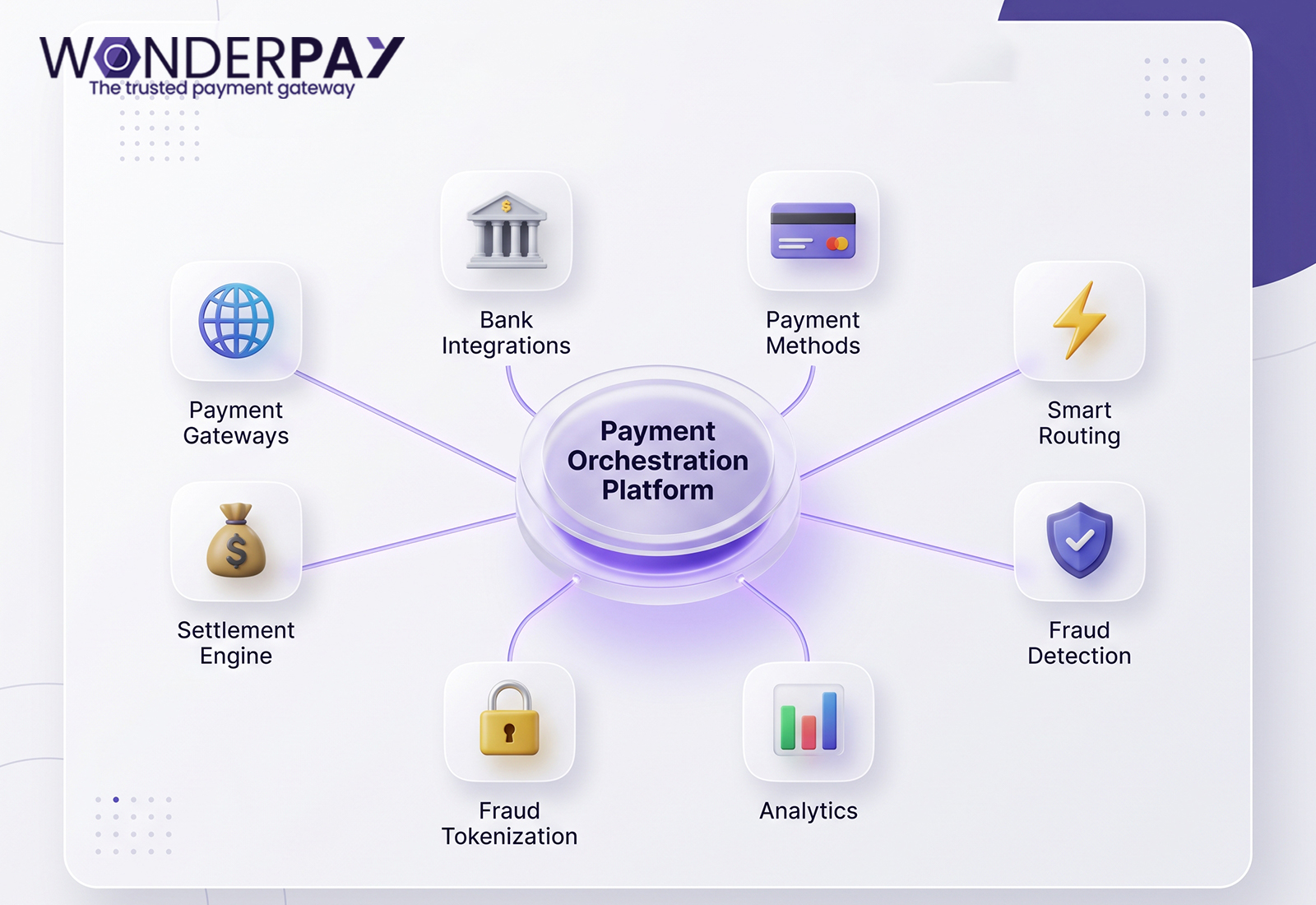
A payment orchestration platform in India (POP) is a centralized software layer. It manages complex transaction flows, routes the payments across multi-gateway payments including payment processors, with the help of a single API.
The orchestration system automates payment operations, optimizes approval rates, and centralizes the entire data.
Payment Gateways: This is the front-end technology that captures customers’ payment details and helps initiate transactions.
Payment Processors: It plays a significant role as a financial institution or a service. A processor handles the actual movement of funds; it communicates with the acquiring bank and issuing bank directly.
Smart Routing Engine: This is where smart routing becomes important with an intelligent algorithm. It automatically directs transactions to one of the best-performing gateways or a processor. It works by checking real-time factors such as cost, success rates, location, and the currency.
Transaction routing handles failover management with the help of failover routing to backup processors.
Tokenization: The Payment Card Industry Data Security Standards (PCI DSS) mandates tokenizing customers’ sensitive payment details into random numbers, which is one of the best practices for fraud prevention.
Vault: This secure database allows organizations to store actual payment details. It further helps deliver online click checkout and recurring billing.
Fraud Prevention: The modern digital payment ecosystem offers built-in or integrated tools that use Artificial Intelligence AI and Machine Learning (ML). It scans transactions for anomalies, stopping malicious activities before they take place.
Webhooks: It is an automated, real-time HTTP callback. The webhooks notify the system of key payment events. This can include successful charge, settlement, or failed payment, which further lets an organization’s system update order statuses.
Reconciliation: Payment reconciliation is an automated process of matching your internal sales records with the actual payouts, including the fees deposited by the payment processor.
Analytics: The analytics tool drives helpful insights into the payment ecosystem, such as customer behavior, transaction trends, and more.
Reporting: The centralized dashboard compiles the data across all integrated payment methods, including the gateway, with a single view, while it also simplifies the accounting.
Settlement management: With the term, you understand what it does. So, it oversees the transfer of funds from the acquiring bank to the merchant’s bank account.
The POP sits above the multiple gateways, including the acquirers. Here it acts as a unified payment infrastructure layer. It evaluates the performance in real time to route the transactions using the most effective channels.
Here is the comprehensive table for a better understanding.
| Feature | Payment Gateway | Payment Orchestration |
|---|---|---|
| Integrations | This will require you to integrate every new provider, bank, or acquirer. | With just a single API integration within your platform allows access multiple payment gateways and processors also. |
| Routing | With this, every transaction follows the exact path that is predetermined. | Smart routing sends the transaction to the optimal provider dynamically. It comes based on geography, card type, or cost. |
| Failover | In case a gateway goes down, it will result in transaction loss. | The automated retries play a significant role in sending failed payments to the alternative processor immediately without the customer noticing. |
| Analytics | The siloed as well as the fragmented reporting is restricted to one of the specific gateways. | The unified dashboard allows you to track approvals and revenue in one place while aggregating cross-provider data. |
| Payment Methods | This is restricted to one of the methods as it is natively supported by the single gateway provider. | It supports all the local and alternative methods for payments using multiple partners. |
| Scalability | At the time of scaling, it requires one to build, manage, and maintain the new integrations. | Highly scalable; allows adding new regions and payment preferences with just simple configuration. |
| Cost Optimization | It comes with limited ability to control processing or cross-border fees. | Payment orchestration software or system assists with routing by lowering processing fees, local acquiring, including cross-border cost efficiency. |
The name payment aggregator suggests that it aggregates. It means an all-in-one provider with a ready-made merchant account to accept payments instantly.
On the other hand, a payment orchestration app or software platform is a vendor-neutral software layer. It sits above multiple aggregators and acquirers. Its role is not to process the payments itself but to route them to the best-performing provider.
| Features | Payment Aggregator | Payment Orchestration platform |
|---|---|---|
| Primary function | PA provides you with bundled merchant accounts and simplifies payment collection. | Intelligently routes, manages, and optimizes transactions across various processors. |
| Setup and integration | Fast, with a single integration, it allows access to a number of payment options. | POP integration is complex. It connects multiple existing merchant accounts and gateways using an API. |
| Merchant account | It uses a submerchant account along with a shared infrastructure that takes place under an aggregator. | With this, merchants retain their own independent merchant IDs (MIDs) and banking relations. |
| Smart Routing | None. PA’s all transactions follow the same path. | It offers a dynamic option. It routes your transactions based on cost, currency, and historical approval rates. |
| Failover or redundancy | Low. In case PA’s gateway goes down, it results in a failed transaction. | High. It helps you automatically route the transaction to backup processors in milliseconds. |
| Data Reconciliation | Siloed. The entire data is managed over the aggregator’s proprietary dashboard. | Consolidated. This normalizes the data and settlement records from all the providers into a single dashboard. |
| Best Suited for | PA is best for startups, local businesses, or lower-volume processors who seek an easy start. | Large enterprises, including global brands or businesses processing high volume monthly. |
A payment processor is a technical engine. It moves money from the customer’s bank to the merchant account, usually working with a single gateway.
On the other side, payment orchestration software sits above the processors, delivers one application programming interface that intelligently routes transactions, prevents downtime, and lowers fees across multiple acquirers.
| Feature | Payment Processor | POP |
|---|---|---|
| Core function | Authorizes Captures Settles funds from customer to merchant | It manages the routing Optimizes It reduces redundancies of transactions across multiple processors. |
| Architecture | This connects the checkout to a single processor or a limited number of pre-approved gateways. | It only sits at the unified layer between your store, app, and multiple processors, including acquirers and gateways. |
| Smart routing | It sets down the same path each time, even if it performs poorly in certain regions. | It routes the transactions automatically to the best provider. It does so based on the location, cost, or approval history. |
| Failover or downtime | Payment acceptance stops immediately if the gateway or processor has an outage. | It automatically retries the failed transaction before the user notices. |
| Vendor flexibility | Vendor lock-in means switching processors but rebuilding integration and moving stored card data. | You can easily plug or unplug processors and alternative payment methods using configurations. |
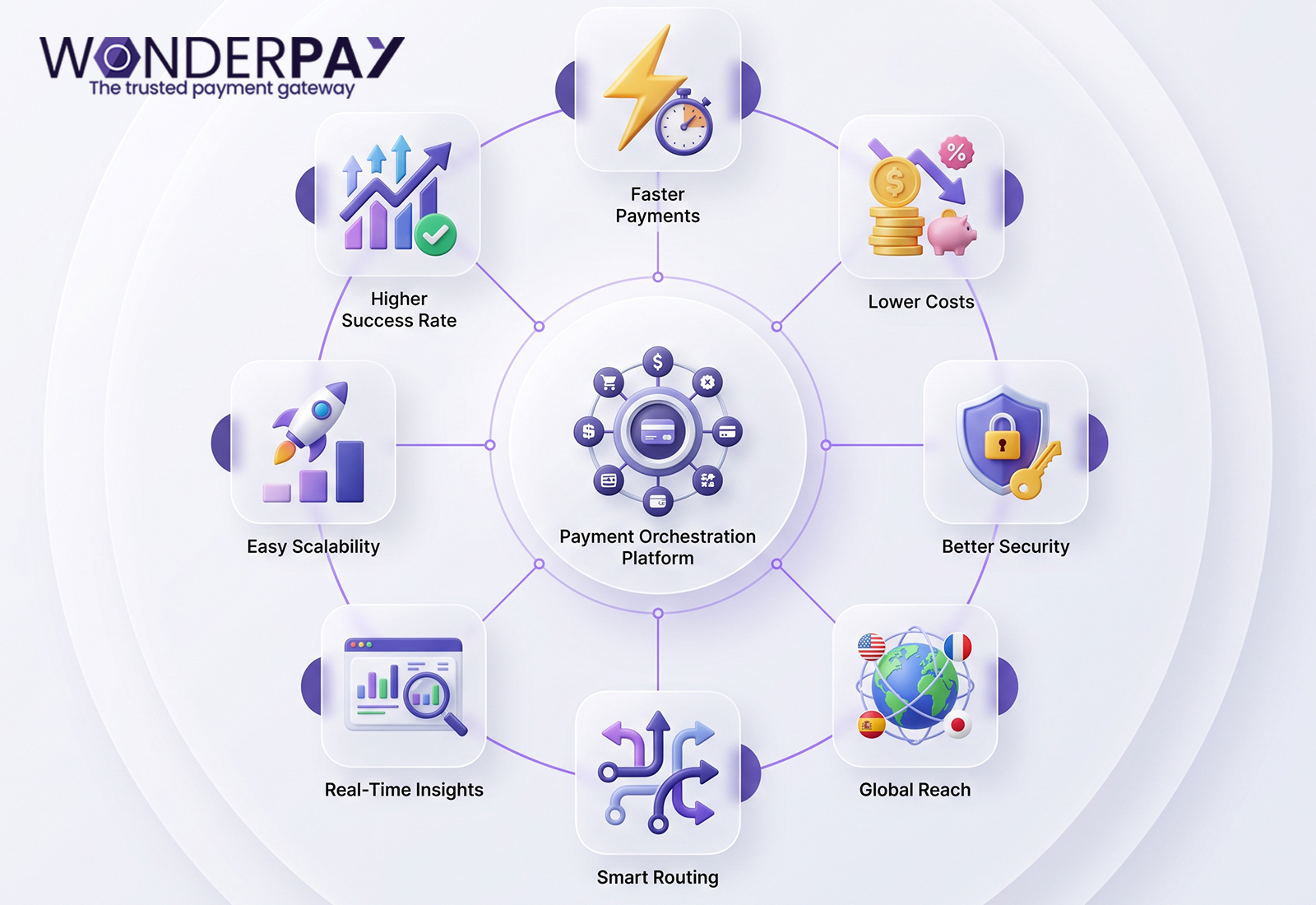
A payment orchestration platform in India is an improved solution. It drives business growth and getting rid of failed transactions and preventing customers from leaving without making a purchase.
In this section, you will explore a list of comprehensive benefits.
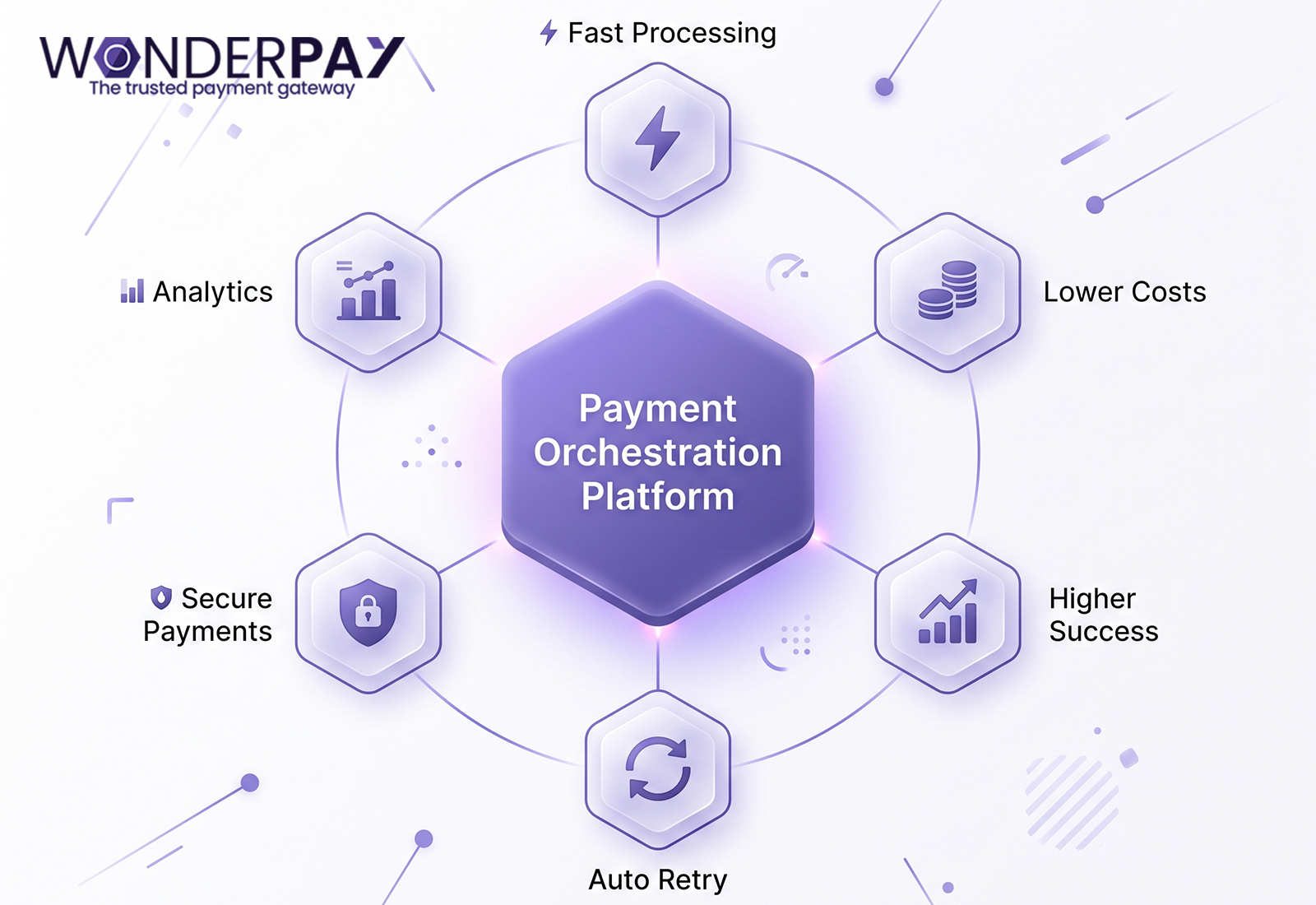
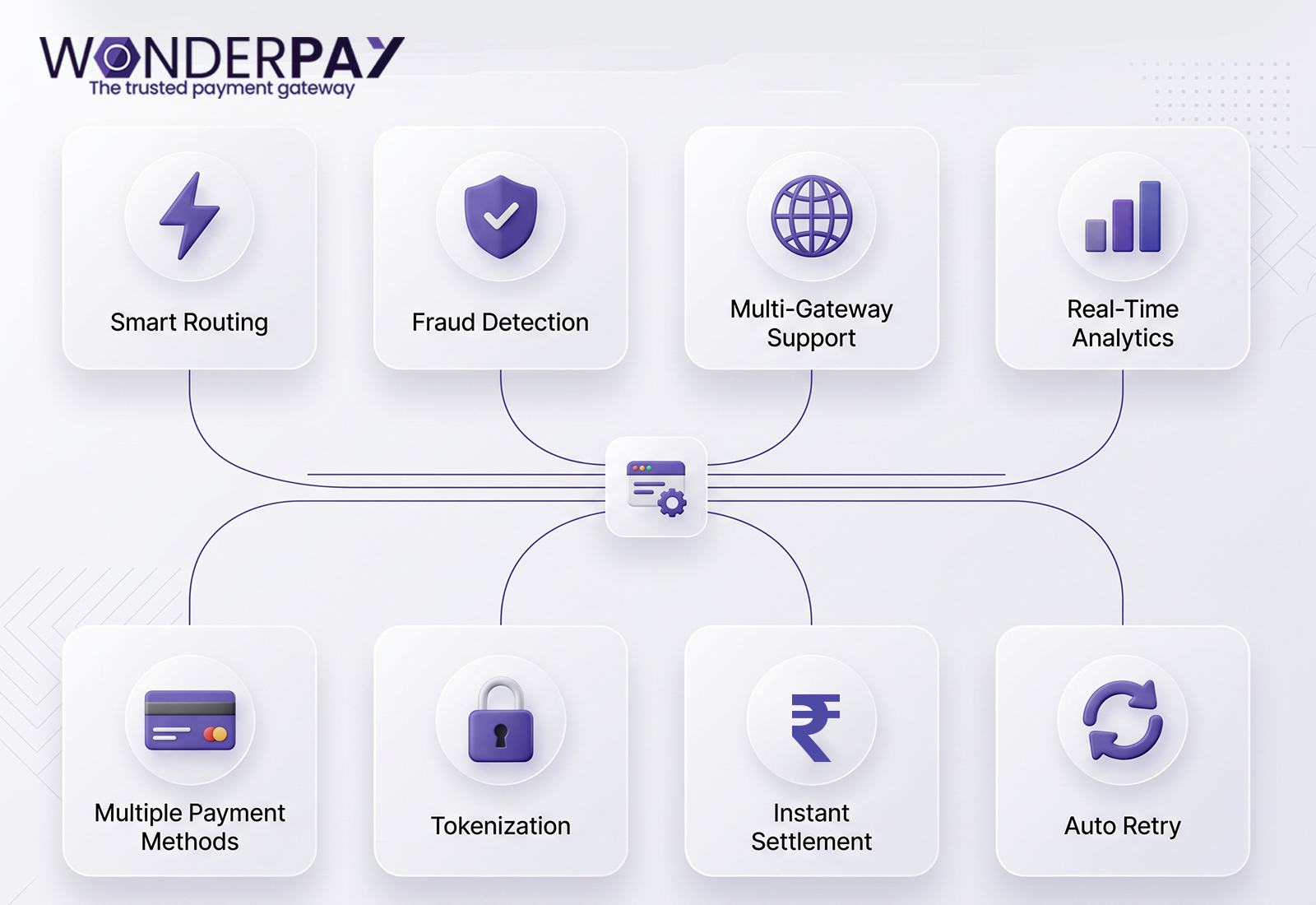
Rule-based routing: As the name suggests, it’s rule-based routing. It usually sets the conditional logic based on the transaction variables.
Cost optimization routing: It includes the interchange fees and processing markups. Further, it results in selecting the cheapest acquirer.
AI-Powered Routing: Artificial intelligence allows us to predict the likelihood of a transaction’s approval in milliseconds. It uses Machine Learning (ML), which is trained on historical data.
Geographic Routing: The system works to align transaction currency and the card’s origin along with the local or regional acquirer.
Issuer Routing: This functionality matches the customer’s bank identification number range to the processor. It maintains a stronger approval relationship with the exact issuing bank.
Failover Routing: Failover plays its role by implementing real-time gateway monitoring.
Retry Logic: Within this process, it cascades soft declines such as temporary network timeouts and insufficient funds to the secondary payment rail.
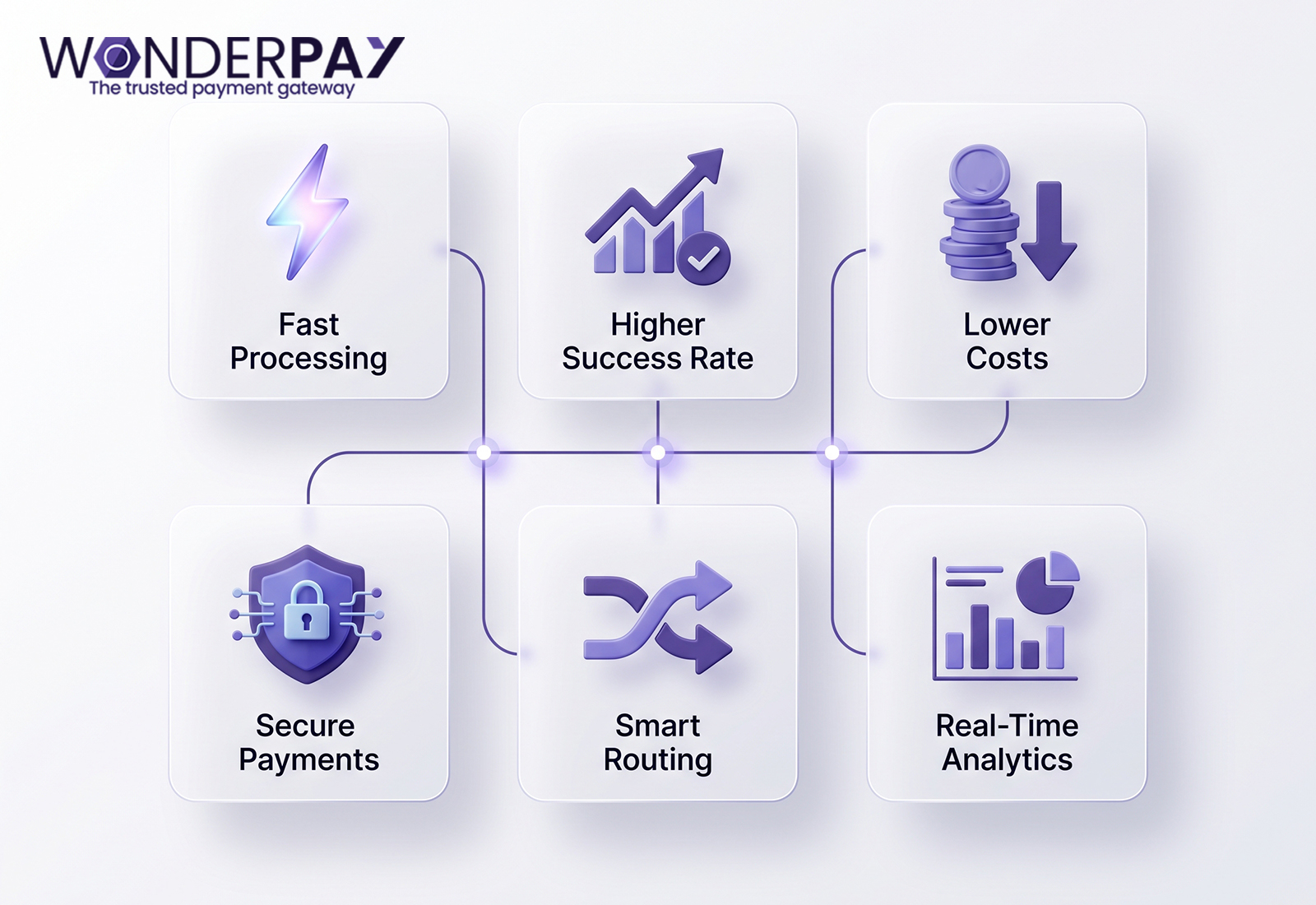
The payment orchestration optimizes transactions through the centralized platform. It routes and manages payments across multiple providers.
Here, the complete process of optimization takes place.
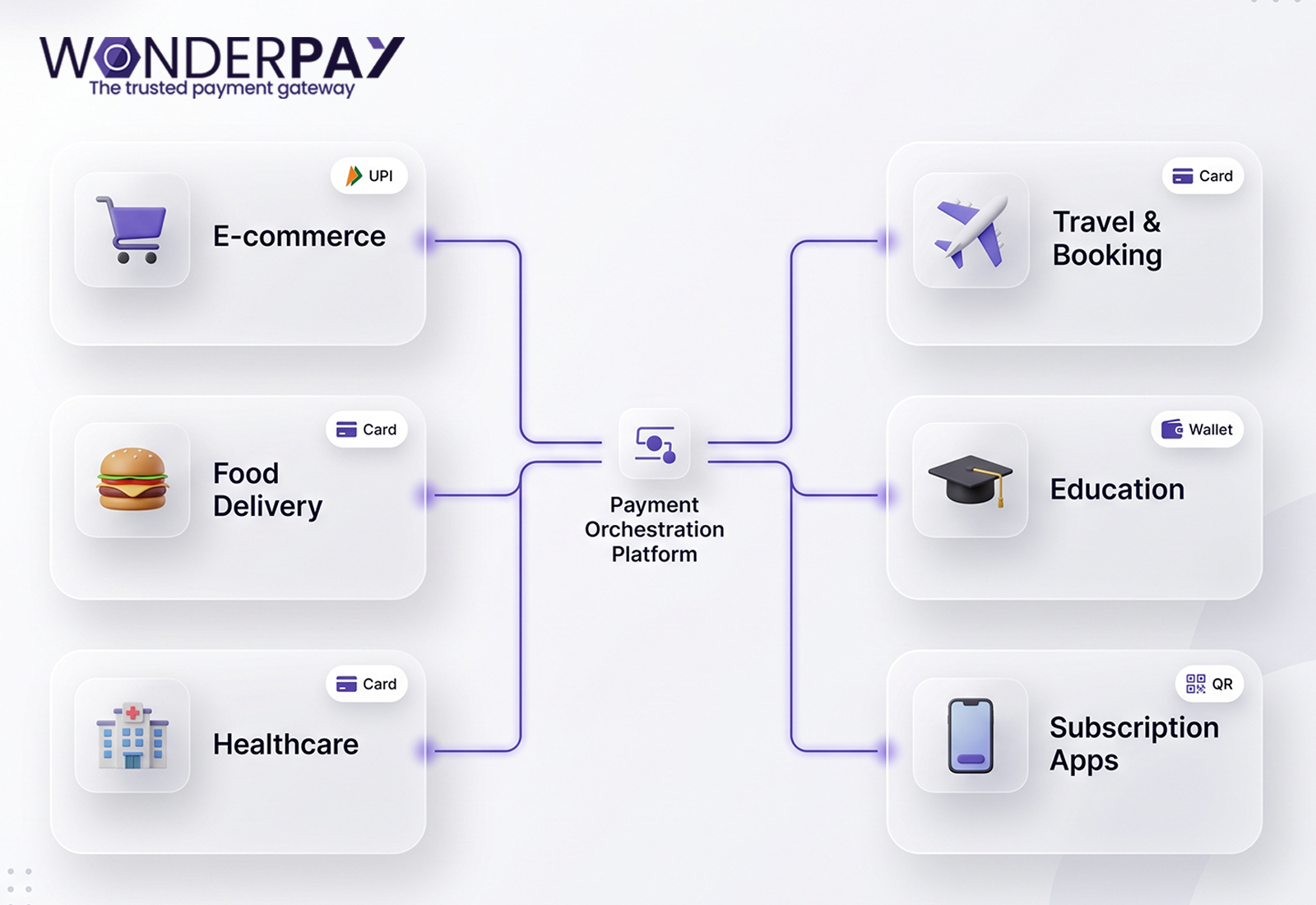
The improved solution of POP can be utilized in various business domains, from a small business operation in person to enterprise-level online or offline.
Below are the top businesses from different industries that dominate their respective market.
E-commerce companies use the solution to reduce increasing payment failures.
SaaS: Software as a Service (SaaS) companies such as Netflix, Salesforce, and Zoho heavily rely on recurring payments. If a SaaS faces high payment failure rates, they will not just lose a payment but a customer, and their trust at the same time.
Travel: You, as a travel agency or a company, do not know in what circumstances a customer is booking their tickets after selecting everything from their destination to hotels to a vehicle. The time a customer reaches the checkout page and the transaction fails, you lose trust in your brand, which becomes a perspective in their mind.
Gaming: The gaming company can use the solution to improve their customers’ experience.
Marketplaces like app stores, streaming, Uber, and Airbnb can improve their customer experience with better payments and automation.
Healthcare organizations nowadays deliver medical services online using a mobile application or app. With the integrated solution, organizations can collect payments with an embedded payment system.
Insurance: If you belong to the insurance business domain. The online payment solution can accept recurring monthly or annual premiums, as well as disburse claims more easily.
Education organizations such as schools, universities, and institutions in India for competitive exams can use the payment solution. It simplifies the payment collection for scheduled monthly, half-yearly, or annual fees aligned with extracurricular activities. The best part is the transparency that the system builds.
The right payment solution improves your and the business customer experience. When selecting the right online payment solution, it becomes more important to consider the brand’s exact needs and wants.
If the Payment Service Provider (PSP) offers the right features and drives your brand growth; at that time you may consider it.
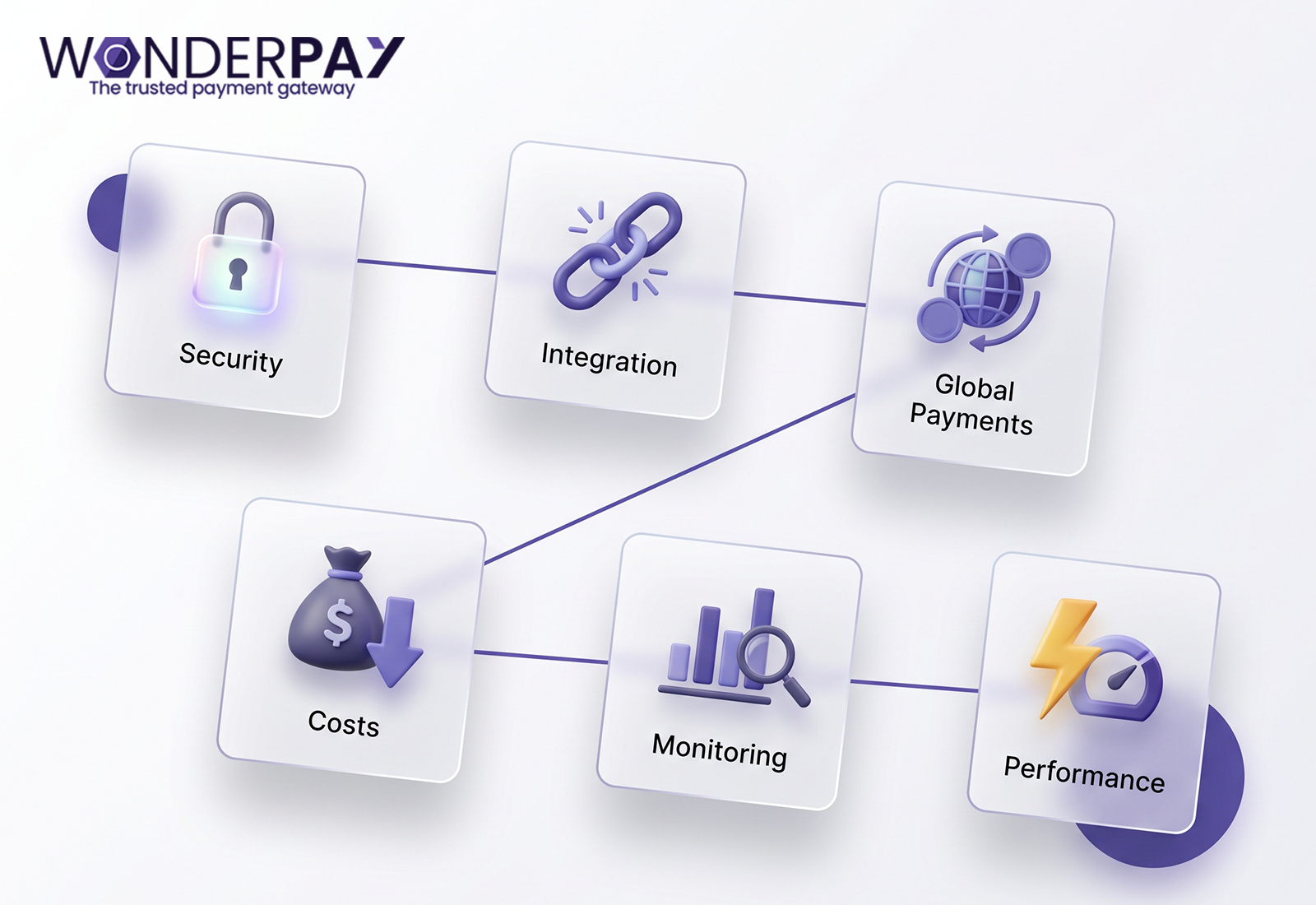
Here is the comprehensive list of challenges and some considerations every brand must look into.
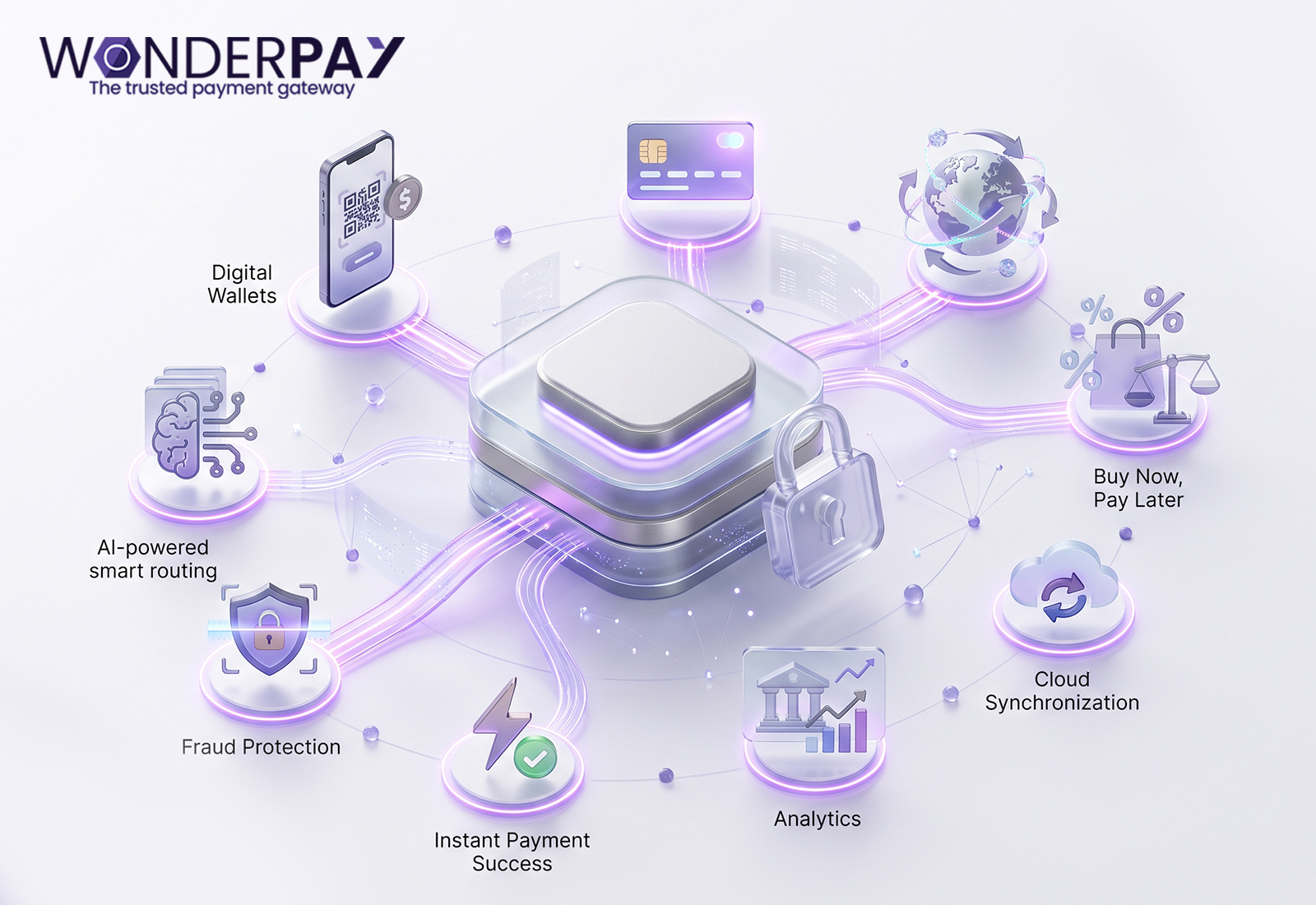
The latest Global Payment Report 2025 by McKinsey draws the exciting trends for the future of payment orchestration. All the insights discussed in this section will help business decision-makers make informed decisions for their brand growth.
| Future Trend | Insight | Impact on Payment Orchestration |
|---|---|---|
| AI-driven Routing | AI will analyze the: Cost Approval rates Network performance The entire process takes place and chooses the best payment route in real time. | Intelligent routing will help with: Improved success rates. Lower processing costs. |
| Agentic Commerce | AI agents help with: Search. Compare. Complete purchases. 10% of consumers shop with AI. 20% are willing to let AI make their purchase. | The system will require support for: Autonomous payments. AI wallets. Tokenized transactions. |
| Embedded Finance | It will be a built-in feature for the online platform, including business applications. | API solution allows for: Payment integration for apps, marketplaces, and SaaS platforms. |
| Open Banking & Multi-Rail Payments | Payments will increasingly flow: Across cards. Account to Account (A2A). Open banking. Wallets and other rails. | Smart orchestration helps select: The best payment rail, based on cost. Speed. Preferences. |
| Real-Time Payments | AI will optimize instant payments and faster settlement. | It will improve cash flow as the system automatically routes transactions using the real-time payment rails. |
| Machine Learning for Fraud Detection | AI will simplify fraud detection. Compliance. Risk management | It works in the following way: Detects fraud before routing. Improves security. Enhances the authorization rates. |
| Autonomous Payment Optimization | With the advancement of AI, it will: Optimize routing via fees, FX, speed, and customers’ preferences. | A self-learning system will improve: Payment performance with minimal manual intervention. |
Do you prepare plan A and plan B to achieve a specific goal? We do, right? What about your day-to-day business payments? Does it have any alternative plan if the transaction fails?
The payment orchestration is an alternative solution with its improved functionality. It gets rid of failed transactions by rerouting the transaction instead of building separate pipelines for Gateway A and B. Additionally, the system chooses the best payment solution while determining the cost and performance.
Organizations can save their development time, decrease sales losses, and centralize the entire data while being cost-effective.
Are you ready to leverage the improved solution? Connect with Wonderpay and get the payment solution right now.
It is a centralized software layer that unifies a business payment gateway, processor, and fraud prevention tools. It eliminates the need to build a separate integration for every bank or payment method. This is a one-time process, and the rest of managing digital payments is done with automatic routing transitions to the most reliable, inexpensive provider.
The working of orchestration is simple, and it completes in a few easy steps as follows:
The evolving online technology comes with its cons. It directly impacts businesses’ revenue and operations. However, an increasing number of failed transactions is a headache and costs time, more resources, and trust in the brand.
Getting started with the right digital payment solution with advanced capabilities to reroute the transactions automatically without the user knowing anything, save the extra costs, and avoid losing the customer changes the entire game for your business. So, having the orchestration solution is no longer a choice but a necessity.
A gateway is the foundation tool that allows a brand to securely capture and transmit a transaction to a single processor. On the other hand, orchestration acts as an intelligent command centre that sits over multiple gateways. It allows a brand to route transactions across different providers, optimize processing fees, and avoid facing any downtime.
The orchestration system uses smart routing and automated retries. It connects a brand’s online transaction with multiple payment gateways, and further, it automatically routes transactions by using the most reliable and cost-effective channel in case gateway A experiences downtime.
Yes, orchestration is available regardless of a business’s size or industry. If you have an online payment system for the brand. You are eligible for the orchestration transaction to improve payment success rate and improve cash flow.
When it comes to managing digital payments, the orchestration software streamlines digital payments by using a single centralized platform. This further manages multiple payment service providers (PSPs) and gateways.
The advantages of using the orchestration software by industry differ by a business’s ticket size and increasing failed transactions. It does not matter what industry you come from or what type and size of business you are.
If you accept a large amount of payments and experience peak hours where online transactions are often disrupted by high traffic and customers return without the purchase, in order to avoid this issue, any brand from any industry can leverage this solution.

“With a background in journalism and over 4 years of experience in content marketing, Kamaljeet Singh specializes in fintech storytelling. He transforms complex financial technologies into engaging, SEO-friendly content that helps businesses build authority and connect with their audience.”