Will UPI MDR Return for Large Merchants in India?
July 18, 2026
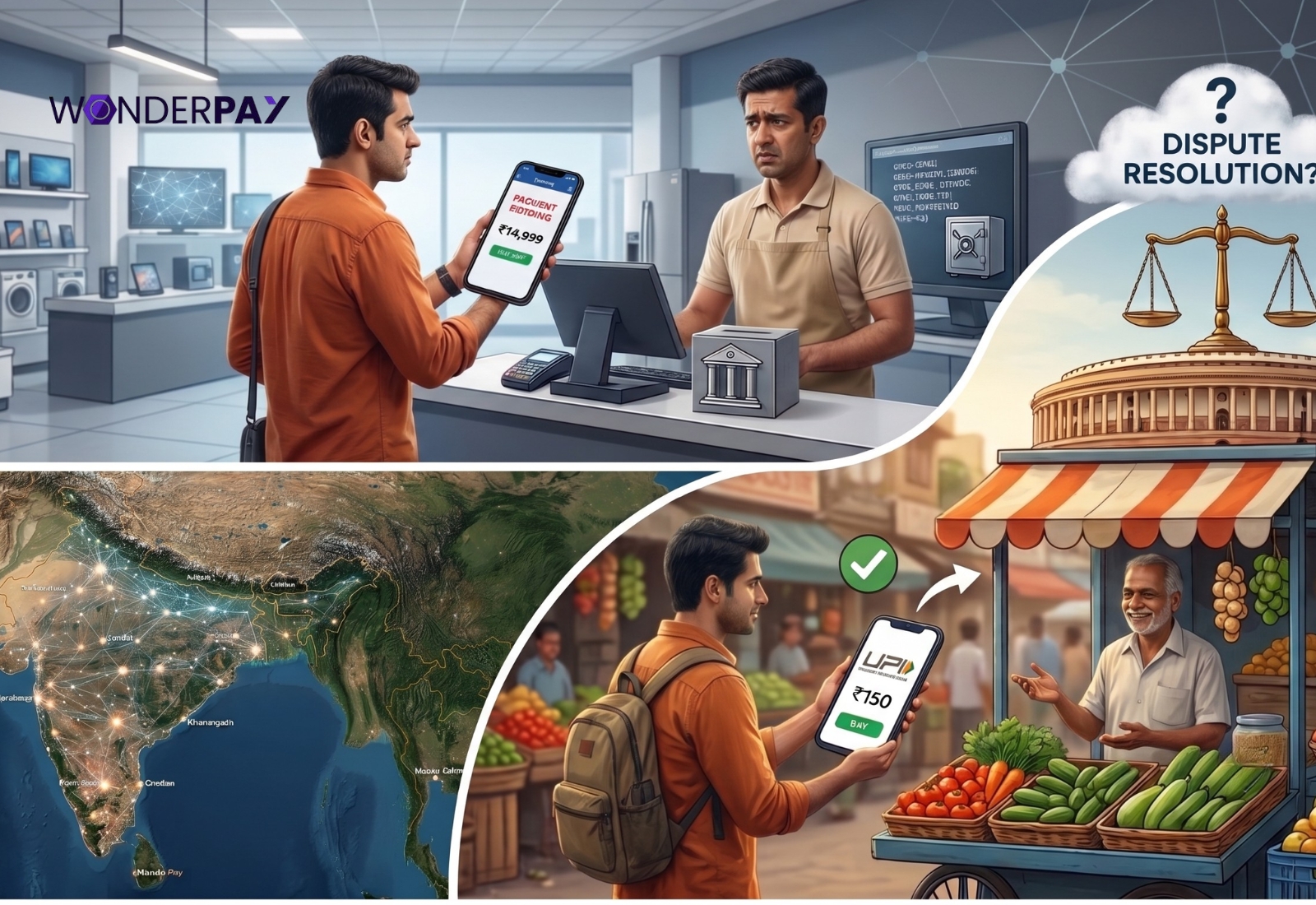
The government may reintroduce the Merchant Discount Rate (MDR) or UPI merchant charges, which were revoked in the year 2020, due to the good response to online payments using Unified Payment Interface (UPI).
If the MDR is approved by the government, the levy will be applied to large merchants, including high-value payments.
The merchant discount rate for businesses making turnover from 1 to 1.5 crores annually will be charged MDR.
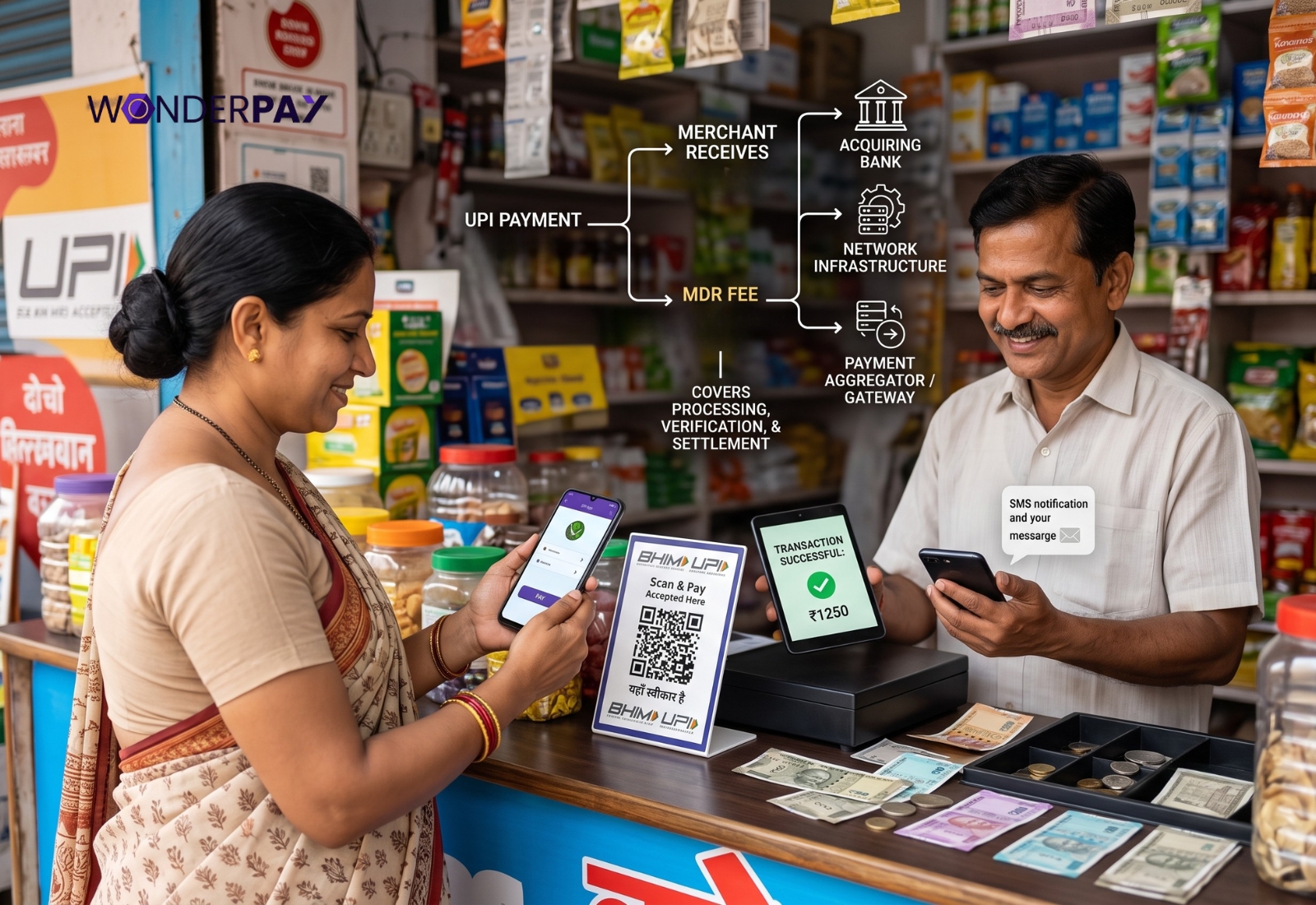
MDR stands for “Merchant Discount Rate”. It is a processing fee that is paid by a business accepting payments and is used to pay the transaction fees to the online payment service provider. It could be a payment gateway, a bank, or a payment aggregator.
The online payment processing typically covers transaction verification, infrastructure maintenance, and fund settlements.
The main purpose is to bring back the UPI merchant charges on selected UPI transactions to ensure the financial sustainability of the payment ecosystem.
The proposed fee will apply to large businesses. This may include all those organizations whose turnover is over Rs 1.5 crore, including the higher-value transactions. The higher-value transaction could be about Rs 2,000.
However, small merchants as well as Person to Person (P2P), also known as Peer to Peer (P2P) transfer, will remain as it is right now.
Current Issue: As focused on the current issue, the zero MDR regime since January 2020 has been due to the UPI being a victim of its own success. If we see the transaction volume, it has skyrocketed to billions per month. This is the one that generates zero direct transaction revenue for the companies facilitating them.
What Does the Industry Say: The Payment Service Providers (PSPs), including the tech firms. They say that sustaining a fee for all the infrastructure is financially unviable in the long run.
There is no specific industry that is going to be affected by Unified Payment Interface digital payments. If you are one of the large entities and your annual turnover is Rs 1.5 crore. This will impact your organization to pay the fee for the transactions as it is applied.
| Business | Impact |
|---|---|
| Large retailers | High |
| E-commerce | High |
| Food delivery | High |
| Travel companies | Medium |
| MSMEs | Low or None (if exempt) |
| Small Kirana stores | Likely no impact |
So, the above added industries may have to pay the MDR fee for the payments they accept. This is going to impact all those organizations as discussed above.
If the authorities reintroduce the UPI MDR for large merchants, such as transactions of Rs 2,000. This shifts the online payment ecosystem. With this, the companies will face direct processing fees for the UPI, as this has zero-cost medium.
Payment acceptance cost: The large merchants are the ones who will see a direct increase in their operational costs. But at the same time, the government proposals cap the UPI MDR, which is around 0.5% or 5 to 7 basis points.
Pricing strategy: As the MDR can not be directly passed onto the consumers. Therefore, the large merchants will be forced to absorb the cost as well as adjust their broader pricing strategies.
Checkout optimization: Within this, the merchants will likely redesign their checkout flows, which will encourage payment methods. This will include those that bypass the MDR charges. If we see the instance, a ticket size threshold like 2,000 will prompt merchants to nudge customers toward the traditional 0 MDR UPI for small purchases.
Multiple payment methods: The introduction of the MDR forces every business in order to verify and evaluate the total cost of acceptance. Typically, customers will weigh the benefits of UPI against RuPay cards, as they are often cheaper.
Cost per transaction: If the new MDR is applied to higher-value UPI payments. The merchants will need to calculate the exact margins, which will be on a per-transaction basis.
All these are some of the considerations that one must consider if the Online payment processing applies after the government approval.
Within this, all small businesses and MSMEs are expected to remain entirely unaffected.
There will be no hidden cost for the customers; even for the large merchants, the MDR is the one which is designed as a merchant cost and will not be passed on to the consumer as a direct UPI charge.
The zero fee for traditional bank to bank UPI remains the company free for small merchants or businesses.
The timeline for the UPI MDR in India includes the year 2016, the time it started, but as time passed. The fee for the transactions using UPI was waived during COVID-19 in the year 2020.
Here is the table with a clear breakdown for the timeline of the UPI MDR in India.
| Year | Event |
|---|---|
| 2016 | UPI launched |
| 2020 | Zero MDR introduced |
| 2023 | Industry requested MDR |
| 2025 | Debate continues |
| 2026 | Proposal under discussion |
As the digital payments surge, industry stakeholders, including the bank as well as the banks and fintech leaders, are pushing for it. They are the ones who are pushing for the reintroduction of the MDR for large merchants. High-value UPI transactions, which will ensure the financial sustainability of the ecosystem.
If we talk about the financial strain, banks are the ones who have raised the alarms that handle billions of UPI transactions. This is all being done without the MDR, which creates a massive financial burden.
There could be a sustainability issue; industry bodies such as the Payment Council of India (PCI) stress that the 0 MDR model leaves providers without a viable core revenue model. The warning will stifle technological innovations as well as user acquisition.
In case the authority approves the digital payments, merchants must consider some of the practices. Here is a comprehensive checklist you must go through, as this will help you a lot to make an informed decision.
1. Monitor official announcements: Keep an eye on the official announcements; you can get updated with the right information.
2. Review payment costs: You must consider the payment cost with your payment services provider.
3. Diversify payment methods
3. You must optimize your checkout page.
4. Work with scalable payment partners.
There is no official response from the UPI MDR yet. Therefore, merchants must stay informed with updates from reliable sources. Within this, you may see and experience where payment economics may evolve.
However, the right payment infrastructure can help a lot of merchants in order to adapt regardless of the final decision.
There are no confirmations from the authority side for the UPI MDR yet. If there are any Unified Payment Charges for merchants, even for large-sized businesses. The authority (government) will update with a clear notification.
No, customers do not pay any Merchant Discount Rate (MDR) directly currently, and there are no updates yet.
Merchants only pay the Merchant Discount Rate (MDR). There are no instructions at all on where the customer or consumer will pay the MDR to the payment service provider. To use the service or buy any of the products they are seeking.

“With a background in journalism and over 4 years of experience in content marketing, Kamaljeet Singh specializes in fintech storytelling. He transforms complex financial technologies into engaging, SEO-friendly content that helps businesses build authority and connect with their audience.”