UPI Charges From October 15, 2026: New MDR Rules Explained
September 18, 2026
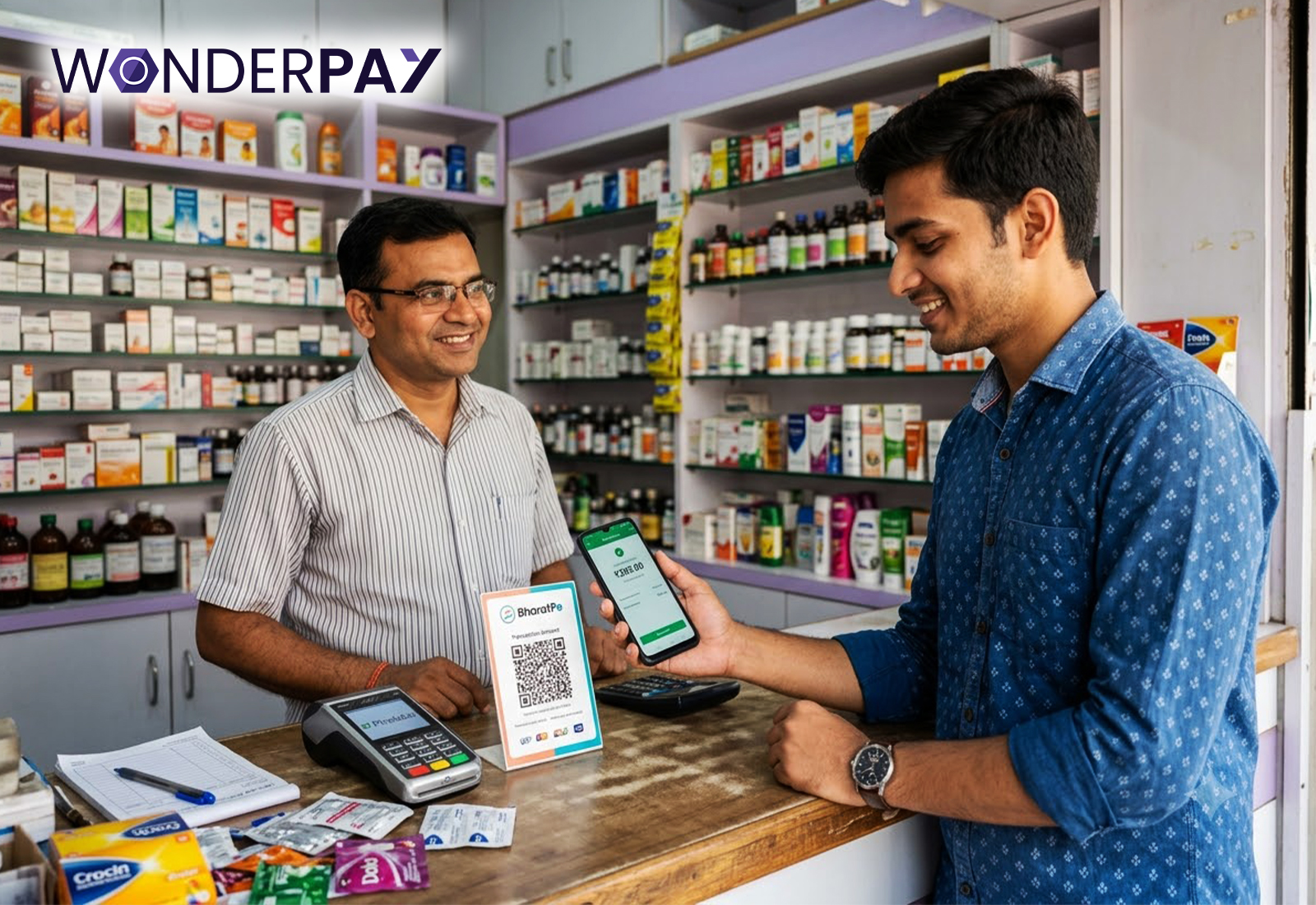
The Unified Payments Interface (UPI) of India imposed a Merchant Discount Rate (MDR) on certain P2M transactions above ₹2,000 from 15 October 2026. As per the new framework, 0.4% will be the standard MDR, and this is capped at ₹300 for transactions of ₹75,000 or more. Consumers will not be charged to make UPI payments, and P2P (Person-to-Person) transactions will be free whatever the amount being transferred.
The Finance Ministry and National Payments Corporation of India (NPCI) have clarified that new MDR is a charge on the merchant side in the payment ecosystem. This is not in any way a tax or fee that goes to the government or NPCI. It has been pitched as a step towards making the UPI ecosystem’s revenue model more sustainable, while shielding end users and small merchants from additional fees.
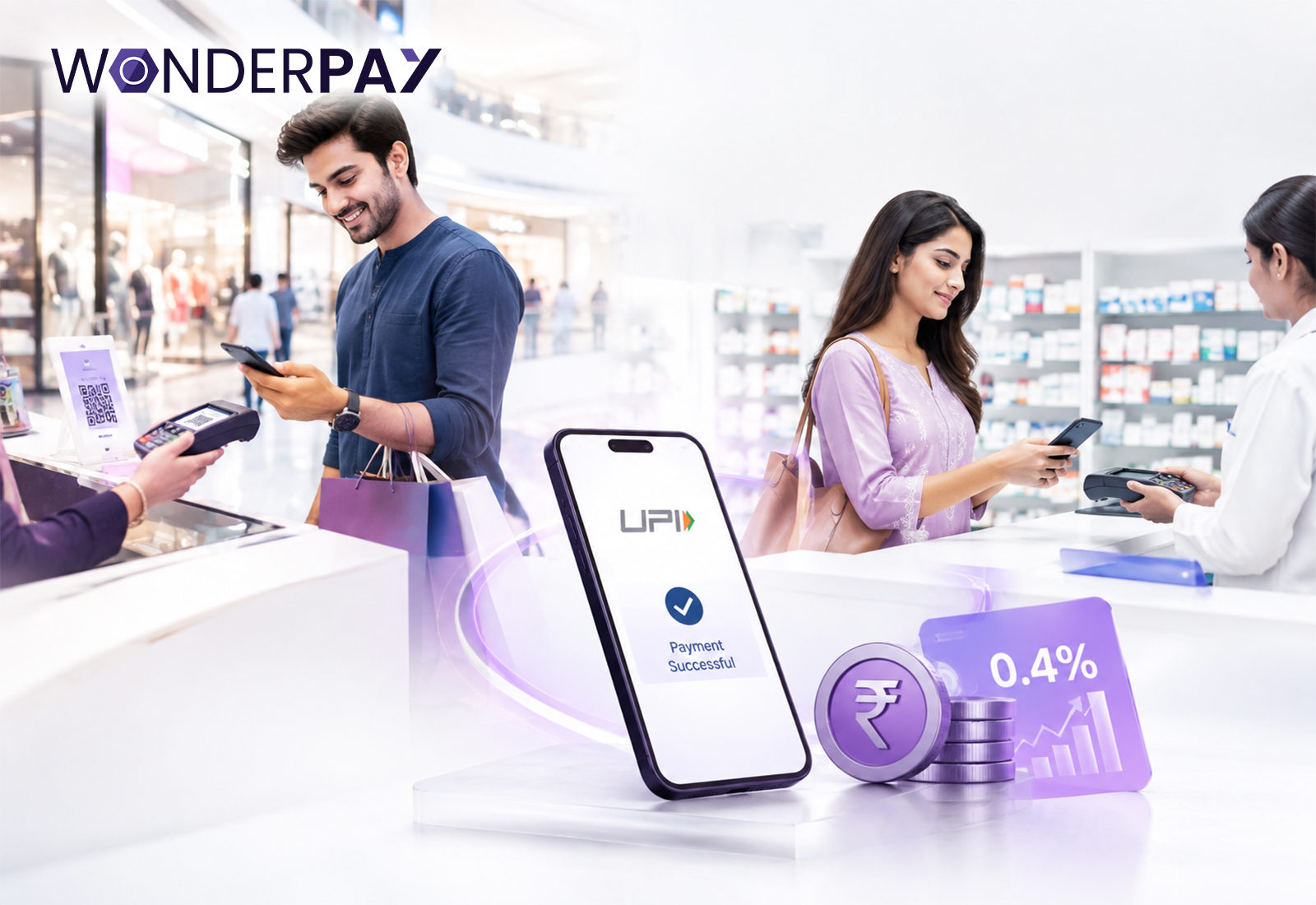
Eligible P2M UPI transactions above ₹2000 will have an MDR of 0.4%. Now, there will also be a limit to the charge of the MDR for transaction value ₹75,000 and above; it will not exceed ₹300. The framework comes into effect on October 15, 2026.
So, for instance, ₹3,000 paid via an eligible merchant transaction would draw an MDR of ₹ 12, and a payment of ₹50,000 would mean ₹200. If payment is made by a customer of this amount of ₹1 lakh, normally the 0.4% would be ₹400, but this can only be capped at ₹300. It may be noted that payments up to ₹2,000 continue to remain outside the normal MDR structure.
So the new framework does not simply mean that users will now have to pay a top-up each time they scan a QR code. The charge is made in the merchant payments environment rather than against the consumer directly.
Related read: UPI Payment Charges & Fees in India
This past week, the government has made it clear on one of the major issues that no fee will be levied on UPI for the general public.
The Finance Ministry further stated that UPI services will remain available to consumers at no charge. No platform fee or any other charge will be levied on UPI payments for UPI application providers. Other directives include ensuring that merchants should not pass on the cost of MDR onto customers; banks have also been asked.
This implies that in case of a single eligible merchant transaction larger than ₹2,000, a customer should not be billed separately for the UPI fee. The government further stated that consumers should still pay the listed price of products and services.
Consumers will also be exempt from any monthly allowances or usage-based charges. The over-the-counter transaction limit that banks and NPCI set is at the rate of commercial charging rules, but daily limits for security & risk-management is different.
The new MDR framework does not apply to person-to-person transactions.
As per the Ministry of Finance, a person can send money to friends, family members, and other individuals without paying any transaction fee up to any amount. Transfers between two of the same user’s bank accounts linked to each other continue to be free.
This distinction matters due to the fact that the MDR is limited to merchant payments, not between two individuals. Thus, you will not be levied with the fresh MDR at all if you are transferring any amount more than ₹2000 using UPI to any family member (sending it cross-border).
The government claims that P2P is 70% of total UPI transaction value and will continue to remain outside the MDR framework.
The government has tried to emphasise that the new MDR will be relevant only on a fraction of merchant transactions.
According to a release from the Press Information Bureau on the 15th of September, only around 4% of merchant transactions will fall under MDR. Thus, around ~96% of P2M transactions are expected not to be impacted as these either fall below Rs 2,000 or the zero-MDR regime for small merchants.
The Finance Ministry has also noted separately that payments under ₹2,000 account for over 95% of UPI P2M transaction volume. While the two figures are using equivalent descriptions and denominators, there is a notable change both figures show that almost all merchant transactions will still occur without MDR.
The newly established structure, the Person-to-Person-Merchant (P2PM) system continues to protect small merchants.
In the case of small vendors, who receive up to ₹ 1 lakh per month through P2PM through UPI QR codes, MDR will remain zero. According to the government, this provision is aimed at shielding street vendors, neighborhood stores and other micro-enterprises by preventing additional costs or tariffs.
This definitely does not means P2PM merchant receiving a payment above ₹2000 will automatically be liable to pay MDR. Eligibility is determined based on a combination of the merchant’s account classification as well as overall transaction volumes.
According to the Finance Ministry, acquiring banks and payment service providers will monitor UPI inflows on a monthly basis. Merchants with over ₹1 lakh received per month for 3 continuous months, they can move from P2PM category to regular P2M category.
Infrastructure built around existing QRs will also continue to operate as normal. This move does not require small merchants to replace their existing QR codes, physical QR stands or soundboxes.
This does not mean that all sectors will utilize the 0.4% MDR structure as a standard.
For certain key categories running on thin margins like railroads, telecommunication, insurance, fuel and agricultural inputs, a flat MDR of ₹5 will be imposed on transaction amounts over ₹2,000. In the categories, you must pay a flat fee of ₹5, which does not fluctuate regardless of their sizes.
The government says the flat structure is aimed at delivering more cost certainty to critical services and businesses operating on relatively narrow margins.
Under the framework, capital market-related payments have also been assigned a separate rate. Payments for mutual funds, securities and stock brokers/dealers will attract MDR of 0.02%, up to ₹300 per transaction as per the PIB release. This is less than the common fee of 0.4% on most eligible P2M ventures.
This separate treatment draws a line between transactions in financial markets and normal merchant payments, applying a lower percentage charge to this category.
The government said the new is intended to enhance the long-term viability of UPI in the context of its financial health.
As per the Finance Ministry, MDR collections will be shared with participants in the payments ecosystem and would be used to enhance infrastructure resilience, cyber security innovation & customer service. The government says the running costs of UPI’s enormous technology backbone, including servers, telecommunications, anti-fraud and banking systems cost a great deal of money.
The Finance Ministry cites industry estimates that ₹20,000 crore is the yearly cost of operating UPI payment systems, server bandwidth, fraud deterrent programs and banking tech-support. That also means that dependence on government subsidies alone creates uncertainty and could limit long-term technology investment.
This attribute is further substantiated by the magnitude of payment infrastructure that operate at — UPI processed total 2,451 crore transactions worth ₹29.9 lakh crore in August 2026 alone.
It also announced a separate fund to assist small traders in adopting digital payments.
This Fund shall receive 5% of the total MDR collections according to PIB release. It is set to employ the fund to facilitate larger usage of UPI and create access for small businesses in transitioning from cash transaction mode.
The fund will aid digital payment infrastructure in tier 3 to 6 centres including Northeast, Jammu and Kashmir and Ladakh, according to Finance Ministry. It may also cover notified central government schemes being implemented at the Tier 1 and Tier 2 centers such as PM SVANidhi, PM Vishwakarma, etc. The framework will be finalised with Reserve Bank of India after holding consultation within three months. (Source)
Most of the changes on October 15 pertain to high-value merchant transactions in the UPI payment ecosystem. Consumers will not have to pay anything for UPI, P2P transactions will continue to be free irrespective of the amount and no MDR on P2M payments below ₹2,000. Zero-MDR treatment is still being offered to small merchants under P2PM.
The new framework imposes a 0.4 per cent MDR for certain P2M transactions above ₹2,000, subject to an upper limit of ₹300 for transactions equal to or greater than ₹75,000. This would come as an added burden to pay the same EMI twice — choosing MDR instead of a percentage for certain sectors, fixed at ₹5 while there will be a specific capital market transaction rate of 0.02 per cent with upper limit of ₹300.
To schedule the implementation, banks, payment aggregators, fintech and other ecosystem participants updated their systems before October 15.(Source)
Want to be a part of the Wonderpay community? follow us on:
Youtube: https://www.youtube.com/@wonderpaytec
Instagram: https://www.instagram.com/wonderpaytec
LinkedIn: Wonderpay Technologies Pvt.Ltd. | LinkedIn
Facebook: https://www.facebook.com/wonderpaytec
Twitter: wonderpay (@wonderpaytec) on X

“A fintech content specialist with expertise in financial technology, digital banking, and emerging market trends, Kanisha Mathur is skilled in crafting SEO-friendly, research-driven content that transforms complex financial concepts into engaging and accessible insights. Combining analytical precision with compelling storytelling, the writing delivers value to both industry professionals and modern digital audiences.”