SBI Warns Of UPI Fraud: How The Jumped Deposit Scam Works
October 19, 2026

Digital payments have made everyday banking faster and simpler than ever, and a little awareness is all it takes to keep it that way. UPI fraud continues to evolve, with scammers finding new ways to exploit trust, yet the defence remains well within every customer’s reach.
State Bank of India has issued an advisory on the “jumped deposit” scam, in which an unexpected credit and a request for its return are used to prompt a larger UPI payment. The good news is that this form of UPI fraud depends entirely on a hurried response. Customers who pause, verify, and consult their bank are well protected.
Here is how the scam works, and the simple habits that keep your money secure.
The jumped deposit scam turns an unexpected credit into a tool of pressure. A UPI fraud scammer sends money to your account, then calls with an urgent request: the transfer was a mistake, and could it please be returned, often to a different UPI ID or bank account. Some variations add fake payment screenshots, misleading messages, or requests that quietly lead the recipient to approve a UPI transaction themselves.
The real vulnerability is not the deposit but the response to it. Many people act quickly, uneasy at the thought of holding money that is not theirs, and skip the step that matters most: confirming the credit through official banking channels.
It helps to keep perspective. An unfamiliar deposit does not mean your account has been hacked. But an unexpected credit followed by an urgent refund request always deserves careful verification before a single rupee moves.
Related read: How To Identify Fake Payment Screenshots & Avoid UPI Scams
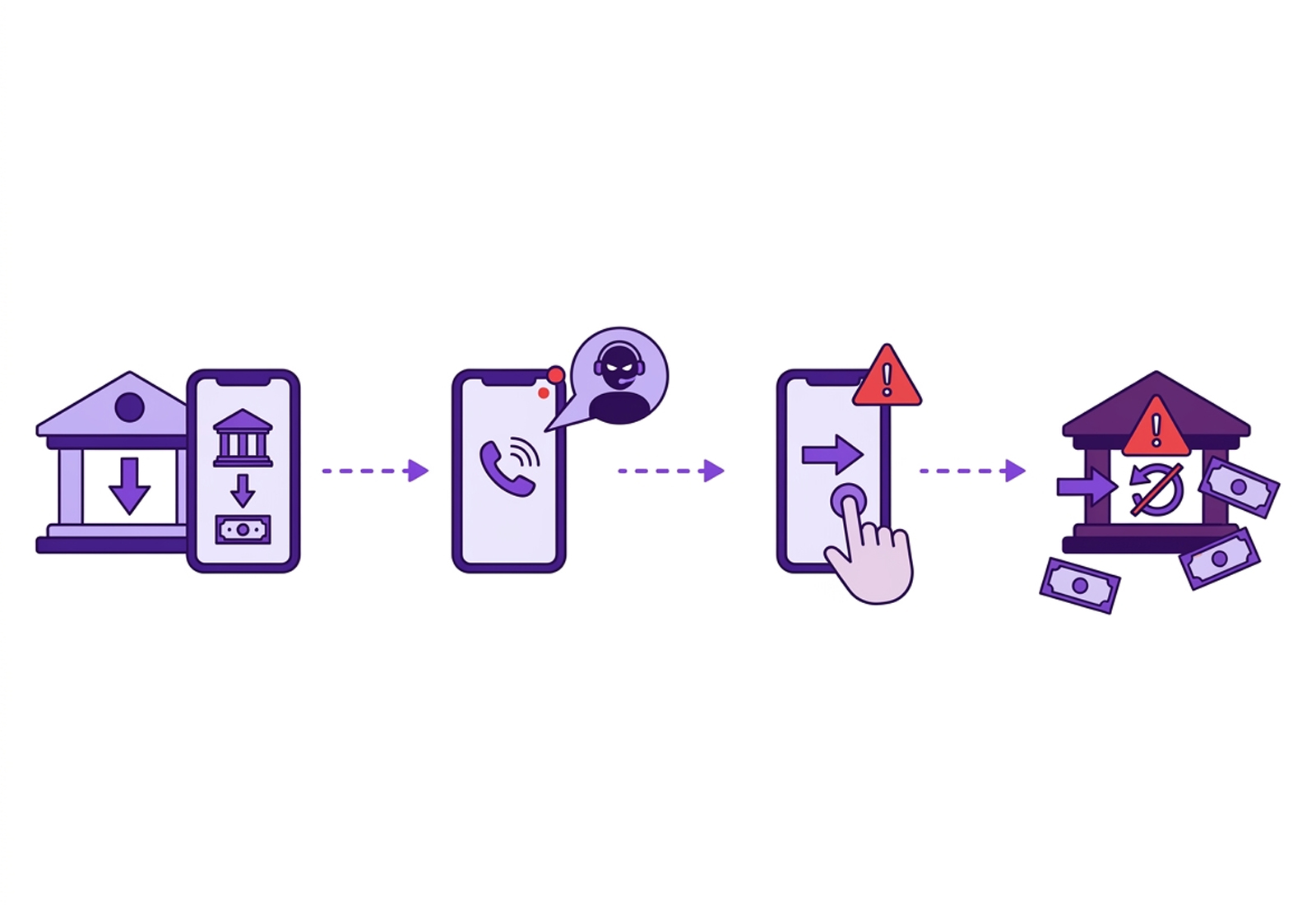
Details differ from one case to the next, yet most jumped deposit scams move through the same stages.
A credit alert appears from someone you have never dealt with. Sometimes the sum is small enough to shrug off. Sometimes it is large enough to make you uneasy. Either way, the first assumption is usually that a stranger mistyped a number.
A call or message follows quickly. The caller says the money was sent by accident and needs to come back today. The delivery is rehearsed: apologetic, hurried, occasionally a little desperate. Whatever the tone, the aim is the same, which is to keep you from stopping to look into where the money came from.
You are given a UPI ID, mobile number or bank account and asked to send the amount there. It is often not the account that paid you. If you comply, you are sending your own money to a stranger while the original credit remains unexplained.
Money arriving through UPI needs no PIN from you. A PIN comes into play only when funds leave your account. Fraudsters know many people are unaware of this, so they ask you to key in your PIN, accept a collect request or scan a QR code, and describe each as a step in the refund. Once you approve it, the debit is real.
Recovering funds sent to a fraudster is rarely straightforward. If you also gave out personal details or approved further requests, the damage can reach well past the first amount.
One Rule Worth Keeping:
Plenty of unexpected deposits are harmless, and not every case will match the steps above. What gives a scam away is the insistence: an urgent demand that you pay someone you cannot verify, or approve a request you do not recognise.
When that happens, do nothing yet. Call your bank on its official helpline or open its app, and let the bank confirm the credit and advise you on what to do.
Also read: UPI Charges From October 15, 2026: New MDR Rules Explained
The scam causes real loss only when someone is persuaded to let money leave their own account. The deposit itself is incidental. It serves as a distraction, a way of lending the caller credibility, or simply a reason to start a conversation.
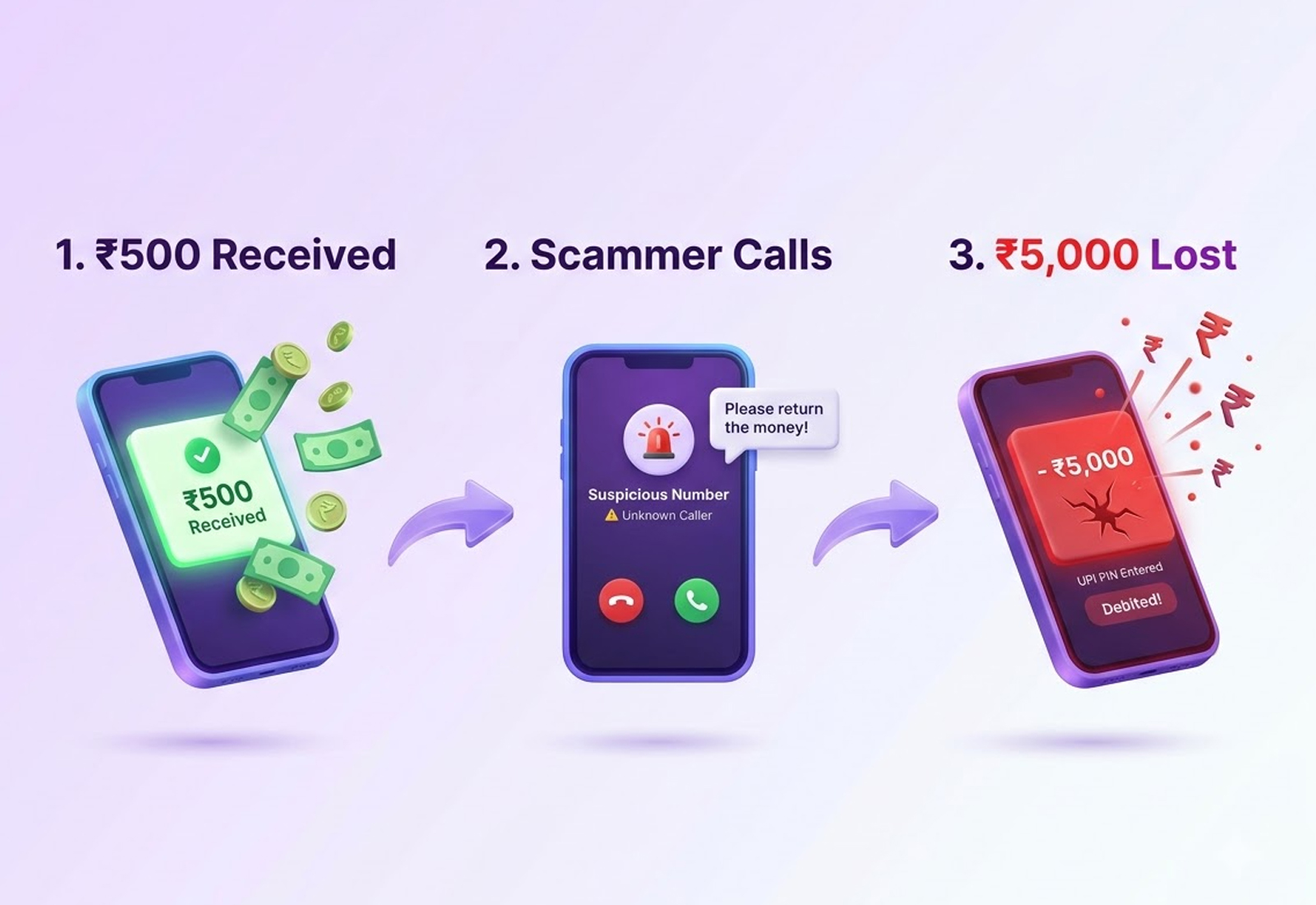
Consider a typical case. ₹5,000 appears in your account without explanation. Minutes later, a stranger phones, insisting the transfer was a mistake and asking you to send it back to a different UPI ID. If you comply without first verifying the credit and the recipient, you may be sending your own money to a fraudulent account. And if the original transaction is later disputed or reversed through the bank’s formal process, you could be left out of pocket and facing a far more tangled situation.
It is worth keeping this in proportion. An unexpected credit will not necessarily be reversed, and receiving money does not give a stranger access to your funds. A credit notification alone cannot authorise a debit. The danger arises when you send a payment yourself, approve a request, share your credentials or follow instructions from someone you cannot verify.
That is why independent verification matters. Rely on your bank, not on a caller’s explanation or a screenshot.
Spotting the pattern early is the surest way to avoid a loss. Be alert to the following:
An unexplained deposit: Money arrives from a sender you do not know and cannot account for.
A demand for an instant refund: You are pushed to return the amount at once, with no time to check it.
A different refund destination: The account or UPI ID you are given does not match the one that paid you.
A request for your PIN or OTP: Receiving money never requires either, whatever the caller says.
An unfamiliar collect request: You expect to receive money, yet you are asked to approve a payment.
A QR code, link or app: The caller asks you to scan, click or install something to complete the refund.
Discouragement from calling your bank: You are urged to skip verification or keep the matter private.
An honest mistake never requires you to compromise your security or bypass your bank.
SBI’s advice is simple; do not rush to return unexpected money, and check with the bank first. A few steady habits will keep you well protected against UPI fraud of this kind.
When an unfamiliar amount appears, open your official banking app or check your statement. An SMS, a screenshot or a caller’s account of events is not proof of anything. If the sender says the transfer was a mistake, contact your bank through its official customer service channels and ask how it should be handled.
Read the payment screen in full before entering your UPI PIN, and confirm the recipient’s name, UPI ID and the amount. If an unexpected request arrives while someone is asking you to return money, decline it until you have verified the situation yourself. Approving a request can move money out of your account.
Your UPI PIN, OTP, and password are for you alone, even if the person asking claims to represent a bank. Receiving money through UPI never requires a PIN. Do not scan unfamiliar QR codes or install an app because a stranger asked you to.
Fraudsters rely on pressure: hurried requests, emotional appeals and repeated calls, all designed to stop you from thinking clearly. Take your time. Block the number, report the incident to your bank, and follow its guidance on the unexpected credit rather than transferring the money elsewhere yourself.
If you have approved a suspicious transaction or lost money, call your bank immediately and report the incident to the national cybercrime helpline on 1930. You can also file a complaint on the National Cyber Crime Reporting Portal.
Keep transaction IDs, bank messages, screenshots and caller details as evidence. Prompt reporting gives authorities a better chance to act in time, although recovery cannot be guaranteed.
An unexpected credit calls for patience. Reacting to an unknown sender’s refund request is exactly how people fall into UPI fraud, so begin with the facts. Open your bank’s official mobile app or your account statement and check the amount, the transaction reference number and the sender’s details.
If you cannot trace where the money came from, contact your bank through its official customer support channels and explain what has happened. Then follow its instructions. In the meantime, do not send the money to another UPI ID, scan an unfamiliar QR code or approve a payment request in the name of a refund. Your UPI PIN, OTP and banking credentials stay with you, whoever claims to be arranging the reversal.
Even when the transfer looks entirely genuine, let your bank guide the resolution. It keeps your funds safe and ensures a real mistake is corrected properly.
UPI fraud does not always begin with a suspicious link or a request for banking details. Sometimes it starts with a deposit that nobody expected, followed by a call that sounds entirely reasonable. SBI’s advisory urges customers to verify unexpected credits independently and to refuse unfamiliar payment requests. Stay calm, keep your UPI PIN to yourself, and let your bank guide every step. Report anything suspicious promptly. A moment of caution is the most reliable protection your money has.
Want to be a part of the Wonderpay community? follow us on:
Youtube: https://www.youtube.com/@wonderpaytec
Instagram: https://www.instagram.com/wonderpaytec
LinkedIn: https://in.linkedin.com/company/wonderpay-technologies-pvt-ltd
Facebook: https://www.facebook.com/wonderpaytec
Twitter: https://x.com/wonderpaytec
In a jumped deposit scam, an unexpected credit is used to pressure you into sending money back before anything has been verified. The fraudster may ask you to transfer funds to an unrelated UPI ID, or nudge you into approving a payment request. The safest course is to confirm the transaction through your bank’s official channels first.
No. Receiving money through UPI does not give the sender any access to your bank account. The real danger comes afterward, when a fraudster tries to persuade you to share confidential details or approve a payment going out. Never disclose your UPI PIN or OTP to anyone.
Review your bank statement and confirm the transaction in your official banking app. Speak to your bank before attempting any refund. Never transfer money to another account on a caller’s instruction, as doing so could expose you to fraudulent payment requests.
Watch for an unexplained credit, an urgent demand for a refund, a request to enter your UPI PIN, a payment approval you do not recognise, or pressure to send money to another account. Any of these could be signs of UPI fraud. Confirm each transaction through your bank’s official app or helpline before taking any action.
Returning money can be the right course once a genuine transfer error has been confirmed. Even so, never send funds to an unfamiliar account on a caller’s word alone. Contact your bank and follow the procedure it recommends, so the transaction is handled securely.

“A fintech content specialist with expertise in financial technology, digital banking, and emerging market trends, Kanisha Mathur is skilled in crafting SEO-friendly, research-driven content that transforms complex financial concepts into engaging and accessible insights. Combining analytical precision with compelling storytelling, the writing delivers value to both industry professionals and modern digital audiences.”